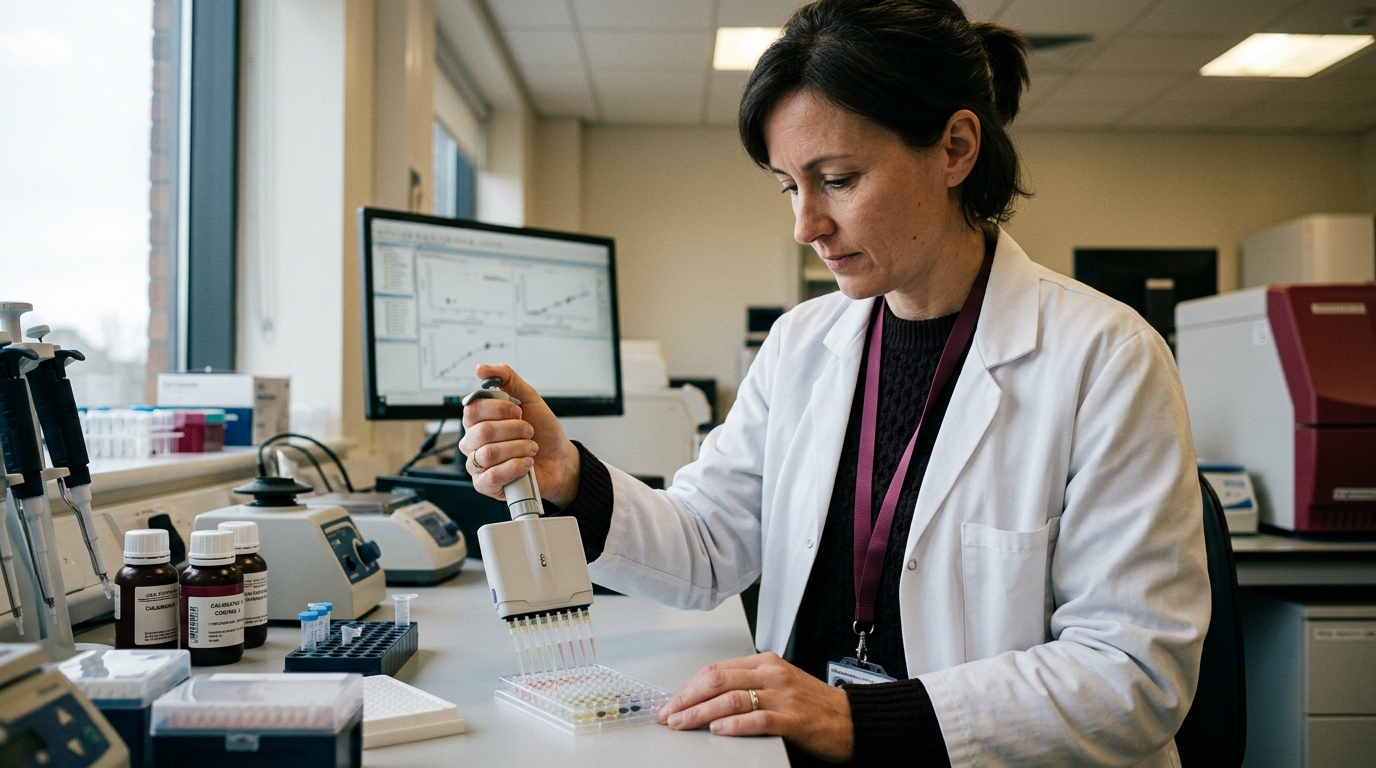

Accurate low testosterone evaluations require tracking symptom onset, progression, and daily patterns to distinguish permanent deficiency from temporary hormonal suppression.





Medical Disclaimer: The information provided in this article is for educational and informational purposes only. It is not intended as medical advice, personal diagnosis, or treatment guidance. Always consult a qualified healthcare professional regarding any medical condition, laboratory test interpretation, or treatment plan.
Consider a familiar scenario. A forty-five-year-old man notices that he feels exhausted every afternoon. His motivation at work has slipped, and his interest in sex has declined over the past several months. He wonders if his testosterone has dropped. When he speaks with a doctor, one of the first questions he hears is not simply what he feels, but when those changes started and how they developed over time.
A clear symptom timeline is one of the most useful pieces of information you can bring to a clinical evaluation. However, a timeline is not a diagnostic test on its own. Low energy, changes in sexual function, mood shifts, and reduced strength can arise from dozens of different health factors. Symptoms alone cannot establish a testosterone deficiency. Current clinical guidance requires compatible signs and symptoms alongside consistently low testosterone levels confirmed through repeat blood tests.
Understanding the history of your symptoms helps your doctor interpret your lab work accurately. It separates short-term changes caused by poor sleep or acute stress from lasting hormonal patterns. It also ensures that blood tests are drawn under the right physiological conditions.
A structured timeline provides clinical context, but it does not replace biochemical testing. The following principles summarize what the evidence shows about symptom progression and hormone evaluation:
When evaluating possible testosterone deficiency, clinicians look at the complete clinical picture. Hypogonadism is a distinct medical condition defined by specific clinical guidelines. The Endocrine Society recommends diagnosing testosterone deficiency only in men who have compatible signs and symptoms paired with unequivocally and consistently low serum testosterone levels.
A timeline provides essential context for interpreting blood results. If a man reports that his fatigue began two weeks ago during a severe viral infection, that timeline points toward temporary post-viral fatigue or acute illness suppression. If another man describes a gradual decline in morning erections and physical endurance over two years, that progression suggests a persistent pattern worth formal investigation. To learn more about standard definitions, review our guide to testosterone basics.
The American Urological Association notes that a total testosterone measurement below 300 ng/dL serves as a reasonable threshold in support of diagnosis. However, that number is not a standalone diagnosis. A laboratory value must always be interpreted alongside a patient's physical history, examination, and duration of symptoms.
Chronology helps separate temporary hormonal fluctuations from structural problems. The body naturally adjusts hormone production in response to lifestyle stress, sleep loss, and illness. Tracking when changes began prevents doctors from misinterpreting a temporary drop as a permanent deficiency.
A clear timeline also helps identify whether other medical conditions might explain the symptoms. Thyroid disorders, clinical depression, obstructive sleep apnea, and cardiovascular disease can produce symptoms that feel identical to low testosterone. Knowing the sequence in which symptoms appeared helps your doctor decide which diagnostic tests to order first.
To build an accurate history, clinicians evaluate how symptoms behave over time. You can organize your own health history around five distinct dimensions before visiting a doctor.
Onset refers to how and when a symptom first appeared. Did the change happen abruptly over a matter of days, or did it develop slowly over several months or years?
Abrupt changes often point toward sudden physiological disruptions. Examples include acute illness, sudden severe stress, rapid weight changes, or starting a new medication. Gradual changes are more typical of age-related health shifts, progressive metabolic changes, or chronic endocrine conditions. Recording the approximate month or year when you first noticed a difference provides a solid foundation for your medical record.
Persistence measures how consistently a symptom is present. Is your low energy constant throughout the week, or does it only happen after poor sleep or intense work shifts?
Testosterone levels in healthy men follow a daily rhythm, but systemic deficiency produces ongoing, lasting patterns. If a symptom comes and goes erratically, non-hormonal lifestyle factors may play a larger role. Reporting whether a symptom is constant or intermittent helps your clinician evaluate its underlying cause.
Progression describes the trajectory of your symptoms over time. Is the issue getting steadily worse, remaining completely stable, fluctuating, or slowly improving?
A progressive worsening of sexual function, such as losing morning erections followed months later by difficulty maintaining erections, indicates a changing physiological state. Conversely, symptoms that fluctuate wildly from week to week often reflect external variables like sleep quality, alcohol intake, or psychological strain.
Sequence examines the order in which different symptoms appeared. Did fatigue appear first, followed later by reduced libido, or did sexual changes precede changes in mood and energy?
Because testosterone affects multiple organ systems, sequence provides valuable clinical clues. When sexual symptoms and physical changes occur together, clinicians may view the pattern differently than when isolated fatigue occurs on its own. Tracking which symptom came first gives your doctor a clearer picture of how your health has evolved.
Context involves the life events, health changes, and environmental factors that coincided with your symptoms. Did you start a new prescription around the same time? Did you gain significant weight, change your work shift, or recover from surgery?
Context prevents clinicians from viewing lab tests in a vacuum. If a drop in energy coincided with starting an opioid pain medication or a glucocorticoid, that context points toward medication-induced suppression. Identifying contextual factors helps your doctor determine if your symptoms might be reversible. For further reading on these factors, explore our resources on low testosterone signs and risk factors.
Not all symptoms carry the same weight during a medical evaluation. Many common complaints, such as low energy, brain fog, and mild mood changes, are highly nonspecific. They occur frequently in the general population and can stem from many different physical and psychological causes.
The European Male Ageing Study evaluated 32 candidate symptoms in a large population of middle-aged and older men. The researchers sought to determine which specific symptoms were genuinely linked to low testosterone levels. Their findings revealed that most general symptoms, including fatigue and sadness, had a weak correlation with hormone levels when evaluated in isolation.
The study identified three sexual symptoms that showed the strongest relationship with low testosterone:
The European Male Ageing Study also noted that physical symptoms, such as an inability to perform vigorous physical activity, and psychological symptoms, like low energy or depressive feelings, were relevant mainly when they accompanied sexual symptoms. The researchers proposed a research definition for late-onset hypogonadism that required the presence of all three sexual symptoms combined with total testosterone below 11 nmol/L and free testosterone below 220 pmol/L.
In that study population, the prevalence of this combined syndrome was only 2.1 percent overall. The prevalence ranged from 0.1 percent in men aged 40 to 49 up to 5.1 percent in men aged 70 to 79. These findings demonstrate that true biochemical deficiency combined with specific symptoms is less common than general fatigue symptoms might suggest.
This research highlights why clinicians do not rely on generic symptom checklists. A man may experience profound fatigue, but without sexual symptoms or low morning testosterone levels, his fatigue is far more likely caused by sleep disturbances, lifestyle factors, or other medical conditions. To read more about how hormones influence physical and sexual health, see our section on sexual health and performance.
A common point of confusion is the difference between daily hormone rhythms and long-term symptom timelines. Men often wonder why their blood must be drawn at a specific time of day, even if their symptoms feel worse in the evening.
In healthy adult men, testosterone production follows a circadian rhythm. Levels reach their daily peak in the early morning hours, typically between 7:00 AM and 10:00 AM, and decline gradually toward their lowest point in the late afternoon and evening. Because reference ranges are standardized against morning peak values, blood drawn in the afternoon cannot be accurately compared to clinical diagnostic cut-offs.
Clinical guidelines from both the Endocrine Society and the American Urological Association emphasize that testing must be performed in the early morning. The American Urological Association explicitly requires two separate early-morning measurements before confirming a diagnosis. Testing on two separate days accounts for normal day-to-day biological variation.
If a patient works night shifts or has an irregular sleep schedule, standard morning testing windows may not apply. Clinical testing guidance from British Columbia recommends collecting the blood sample within three hours of waking once the individual's sleep-wake cycle has been stable for several weeks.
It is vital to distinguish between when your symptoms feel worst and when your blood should be drawn. Experiencing worse fatigue at 6:00 PM is a normal physiological pattern related to daily energy expenditure. It does not mean your blood should be tested at 6:00 PM. Adhering to standardized morning testing protocols ensures that your results reflect your true baseline hormone production. For detailed testing protocols, visit our guide on hormone testing and biomarkers.
Testosterone production is regulated by the hypothalamic-pituitary-gonadal axis. This complex feedback loop is sensitive to physical stress, nutritional status, systemic inflammation, and medications. When the body faces an acute challenge, it often dials down reproductive hormone production temporarily to conserve resources.
This temporary reduction is often referred to as functional hypogonadism. In functional suppression, the testes and pituitary gland are structurally healthy, but hormone output decreases due to reversible external factors.
Several common scenarios can cause temporary drops in testosterone:
Severe infections, systemic illness, major surgery, and trauma cause an immediate drop in serum testosterone. Clinical testing guidelines advise against measuring testosterone levels while a patient is acutely ill or hospitalized. Expert clinical reviews suggest waiting until a patient has fully recovered to baseline health for at least two months before assessing hormone status. Testing during or immediately after an infection frequently produces misleadingly low results.
Certain medications directly suppress gonadotropin release from the pituitary gland. Opioid pain medications, oral glucocorticoids like prednisone, and androgen deprivation therapies are well-documented causes of secondary hormone suppression. Even short-term use of high-dose opioids or steroids can suppress testosterone. A thorough timeline should document exactly when any medication was started, adjusted, or discontinued.
Intense nutritional deprivation, crash dieting, and excessive physical endurance training signal an energy deficit to the brain. The hypothalamus responds by reducing luteinizing hormone secretion, which in turn lowers testosterone production. Correcting the energy balance often restores normal hormone levels over time.
Severe sleep apnea, chronic insomnia, and rapid shifts between day and night work schedules disrupt normal nocturnal hormone secretion. Testosterone rises primarily during uninterrupted sleep, particularly during deep and REM stages. Resolving sleep disordered breathing often improves both daytime energy and morning testosterone values.
Recognizing these reversible contributors prevents premature diagnoses. If your symptom timeline shows that your low energy began right after a bout of pneumonia or a major sleep disruption, addressing those root issues is the first logical step before pursuing hormone therapies.
When evaluating a symptom timeline, clinicians order specific laboratory biomarkers to pinpoint where potential hormonal disruptions occur. Interpreting these tests requires looking at the entire endocrine panel rather than a single isolated number.
Total testosterone measures all the testosterone circulating in the bloodstream. This includes hormone bound tightly to sex hormone-binding globulin, hormone bound loosely to albumin, and unbound hormone. Clinical guidelines consider a fasting morning level below 300 ng/dL on repeat testing as supportive evidence for deficiency when compatible symptoms are present.
SHBG is a protein produced by the liver that binds to testosterone and regulates its delivery to tissues. Conditions like obesity, type 2 diabetes, and hypothyroidism can lower SHBG levels, which lowers total testosterone without necessarily reducing active hormone levels. Conversely, aging, liver disease, and hyperthyroidism can raise SHBG, resulting in higher total testosterone but lower available hormone.
Free testosterone represents the small fraction of hormone, typically one to two percent, that is completely unbound in the blood. Bioavailable testosterone includes both free hormone and hormone loosely bound to albumin. Measuring or calculating free testosterone is especially useful when SHBG levels are abnormally high or low, or when total testosterone values fall into borderline ranges between 200 and 350 ng/dL.
LH and FSH are gonadotropins produced by the pituitary gland. LH signals the Leydig cells in the testes to produce testosterone, while FSH supports sperm production. Measuring gonadotropins helps clinicians differentiate between two primary forms of hypogonadism:
Prolactin is a pituitary hormone that, when significantly elevated, can suppress LH and FSH secretion, leading to secondary hypogonadism. Clinicians often measure prolactin during an initial workup to screen for prolactin-secreting pituitary adenomas or medication side effects.
Evaluating these biomarkers alongside your symptom timeline provides a clear roadmap. For instance, high LH combined with longstanding testicular trauma points toward an established primary deficiency. In contrast, low LH following a recent period of high stress points toward temporary secondary suppression.
When researching testosterone health, it is essential to distinguish between rigorous clinical guidelines and lower-level observational findings. Not all medical claims carry equal scientific weight.
Major clinical guidelines, such as those published by the Endocrine Society and the American Urological Association, represent the highest standard of consensus evidence. These guidelines are developed by expert panels who systematically review randomized controlled trials and large clinical datasets. Their core recommendations, such as requiring two separate morning fasting tests and demanding both symptoms and biochemical verification, are designed to minimize misdiagnosis and protect patient safety.
Large-scale observational studies, such as the European Male Ageing Study, provide valuable population-level insights. They help researchers understand statistical associations between symptoms and hormone levels across thousands of individuals. However, an observational correlation does not prove direct causation for a specific individual. A finding that sexual symptoms correlate with lower testosterone in a research cohort cannot be used as an automated self-diagnosis tool at home.
Small clinical trials and retrospective chart reviews offer useful preliminary data, but their conclusions are often limited by small sample sizes or short durations. When evaluating claims about new treatment protocols or rapid natural remedies, look for support in established clinical guidance. To understand the ongoing research surrounding clinical treatments, explore our section on emerging research on testosterone therapy.
Understanding these distinctions helps you maintain realistic expectations. Clinical guidance prioritizes patient safety through deliberate, step-by-step confirmation rather than rushing to conclusions based on subjective symptom questionnaires alone.
The following examples represent fictional, illustrative communication models designed to show how different clinical histories appear in practice. These scenarios contain no real patient data and do not represent diagnostic outcomes. They demonstrate how clear timelines help doctors make informed decisions.
An adult male notes a slow, persistent decline in sexual desire over a twelve-month period. Six months after noticing reduced desire, he realizes he no longer experiences morning erections. Over the past three months, he has developed difficulty maintaining erections during intercourse. He has had no major illnesses, no changes in medication, and maintains a stable sleep schedule.
Why the timeline helps: This timeline establishes a clear, progressive sequence of specific sexual symptoms without obvious external disruptors. Because the changes have persisted for a full year, the clinician can rule out short-term fluctuations. The next step is to order two separate morning fasting testosterone panels alongside LH, FSH, and prolactin to evaluate testicular and pituitary function.
A man experiences severe fatigue, brain fog, and muscle weakness that began abruptly following a severe respiratory infection six weeks ago. Prior to the illness, he felt energetic and had normal sexual function. He requests a full hormone evaluation to see if his testosterone has crashed.
Why the timeline helps: The timeline reveals that the symptoms began immediately after an acute infection. Because acute illness is known to suppress hormone levels temporarily, an immediate blood test could produce a misleading result. The clinician advises the patient to focus on rest and recovery, deferring formal hormone testing until he has been fully recovered for several weeks.
A man reports experiencing low mood, lethargy, and reduced libido over the past four months. When reviewing his timeline, he notes that he was prescribed daily oral glucocorticoids for an autoimmune flare-up five months ago.
Why the timeline helps: The chronology connects the onset of symptoms directly to the introduction of a medication known to suppress pituitary gonadotropin release. Instead of assuming permanent testicular failure, the clinician recognizes potential medication-induced secondary suppression. The physician coordinates with the prescribing doctor to evaluate whether the medication dose can eventually be tapered safely before making any permanent hormone diagnoses.
A hospital employee reports chronic exhaustion, poor concentration, and low motivation. Three months ago, his work schedule changed from a standard day shift to rotating twelve-hour night shifts. A recent blood test drawn at 4:00 PM showed total testosterone below normal reference ranges.
Why the timeline helps: The timeline identifies severe circadian disruption and an improperly timed blood draw. The afternoon test cannot be compared accurately to morning reference ranges, and the rotating schedule makes standard testing windows unreliable. The clinician explains the influence of circadian rhythms, orders a repeat test collected within three hours of waking once the schedule stabilizes, and screens for shift-work-related sleep disorders.
A thirty-year-old man presents with concerns about low muscle mass and reduced stamina. While discussing his timeline, he recalls that he experienced delayed puberty in his teens, never developed significant facial hair, and had a history of an undescended testicle in childhood.
Why the timeline helps: This history extends far beyond recent lifestyle complaints. The presence of developmental delays and testicular history prompts the clinician to look for longstanding primary hypogonadism or genetic conditions. The physician orders a comprehensive endocrine workup, including total and free testosterone, LH, FSH, and karyotyping, to investigate potential primary testicular failure.
Preparing a concise summary before your medical visit helps your doctor understand your situation quickly. Healthcare appointments are often brief, and having your timeline organized ensures that critical details are not overlooked.
When preparing your notes, focus on providing objective descriptions of what occurred rather than attempting to interpret the medical cause yourself. Write down the following details:
You can summarize your history in a concise format:
> "I first noticed a persistent reduction in morning erections and sexual desire approximately eight months ago. Over the past four months, I have also experienced progressive fatigue that does not improve with rest. These changes did not coincide with any new medications, illnesses, or major changes in my sleep. My previous blood draw occurred at 8:00 AM while fasting, and I would like to discuss appropriate next steps for repeat testing."
This clear format provides your clinician with the exact information needed to guide diagnostic testing and clinical evaluation.
Open communication with your doctor ensures that testing is thorough, safe, and accurate. Consider bringing these questions to your next appointment:
These questions encourage a collaborative, thorough investigation while respecting standard clinical protocols.
You may want to revisit this guide whenever your health circumstances change significantly. Review these concepts if you receive an unexpected or borderline lab result, if you experience a major change in your sleep patterns or work schedule, or if you are recovering from a significant illness. Re-evaluating your timeline before follow-up medical appointments will help you communicate clearly and make informed decisions alongside your healthcare team.
A structured timeline transforms subjective daily complaints into clear, actionable medical history.
Testostra explains testosterone biology, testing, symptoms, lifestyle factors and TRT with careful sourcing and clear clinical limits.



Send us a question, research idea or topic suggestion. Reader questions help shape future Testostra content.
Contact Testostra