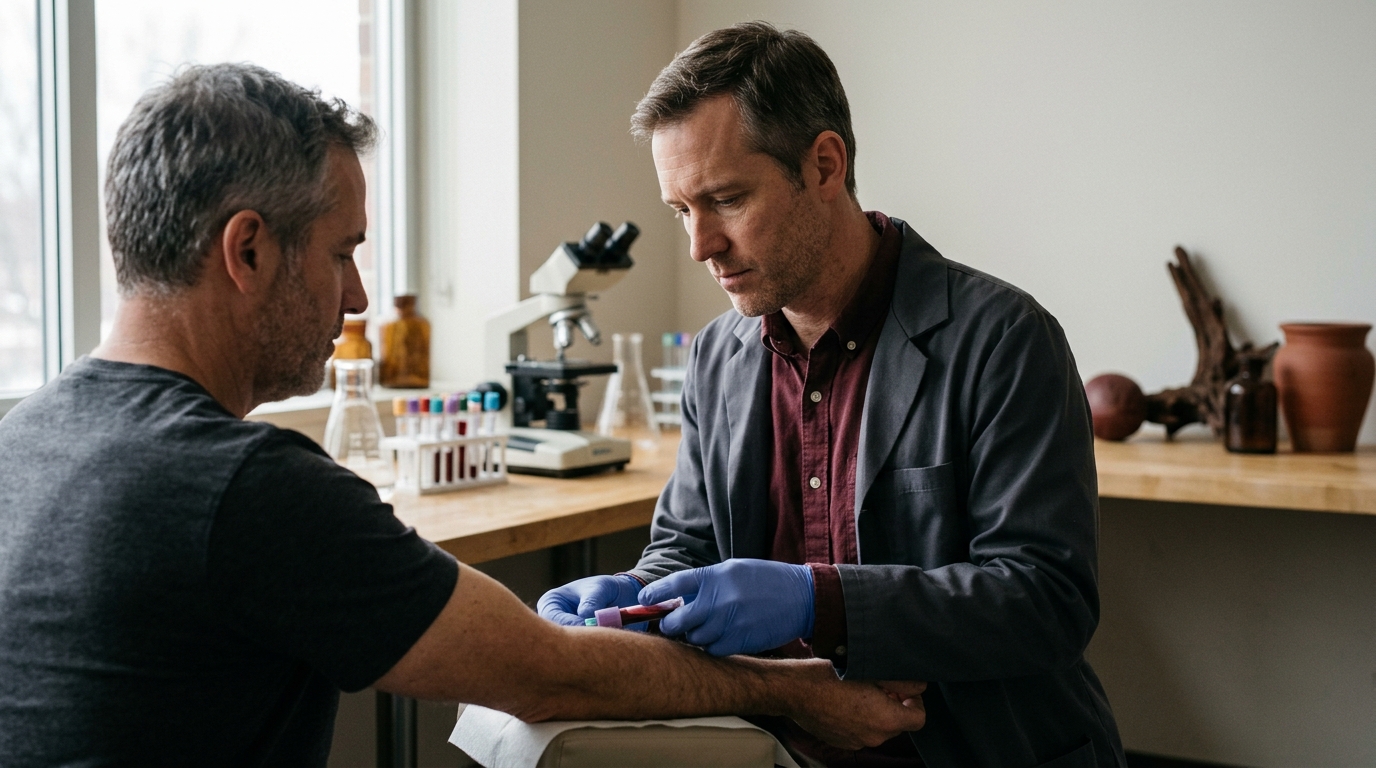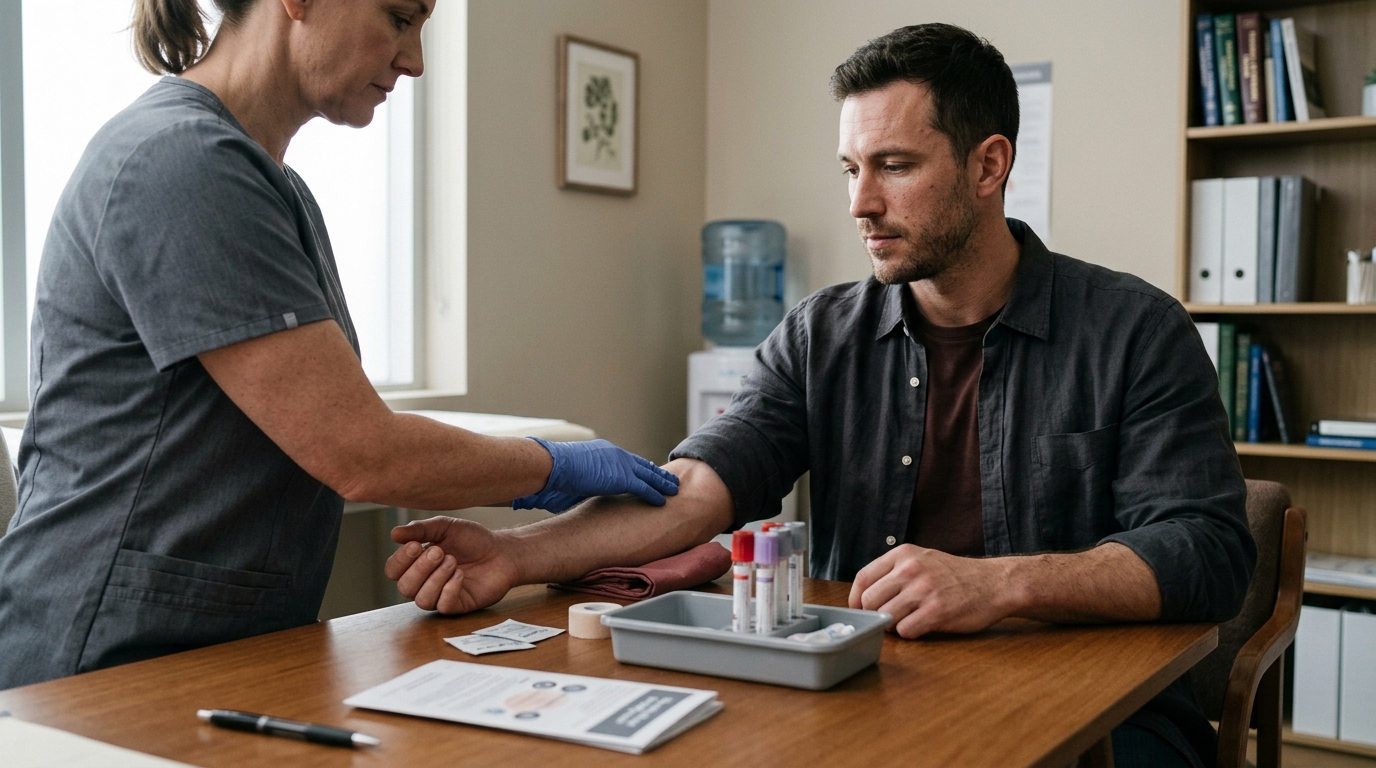

A routine blood test taken during an acute illness or stressful recovery period often shows temporarily suppressed testosterone levels that require careful reassessment.





A low testosterone reading during an acute illness is a temporary physiological response rather than a permanent loss of testicular function. It is not an automatic indicator of lifelong hypogonadism, nor does it mean your endocrine system has permanently failed.
This guide examines how physical trauma, infections, chronic flare-ups, and disrupted sleep alter hormone production. You will learn how the body regulates androgen production under stress, why clinical guidelines advise against testing during illness, and when you should schedule repeat laboratory work to ensure accurate results.
This article is for educational and informational purposes only. It is not intended as personal medical advice, diagnosis, or treatment. Hormone levels, laboratory results, and clinical symptoms must always be evaluated by a qualified healthcare professional in the context of your complete medical history. Never start, stop, or change any medical treatment or hormone therapy based solely on the information provided here.
When the human body encounters acute physiological stress, its survival priorities shift immediately. Energy and metabolic resources are redirected away from reproduction, growth, and tissue building toward immune defense, cellular repair, and inflammatory control.
This adaptive biological response directly affects the hypothalamic-pituitary-gonadal axis. The hypothalamus decreases its pulsatile release of gonadotropin-releasing hormone. As a result, the anterior pituitary gland reduces secretion of luteinizing hormone and follicle-stimulating hormone. Without adequate luteinizing hormone stimulation, the Leydig cells in the testes decrease testosterone synthesis.
Research in acute-care environments illustrates how pronounced this suppression can be. In a study evaluating 55 men admitted to acute-care hospital units, sustained testosterone levels below the standard normal range occurred in 62% of patients. Furthermore, hypogonadotropism was observed in 60% of those men. This demonstrates that acute illness frequently mimics central hypogonadism on standard blood tests.
The magnitude of this drop happens rapidly. A clinical study examining critically ill patients found that average testosterone concentrations in men dropped substantially within the first 24 hours of admission. Specifically, levels fell by 55% following traumatic brain injury, 43% following acute myocardial infarction, and 58% following major elective surgery.
These severe reductions do not indicate that the Leydig cells have lost their intrinsic capacity to produce hormones. In that same critical illness study, testosterone concentrations returned to normal ranges as patients recovered from their underlying conditions.
Evaluating hormone levels during an acute medical event captures a biological stress response rather than your true baseline endocrine function. Understanding the basics of testosterone fundamentals and hormonal function helps clarify why temporary suppression must not be mistaken for permanent organ failure.
Chronic medical conditions introduce ongoing physiological complexity to hormone regulation. Unlike an acute infection that resolves in days or weeks, long-term conditions can create prolonged functional suppression of the hypothalamic-pituitary-gonadal axis.
A key distinction exists between a stable chronic condition and an active inflammatory flare-up. During an acute flare of an autoimmune disorder, inflammatory bowel disease, or severe respiratory illness, inflammatory cytokines rise sharply. These circulating cytokines act directly on the brain and testes to blunt hormone production.
The Endocrine Society identifies systemic illness, severe nutritional deficiencies, chronic opioid use, glucocorticoid therapy, and major organ impairment as significant contributors to functional hypogonadism. Functional hypogonadism refers to low circulating testosterone caused by an underlying medical condition, where the structural integrity of the hypothalamus, pituitary gland, and testes remains intact.
Clinical guidance documents from the Veterans Health Administration emphasize that functional suppression is often reversible. When an underlying condition is treated effectively, caloric deficits are corrected, or suppressive medications are removed, circulating testosterone levels frequently increase without hormone replacement.
Metabolic health plays a substantial role in baseline testosterone regulation. Conditions such as obesity and type 2 diabetes are strongly linked to lower total testosterone. This occurs partly through elevated aromatase activity in adipose tissue and partly through reductions in sex hormone-binding globulin.
If you live with a long-term condition, your hormone status should be evaluated when your health is as stable as possible. Testing during a disease flare-up will almost certainly show lower values than testing during a period of stability and remission.
Sleep architecture and circadian rhythms are intimately tied to male endocrine health. In healthy men who follow a standard diurnal schedule, testosterone production begins to rise shortly after sleep onset. It peaks during the early morning hours, coinciding closely with rapid eye movement sleep cycles.
Because sleep plays such an integral role in daily hormone synthesis, acute or chronic sleep disruption is often suspected of lowering laboratory values. However, scientific evidence regarding sleep loss and testosterone shows nuanced findings that require careful interpretation.
In a controlled clinical study involving healthy young men, restricting sleep opportunities to five hours per night for eight consecutive nights resulted in daytime testosterone reductions of 10% to 15% compared to the fully rested state. The affected participants reported decreases in vigor and mood alongside the lower laboratory values.
Conversely, another controlled trial in healthy young men evaluated five nights of severe sleep restriction alongside six weeks of mild chronic sleep restriction. That investigation found no statistically significant reduction in testosterone concentrations under its tested conditions.
These divergent findings demonstrate that individual responses to sleep loss vary considerably. Laboratory sleep restriction does not automatically translate into a persistent clinical deficiency for every individual.
Sleep timing remains a critical variable for laboratory accuracy. If you work rotating night shifts or experience severe insomnia before a morning blood draw, your diurnal peak may be shifted or blunted. Guidance from the British Columbia testing protocol recommends that individuals with non-standard schedules undergo testing within three hours of waking from their primary sleep period, provided their sleep-wake schedule has been stable.
If you suspect your symptoms stem from poor rest, reviewing lifestyle factors and natural hormone support can help you establish stable sleep habits before pursuing diagnostic testing.
Distinguishing between a temporary biochemical dip and true hypogonadism is the cornerstone of responsible endocrine assessment. A single laboratory reading below a reference range does not constitute a clinical diagnosis.
True clinical hypogonadism requires two elements. First, an individual must demonstrate persistent, unequivocally low testosterone concentrations confirmed across multiple separate morning measurements. Second, those low biochemical values must be accompanied by specific, compatible clinical signs and symptoms.
The American Urological Association guidelines identify a total testosterone level below 300 ng/dL as a reasonable cutoff supporting a diagnosis of testosterone deficiency. However, the guideline explicitly states that this threshold must be paired with clinical symptoms and confirmed with two separate early-morning blood draws.
The Endocrine Society guideline emphasizes a similar framework, utilizing a harmonized lower limit of normal around 264 ng/dL for non-obese young men when measured with CDC-certified assays. Both major clinical bodies stress that isolated numerical values cannot be interpreted in a vacuum.
Transient functional suppression differs fundamentally from organic hypogonadism:
Because functional suppression mimics secondary hypogonadism on standard blood tests, rushing to diagnose a patient during a period of illness often leads to diagnostic errors. A thorough understanding of low testosterone causes and risk factors prevents temporary stress responses from being misclassified as permanent diseases.
A standard hormone evaluation involves more than a single total testosterone measurement. Several interrelated biomarkers provide essential context, especially when illness, weight fluctuations, or medications are present.
Total testosterone measures all circulating testosterone in the bloodstream. This includes hormone bound tightly to sex hormone-binding globulin, hormone bound loosely to albumin, and unbound free hormone.
Total testosterone serves as the initial screening marker in clinical practice. However, because it includes protein-bound fractions, any condition that alters binding proteins will alter total testosterone numbers without necessarily changing the amount of biologically active hormone reaching tissues.
Sex hormone-binding globulin is a glycoprotein produced by the liver that transports sex steroids throughout circulation. Approximately 40% to 70% of circulating testosterone is tightly bound to this protein and is not immediately available to cellular androgen receptors.
Certain medical conditions significantly alter sex hormone-binding globulin concentrations:
When binding globulin drops, total testosterone may appear low on a laboratory report even though the biologically active, unbound hormone remains entirely normal. Conversely, elevated binding globulin can keep total testosterone in a normal range while the active unbound fraction is clinically deficient.
Free testosterone represents the roughly 1% to 3% of circulating hormone that is completely unattached to transport proteins. Bioavailable testosterone includes free testosterone plus the fraction loosely bound to albumin, which can dissociate easily to act on target tissues.
The Endocrine Society recommends assessing free testosterone whenever total testosterone falls near the lower limit of normal, or when a patient presents with a condition known to alter sex hormone-binding globulin. Accurate measurement requires equilibrium dialysis or a validated calculation utilizing total testosterone, binding globulin, and serum albumin levels.
Luteinizing hormone and follicle-stimulating hormone are pituitary gonadotropins that regulate testicular function. Measuring these hormones helps clinicians determine whether a confirmed deficiency stems from the testes or the brain.
During acute physical illness, luteinizing hormone is frequently suppressed alongside testosterone, creating a temporary hypogonadotropic pattern. Checking these markers only makes clinical sense once baseline health has been re-established.
Exploring the broader testosterone testing and biomarkers category can give you a deeper appreciation of how these individual laboratory markers interact.
Determining the exact window for follow-up testing requires clinical judgment rather than following a rigid calendar formula. Major clinical guidelines explicitly advise clinicians against testing during acute illness, but they do not define an identical recovery window for every human scenario.
The Endocrine Society states clearly that diagnostic testing should be avoided in men who are acutely ill or actively recovering from an acute medical condition. However, the guideline leaves the precise duration of recovery to clinical discretion based on the severity of the illness.
A published clinical review on endocrine testing recommends deferring hormone assessment until a patient has returned to their baseline health status for at least two months. The authors of that review carefully note that prospective clinical trials defining the exact recovery timeline of the hypothalamic-pituitary-gonadal axis are limited.
Therefore, a two-month recovery window represents a sensible clinical recommendation rather than a universally mandated guideline rule. A minor viral infection might permit accurate retesting within a few weeks, whereas major abdominal surgery, prolonged hospitalization, or severe systemic trauma may require several months before baseline endocrine regulation returns.
To ensure your repeat testing reflects your true physiological baseline, evaluate whether you meet these clinical criteria before drawing blood:
Rushing to retest while you are still experiencing post-viral fatigue or surgical convalescence frequently produces another misleading result. Giving your regulatory axis adequate time to recover protects you from unnecessary medical interventions.
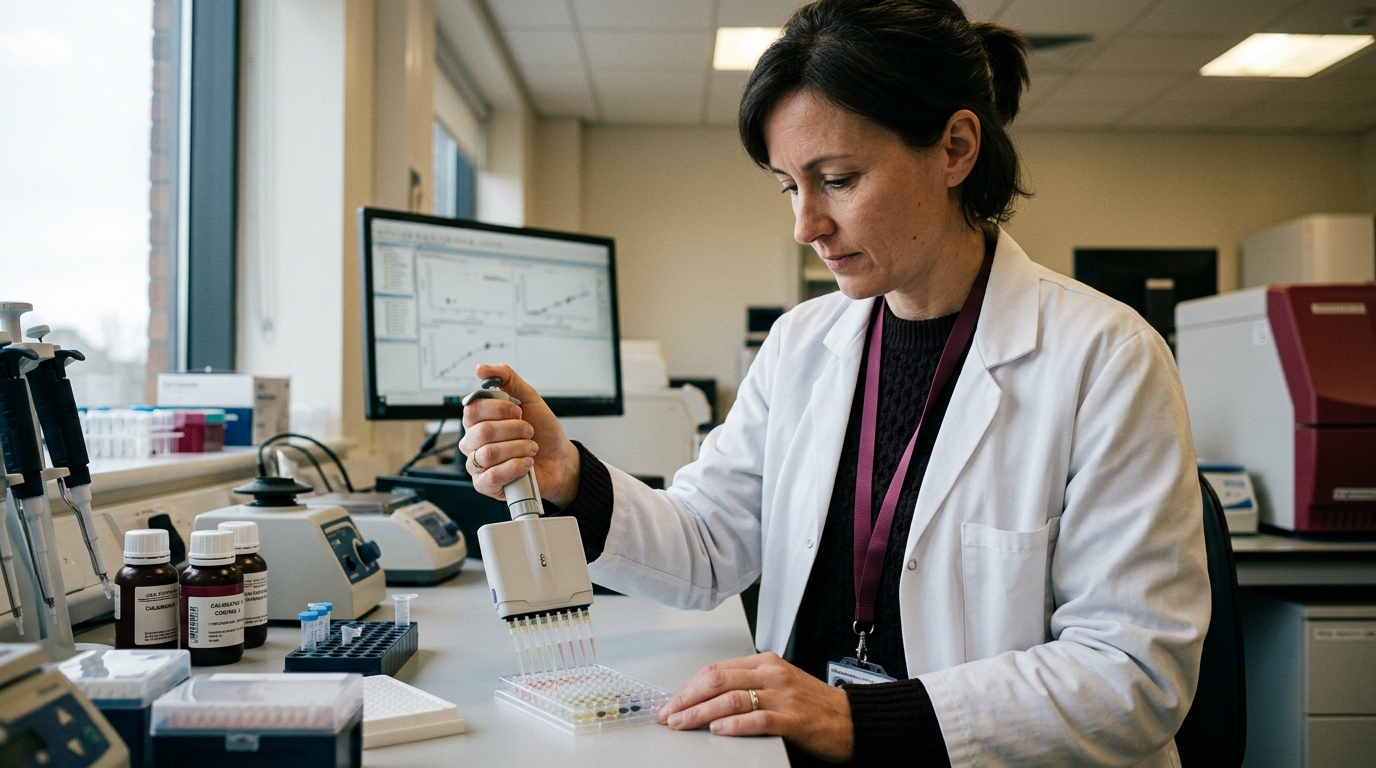
Obtaining an accurate testosterone measurement requires strict adherence to standardized laboratory protocols. Because androgen production follows a pronounced circadian rhythm and responds to nutrient intake, testing under non-standard conditions introduces substantial error.
Both the Endocrine Society and the American Urological Association recommend that testosterone testing be conducted using a fasting blood draw collected early in the morning. For most men following a normal day-night schedule, blood should be drawn between 7:00 AM and 10:00 AM, or within a few hours of waking.
Fasting is a critical requirement. Ingesting food, particularly meals containing carbohydrates or glucose, causes an acute release of insulin that transiently suppresses circulating testosterone concentrations by up to 25%. A non-fasting blood draw drawn in the late afternoon can easily push a healthy man into a falsely deficient range.
Natural day-to-day biological variation represents another reason why single tests are never diagnostic. Guidance published by the Province of British Columbia indicates that healthy adult men experience normal biological fluctuations of 10% to 15% from day to day. Furthermore, successive measurements in the exact same individual can vary by up to 30% due to assay variance and normal physiology.
Because of this natural fluctuation, the Endocrine Society reports that approximately 30% of men who record an initial testosterone level in the hypogonadal range will test completely normal on a subsequent repeat test.
To ensure diagnostic validity, follow these fundamental testing rules:
These rigorous protocols ensure that your laboratory data reflects genuine endocrine physiology rather than procedural artifacts. For further reading on testing logistics, consult this detailed testosterone testing and biomarkers guide.
Evaluating theoretical guidelines becomes much easier when looking at common clinical scenarios. The following examples demonstrate how temporary health events influence hormone testing and how clinicians approach reassessment.
A 52-year-old man is hospitalized with severe bacterial pneumonia. While running broad metabolic panels, an admitting team includes a total testosterone check, which returns at 145 ng/dL alongside low luteinizing hormone.
A 44-year-old man undergoes orthopedic knee reconstruction. Four weeks post-surgery, while still taking prescription opioid pain medications and walking on crutches, he requests hormone testing due to fatigue and low motivation. His total testosterone is 210 ng/dL.
A 38-year-old emergency dispatcher works rotating twelve-hour night shifts. He attends an 8:00 AM blood draw immediately after completing a demanding overnight shift without sleeping. His result comes back at 275 ng/dL.
A 48-year-old man with a body mass index of 34 and type 2 diabetes records a total testosterone reading of 255 ng/dL on a routine morning screening. He reports mild fatigue but maintains normal libido and sexual function.
A 41-year-old man with no acute medical issues, stable sleep patterns, and consistent symptoms of low libido and erectile dysfunction undergoes evaluation. His first fasting morning total testosterone is 220 ng/dL. A confirmatory test drawn three weeks later returns at 235 ng/dL with matching low free testosterone.
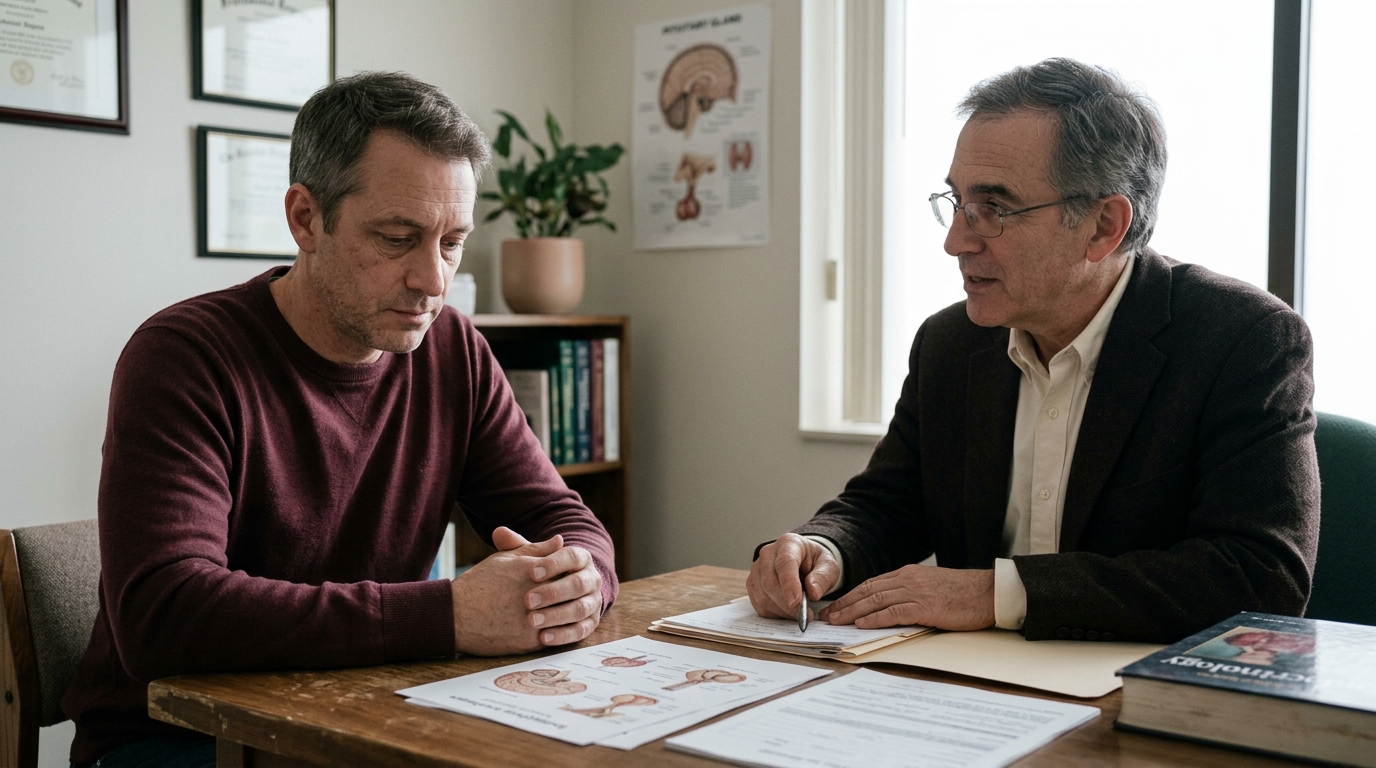
Navigating hormone testing requires close collaboration with a qualified clinician. If you have recently experienced an illness or received an unexpected lab result, bringing structured questions to your appointment can help guide a productive conversation.
Consider raising these key discussion points during your consultation:
A thoughtful clinician will welcome these questions and appreciate your desire to ensure accurate, context-aware laboratory testing. You can read more about evaluating clinical symptoms within our low testosterone educational guides.
Yes. Even mild viral infections stimulate an immune response that elevates circulating inflammatory cytokines. While a minor cold may not cause the dramatic 50% drops seen in intensive care units, it can easily suppress hormone synthesis enough to push a borderline result into an abnormally low range. If you feel unwell, it is best to reschedule your blood draw.
Short courses of medications like prednisone or opioid analgesics can rapidly suppress the release of gonadotropins from the pituitary gland. In most cases, natural production begins to recover within several days to a few weeks after finishing the medication. You should always disclose all recent medications to your clinician before scheduling a hormone panel.
Testosterone production follows a circadian rhythm, reaching its highest concentrations during early morning hours and steadily declining throughout the afternoon and evening. Reference ranges established by clinical laboratories are calibrated specifically to these peak morning hours. An afternoon test may show low values that are completely normal for that time of day.
Clinical guidelines from the Endocrine Society and the American Urological Association clearly state that a diagnosis of hypogonadism requires at least two separate, fasting morning measurements alongside persistent symptoms. You have the right to ask for a confirmatory repeat test once you have fully recovered from your illness before committing to long-term therapy.
Testostra explains testosterone biology, testing, symptoms, lifestyle factors and TRT with careful sourcing and clear clinical limits.



Send us a question, research idea or topic suggestion. Reader questions help shape future Testostra content.
Contact Testostra