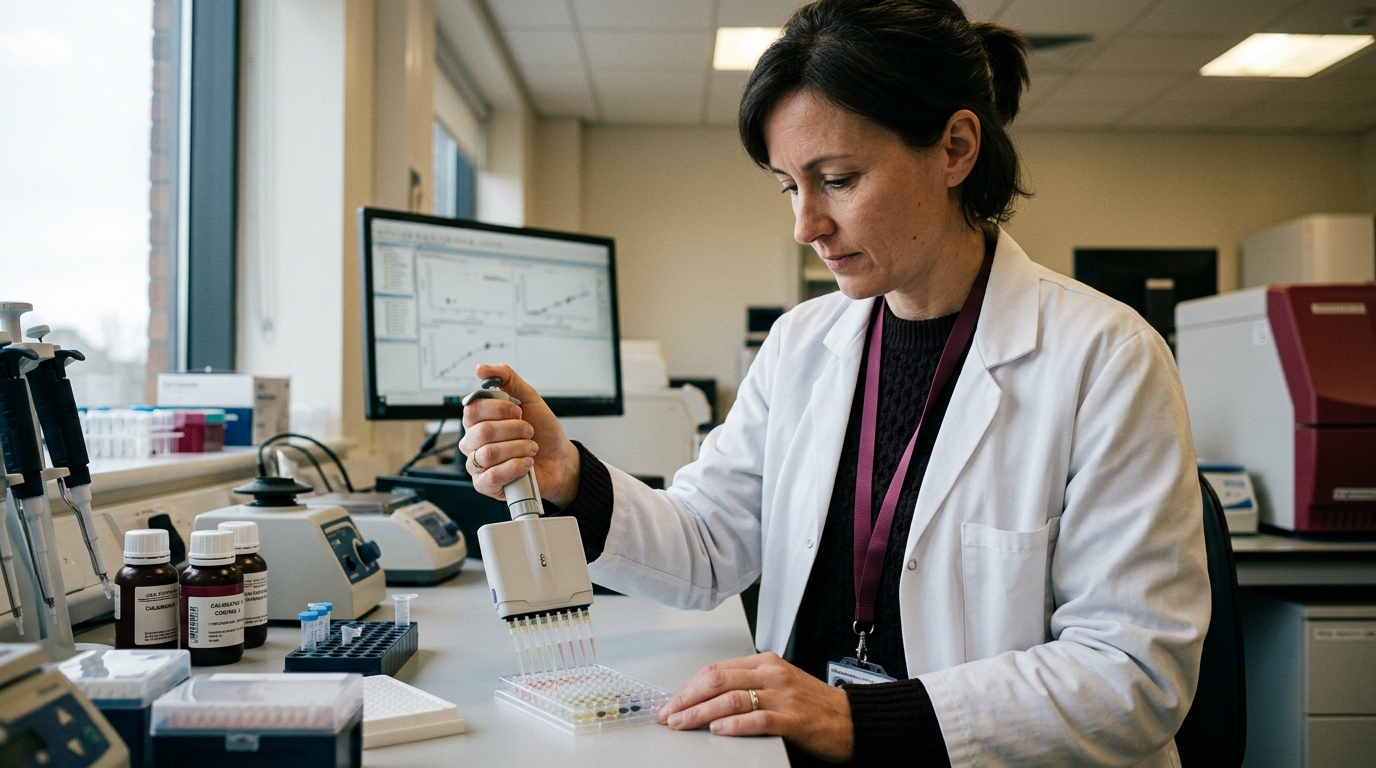

Dihydrotestosterone is produced through enzymatic conversion from testosterone and plays a vital role in local tissue signaling, fetal development, and male puberty.





In popular discussions, dihydrotestosterone is often reduced to a single negative label. Many people view it solely as the cause of male pattern hair loss or prostate enlargement. Others view it as a superior form of testosterone that drives raw physical power. Both viewpoints misunderstand the basic biology of this hormone.
Dihydrotestosterone, commonly known as DHT, is not merely a stronger copy of testosterone circulating in the bloodstream. It operates primarily as a locally produced hormone that acts inside specific tissues. Understanding how DHT works requires looking past simplistic labels and examining the enzymes, tissues, and developmental stages that define its function.
This resource is written for educational and informational purposes only. It does not provide medical advice, diagnosis, or treatment recommendations. Always consult a qualified healthcare professional regarding any medical condition, laboratory test interpretation, or treatment decision.
DHT is a potent steroid hormone classified as an androgen. The human body synthesizes DHT directly from testosterone through a specialized enzymatic reaction. To understand how DHT functions, one must first look at the enzymatic pathways that create it and the receptor interactions that govern its activity.
The conversion of testosterone into DHT is catalyzed by a family of enzymes known as 5-alpha-reductase. In this biochemical reaction, the enzyme reduces the carbon-4, carbon-5 double bond of the testosterone molecule. This structural adjustment permanently alters how the hormone interacts with target cells.
Unlike testosterone, DHT cannot be converted into estrogen. Testosterone can undergo aromatization via the aromatase enzyme to form estradiol. In contrast, DHT is a purely non-aromatizable androgen. This biochemical distinction is crucial because many of the systemic effects traditionally credited to testosterone, such as bone density preservation and lipid regulation, depend partly on its aromatization to estradiol.
The conversion process is not uniform throughout the body because 5-alpha-reductase exists in multiple forms known as isoenzymes. The two most studied forms are type 1 and type 2 5-alpha-reductase.
Type 1 5-alpha-reductase is predominantly expressed in non-genital skin, sebaceous glands, and the liver. It provides a baseline level of peripheral testosterone conversion throughout life. Type 2 5-alpha-reductase is concentrated in genital skin, the prostate gland, seminal vesicles, and hair follicles.
While these isoenzymes have primary locations, their distribution overlaps across various human tissues. Both forms contribute to the total amount of DHT produced. Type 2 plays the most prominent role during early male fetal development and sexual differentiation.
The primary route for DHT production is the classical pathway, where circulating testosterone enters target tissue and meets the 5-alpha-reductase enzyme. However, researchers have identified an additional mechanism called the backdoor pathway.
In the backdoor pathway, the body synthesizes DHT from steroid precursors like progesterone and 17-hydroxyprogesterone without first converting them into testosterone. This alternative pathway is particularly active during specific fetal stages and within certain tissues like the prostate. The presence of the backdoor pathway demonstrates that DHT synthesis is flexible and locally controlled rather than dependent entirely on circulating testosterone levels.
DHT acts by binding to the exact same androgen receptor that testosterone uses. However, DHT binds to the androgen receptor with higher affinity than testosterone and dissociates from the receptor at a much slower rate.
Because of this tighter receptor binding, DHT is often described as a more potent androgen. This shorthand description can be misleading if taken out of context. A higher binding affinity at the cellular level does not mean that DHT is more important than testosterone for all bodily functions. Many vital physiological processes rely entirely on testosterone itself or on its conversion to estradiol.
One of the most frequent misunderstandings in hormone health is assuming that a blood test reflects what is happening inside specific organs. To understand DHT, one must distinguish between endocrine action and intracrine or paracrine action.
Classic endocrine hormones are produced in a single gland, secreted into the bloodstream in large amounts, and transported to distant target tissues. Intracrine and paracrine hormones, by contrast, are synthesized directly within the target tissue to act locally on the producing cell or neighboring cells.
DHT acts primarily as a local, paracrine androgen in adult target organs. Tissues like the prostate and hair follicles take up circulating testosterone and use their own local 5-alpha-reductase enzymes to make DHT on demand. Once produced, much of this DHT acts locally and is metabolized within the tissue rather than spilling out into the systemic circulation.
The distinction between local and systemic hormone levels is clearly visible in the prostate gland. Research published in Endocrine Reviews demonstrates that intraprostatic concentrations of DHT are roughly ten times higher than DHT concentrations found in circulating blood.
The prostate maintains its own local androgen microenvironment independent of blood levels. In clinical studies, administering testosterone gel increased serum DHT concentrations by threefold to fivefold without causing any significant change in intraprostatic DHT levels. Similarly, direct administration of DHT that increased serum DHT roughly sevenfold failed to alter prostatic DHT concentrations. The prostate actively regulates its internal hormone environment through local synthesis and degradation.
A similar disconnect exists between circulating blood levels and skin tissue. Clinical reviews show little to no correlation between circulating serum DHT concentrations and the DHT concentrations measured within skin biopsies.
Two individuals can have identical blood DHT levels while having vastly different local hormone concentrations in their scalp or skin. Local enzyme expression, receptor density, and metabolic breakdown determine tissue exposure. Relying on a routine blood test to judge scalp or prostate hormone activity represents a major oversimplification. You can learn more about how hormones behave across different bodily systems in our guide to testosterone fundamentals and hormonal function.
DHT is an indispensable driver of human biological development. Its primary physiological mission occurs before birth and during the transition through puberty.
During the early stages of fetal development, the presence of the Y chromosome triggers the formation of the testes. These fetal testes begin producing testosterone, which initiates male sexual differentiation.
Testosterone and DHT divide their responsibilities during this critical window:
Without local 5-alpha-reductase type 2 activity to convert testosterone into DHT, the external tissues do not receive the necessary androgenic signals. As a result, external masculinization remains incomplete even when fetal testosterone production is entirely normal.
The essential nature of DHT in early development is demonstrated by a rare genetic condition known as 5-alpha-reductase type 2 deficiency. This condition is caused by pathogenic variants in the SRD5A2 gene and follows an autosomal recessive inheritance pattern.
Individuals with a 46,XY karyotype and this genetic variant are born with internal male structures because their testosterone production is functional. However, their external genitalia are often undervirilized at birth. Clinical case series report that external masculinization scores in these infants range widely from 2 to 9 on a 12-point scale, with a median score of 6. Some infants present with ambiguous genitalia, while others appear predominantly female at birth.
When individuals with 5-alpha-reductase type 2 deficiency reach puberty, their circulating testosterone levels rise substantially. This dramatic surge in testosterone triggers a secondary wave of virilization.
During puberty, these individuals often experience:
This pubertal development occurs partly through direct testosterone action and partly through peripheral conversion of testosterone to DHT by the intact type 1 5-alpha-reductase enzyme. This human genetic model proves that while DHT is strictly mandatory for fetal external genital formation, adult virilization involves a cooperative interplay between testosterone, DHT, and multiple enzyme pathways.
In adult men, DHT continues to exert specific effects across a variety of tissues. Its actions are highly localized and produce distinct physiological outcomes depending on the target organ.
The relationship between DHT and hair growth is famously contradictory. DHT stimulates the growth of coarse facial and body hair, yet it can trigger the miniaturization of hair follicles on the scalp in genetically susceptible individuals.
In androgenetic alopecia, hair follicles on the crown and temples undergo a progressive shortening of their growth phase. The official FDA labeling for finasteride notes that balding scalp tissue in men with pattern hair loss contains miniaturized follicles and significantly higher amounts of DHT compared to non-balding scalp areas.
However, DHT alone does not automatically cause hair loss. The primary determinant of pattern hair loss is the genetic sensitivity of individual hair follicles to androgens. Men with low androgen receptor sensitivity in their scalp can maintain a full head of hair despite high androgen levels, while men with high sensitivity may experience follicle miniaturization even with modest androgen levels.
The prostate gland remains dependent on androgens throughout adult life. Local DHT synthesis supports normal glandular structure and secretory function.
As men age, the prostate often undergoes non-malignant cellular proliferation known as benign prostatic hyperplasia. Type 2 5-alpha-reductase is heavily expressed within the stromal and epithelial cells of the prostate. Because intraprostatic DHT drives cellular signaling pathways that support tissue growth, suppressing local DHT synthesis is a standard clinical strategy for managing urinary symptoms caused by an enlarged prostate.
The skin contains high levels of type 1 5-alpha-reductase, especially within sebaceous glands. These glands produce sebum, an oily substance that lubricates and protects the skin barrier.
DHT stimulates sebaceous gland proliferation and increases sebum synthesis. During puberty, elevated androgen levels can lead to sebum overproduction, which contributes to acne development. In adult skin, balanced local DHT synthesis helps maintain the skin barrier and supports epidermal thickness.
Testosterone is widely recognized for its beneficial effects on bone mineral density and adipose tissue distribution. However, these benefits do not rely primarily on DHT.
To maintain bone mineral density and regulate visceral fat mass, testosterone must be converted into estradiol by the aromatase enzyme. Because DHT cannot undergo aromatization, direct administration of non-aromatizable androgens often fails to support healthy bone remodeling or normal lipid profiles. The systemic maintenance of bone and metabolic health represents a domain where testosterone and estrogen dominate, while DHT plays a limited role.
A widespread myth in fitness and wellness circles is that testosterone must convert into DHT to produce muscle hypertrophy and drive male sexual desire. Rigorous clinical trials have tested this assumption directly.
To determine whether DHT conversion is necessary for testosterone's anabolic effects, researchers conducted a randomized, double-blind clinical trial published in the Journal of the American Medical Association. The trial enrolled 139 healthy young men, of whom 102 completed a 20-week intervention.
The participants received weekly injections of graded testosterone enanthate doses:
Each participant was simultaneously randomized to receive either 2.5 mg of dutasteride daily or a matching placebo. Dutasteride is a potent dual 5-alpha-reductase inhibitor that blocks both type 1 and type 2 enzymes, resulting in profound systemic DHT suppression.
The results of the JAMA trial provided clear evidence regarding muscle anabolism. Increases in fat-free mass and thigh muscle volume were directly proportional to the dose of testosterone administered. Crucially, there was no statistically significant difference in muscle mass gains between the men taking dutasteride and those taking the placebo.
Similarly, gains in leg press strength, chest press strength, and muscle power did not differ between the DHT-suppressed group and the control group. Changes in hematocrit, which measures red blood cell production, also tracked the testosterone dose identically in both cohorts.
The clinical trial established that conversion of testosterone to DHT is not essential for mediating testosterone-induced increases in muscle size, strength, or erythropoiesis under these experimental conditions. Testosterone acts directly on the androgen receptors in skeletal muscle tissue to stimulate protein synthesis.
The same clinical trial evaluated sexual desire, erectile function, and overall sexual activity across all treatment arms. The researchers found no significant differences in reported sexual function between the men who received dutasteride and those who received placebo across all testosterone dosage groups.
However, clinical experience indicates that human sexual function is complex and multifactorial. Comprehensive reviews in Endocrine Reviews point out that while broad trial averages showed no divergence, a small subset of men taking 5-alpha-reductase inhibitors in clinical practice report adverse sexual symptoms, such as reduced libido or erectile changes. These adverse effects typically occur in fewer than 10% of users.
Because altering 5-alpha-reductase activity disrupts the broader balance of testosterone, estradiol, and neurosteroids, sexual side effects cannot be attributed exclusively to low DHT in isolation. DHT is not the sole regulator of male sexual health, nor is it completely irrelevant. For a wider perspective on clinical evaluations, review our overview of evaluating low testosterone symptoms.
When reviewing research on DHT, it is vital to evaluate the quality of the scientific evidence and understand the diagnostic limits of laboratory testing. Medical conclusions must separate well-designed interventional trials from observational correlations.
The scientific understanding of DHT rests on different tiers of clinical evidence:
In clinical practice, ordering an isolated blood test for DHT rarely provides meaningful clinical answers. Routine blood testing measures circulating hormone concentrations, which do not reflect the hormone levels inside target tissues.
Because skin, hair follicles, and the prostate produce and metabolize DHT locally, serum DHT operates as an unreliable biomarker for tissue-specific androgen action. A patient may present with severe male pattern hair loss while exhibiting perfectly normal or low serum DHT. Conversely, another individual may have elevated serum DHT with no signs of hair thinning or prostate symptoms.
Hormones do not function in isolation. When clinicians assess male hormonal health, an isolated DHT number offers little utility without a complete clinical context.
A comprehensive hormonal evaluation includes:
Interpreting these values requires repeat morning blood testing, symptom correlation, and a thorough medical history. To explore these testing parameters in greater detail, see our resource on understanding testosterone lab panels.
Because DHT plays a central role in benign prostatic hyperplasia and androgenetic alopecia, pharmacological inhibition of 5-alpha-reductase is widely utilized in modern medicine.
Two primary 5-alpha-reductase inhibitors are approved for clinical use: finasteride and dutasteride. These medications reduce DHT synthesis by binding to and inactivating the 5-alpha-reductase enzymes.
Finasteride is a selective inhibitor that targets the type 2 isoenzyme. At a standard 1 mg daily dose used for hair loss, finasteride suppresses serum DHT by approximately 65% within 24 hours of administration. At the 5 mg daily dose used for prostate enlargement, finasteride suppresses serum DHT by roughly 70.8%.
Dutasteride is a dual inhibitor that targets both type 1 and type 2 isoenzymes. Clinical pharmacology trials show that a 0.5 mg daily dose of dutasteride reduces serum DHT by a mean of 94.7%. Long-term FDA safety data indicate that dutasteride maintains serum DHT reductions of 94% at year one, 93% at year two, and 95% across three to four years of consistent use.
While both medications achieve substantial reductions in circulating blood DHT, their impact on local tissue concentrations is distinct. Dutasteride suppresses scalp and prostate DHT to a greater degree than finasteride due to its inhibition of the type 1 enzyme present in skin and liver tissues.
However, even near-complete suppression of circulating DHT does not fully eliminate androgenic activity within tissues. Target cells continue to respond to circulating testosterone, which remains available to bind androgen receptors directly. Furthermore, residual local enzyme activity can still produce trace amounts of DHT within the tissue microenvironment.
Inhibiting the 5-alpha-reductase enzyme alters wider steroid metabolism. When the conversion pathway from testosterone to DHT is blocked, the substrate testosterone accumulates.
This metabolic redirection typically leads to:
These downstream hormonal shifts explain why 5-alpha-reductase inhibition is not a clean, isolated suppression of DHT alone. Clinicians must consider these secondary hormonal movements when evaluating patient responses to therapy. For more on clinical treatments and emerging therapies, read our review of testosterone replacement therapy and clinical research.
To evaluate how DHT interacts with the endocrine system, clinicians assess multiple interconnected biomarkers. The following breakdown explains these parameters without providing personal diagnostic criteria.
Total testosterone measures all testosterone circulating in the bloodstream, including hormone bound to proteins and unbound hormone. It serves as the primary substrate from which peripheral tissues synthesize DHT. Without adequate total testosterone production by the testes, downstream DHT production naturally declines.
The majority of circulating testosterone is tightly bound to SHBG or loosely bound to albumin. Only the unbound free testosterone fraction easily crosses cell membranes to access the intracellular 5-alpha-reductase enzymes. Measuring free testosterone provides insight into how much active substrate is actually available to target tissues like the skin and prostate.
Serum DHT reflects the small portion of locally synthesized DHT that escapes tissue metabolism and enters the bloodstream. Reference ranges for serum DHT are significantly lower than those for total testosterone. While serum DHT testing is valuable for diagnosing rare congenital enzyme deficiencies, it provides limited information regarding everyday hair loss or prostate status.
SHBG is a liver-produced glycoprotein that binds sex steroids with varying affinities. DHT binds to SHBG with an even higher affinity than testosterone. Consequently, fluctuations in SHBG concentrations directly influence the clearance rate and bioavailability of both androgens in systemic circulation.
Estradiol is the primary estrogen in men, synthesized via the aromatization of testosterone. Because DHT cannot convert to estradiol, monitoring estradiol levels helps clinicians determine whether a patient's symptoms stem from an imbalance between non-aromatizable and aromatizable sex steroids.
To learn more about diagnostic testing methodologies, visit our complete index on hormone testing and biomarker assessment.
Navigating questions about DHT, hair retention, prostate health, and hormone levels requires an open and informed dialogue with a medical provider. The following questions provide a constructive framework for your next clinical appointment.
Understanding the biological realities of dihydrotestosterone allows men to look past oversimplified hormone myths and make informed healthcare decisions alongside their medical providers.
Testostra explains testosterone biology, testing, symptoms, lifestyle factors and TRT with careful sourcing and clear clinical limits.



Send us a question, research idea or topic suggestion. Reader questions help shape future Testostra content.
Contact Testostra