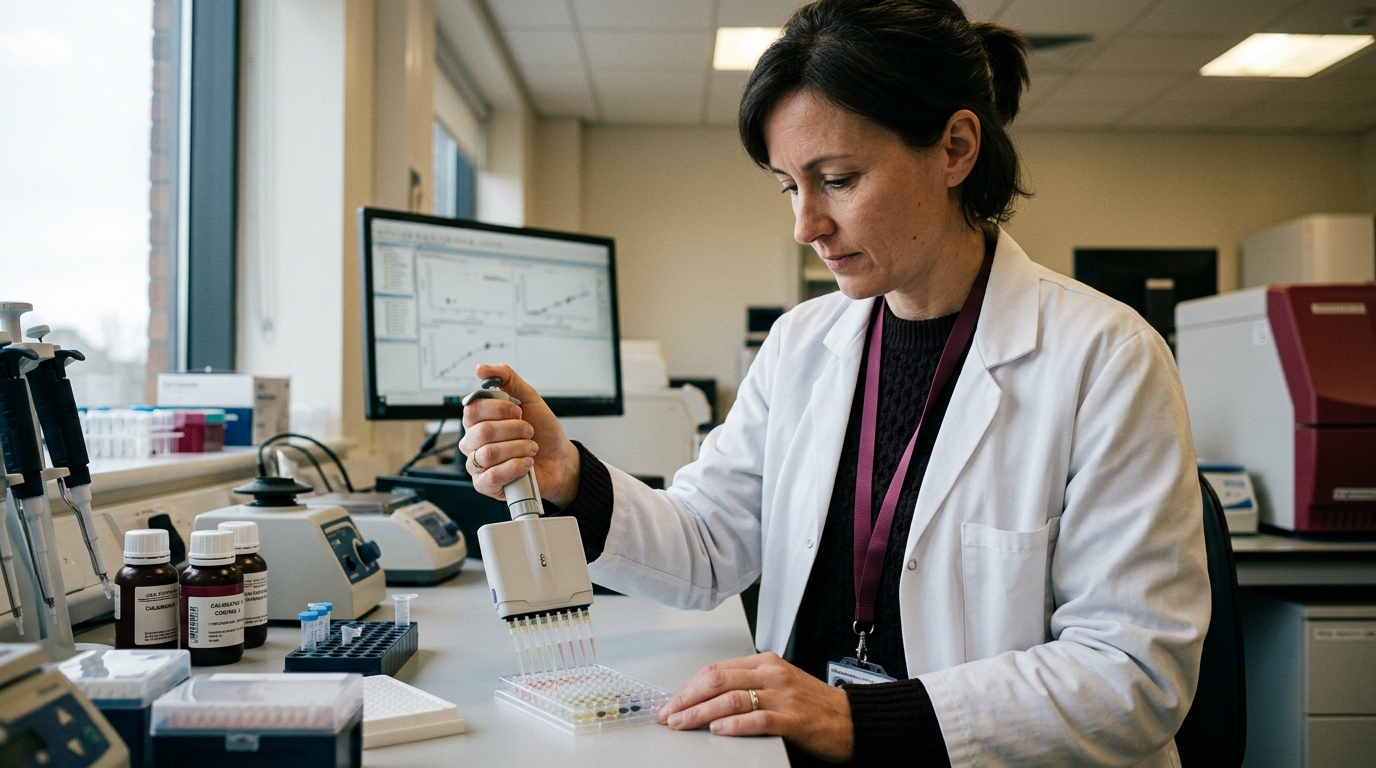

A total testosterone level below 300 ng/dL combined with clinical symptoms defines hypogonadism and determines whether a patient requires hormone replacement therapy.





A 48-year-old man sits in an exam room reviewing his recent lab report. His total testosterone returned at 270 ng/dL, below the standard reference range. He has felt fatigued, noticed a reduced sex drive, and struggled with workout recovery for several months. In online forums and commercial clinic advertisements, the path forward seems clear, immediate, and simple. In formal clinical practice, however, that single number is only the beginning of an extensive diagnostic evaluation.
Testosterone replacement therapy, commonly known as TRT, is a specific medical treatment designed for a diagnosed endocrine disorder. It is not an anti-aging tonic, a body composition shortcut, or a universal solution for low energy. Clinical guidelines emphasize that replacing testosterone is appropriate only when specific clinical symptoms align with confirmed biochemical deficiencies. This guide explains how testosterone replacement therapy works, the diagnostic standards required before starting, what the therapy can achieve, and where its clinical limits lie.
This article is for educational and informational purposes only. It does not provide personalized medical advice, formal clinical diagnosis, or individualized treatment protocols. Testosterone replacement therapy is a prescription medical treatment that carries distinct clinical indications, potential risks, and lifelong monitoring requirements. Always consult a qualified medical professional, such as a board-certified endocrinologist or urologist, to evaluate your symptoms, order appropriate laboratory testing, and discuss personalized care options.
To understand how testosterone replacement works, you must first understand the medical condition it treats. Male hypogonadism occurs when the body cannot produce sufficient testosterone, sperm, or both. This deficiency can stem from problems within the testes themselves or from disrupted signaling within the brain. TRT is designed to restore circulating hormone levels back into a normal physiological range.
Testosterone replacement therapy supplies the body with exogenous testosterone, which is hormone manufactured outside the body. Its sole clinical purpose is to induce and maintain secondary sex characteristics and correct symptoms caused by true hormone deficiency. It acts as a physiological substitute for an absent or impaired internal biological process.
TRT is not a performance-enhancing regimen designed to push hormone concentrations into supraphysiological territory. Pushing levels beyond normal physiological ranges introduces significant health risks without providing legitimate medical benefits. True replacement seeks only to recreate normal, healthy circulating hormone concentrations. Learning about testosterone fundamentals and hormonal function helps clarify how the body uses these baseline hormone levels.
Medical guidelines define hypogonadism as a distinct clinical syndrome. It is not simply a low number on a laboratory printout. A proper diagnosis requires the presence of recognizable symptoms paired with consistently low circulating hormone levels. The Endocrine Society explicitly advises clinicians against diagnosing hypogonadism based on laboratory results alone.
Without compatible physical or sexual symptoms, a low laboratory reading does not warrant medical intervention. Similarly, having common symptoms like fatigue or low mood without low hormone levels points to a different underlying medical issue. Both pieces of the puzzle must be present simultaneously.
The distinction between medical replacement and physical enhancement is fundamental to medical practice. Medical replacement aims to alleviate a documented hormone deficiency and restore physiological balance. It operates within carefully monitored safety parameters established by major medical societies.
Enhancement involves administering high doses of hormones to build muscle, reduce fat, or boost athletic performance beyond natural human limits. This practice falls entirely outside accepted clinical guidelines and carries serious health risks. Legitimate medical therapy never aims for supraphysiological hormone levels.
Diagnosing testosterone deficiency requires a deliberate, step-by-step clinical process. Because hormone levels fluctuate throughout the day and react to external stressors, medical organizations have created rigorous testing standards. A single blood draw is never sufficient to establish a lifelong medical diagnosis.
A clinician begins the diagnostic process by evaluating clinical history and physical symptoms. The symptoms of testosterone deficiency are often divided into specific and nonspecific categories. Specific signs provide strong clinical clues, while nonspecific symptoms require careful differential diagnosis.
Because nonspecific symptoms can stem from thyroid disorders, depression, sleep apnea, or chronic stress, clinicians must evaluate the whole patient. Routine screening of the general male population without symptoms is explicitly discouraged by clinical guidelines. Exploring the broad landscape of low testosterone signs and risk factors provides essential context for these clinical distinctions.
Testosterone production follows a distinct daily circadian rhythm in healthy men. Levels peak in the early morning hours, typically between 7:00 AM and 10:00 AM, and decline gradually toward the evening. This diurnal variation is especially pronounced in younger and middle-aged men.
To obtain an accurate baseline, blood draws must occur in the early morning while fasting. Testing in the afternoon can produce falsely low readings that misrepresent a man's true hormonal status. Acute illnesses, poor sleep, extreme physical stress, and recent meals can also temporarily suppress circulating levels.
The American Urological Association suggests a total testosterone value below 300 ng/dL as a reasonable cutoff supporting a deficiency diagnosis. However, this number is a clinical guidepost rather than an absolute biological boundary. A level of 295 ng/dL does not automatically mean a patient needs treatment, just as a level of 305 ng/dL does not rule out hormonal issues.
The Endocrine Society emphasizes using accurate, standardized assays and rigorously derived reference ranges. Clinicians must interpret total testosterone numbers alongside clinical symptoms and binding proteins. The numerical cutoff serves to support clinical judgment, not replace it.
Hormone levels can vary significantly from one week to the next due to transient lifestyle factors. An acute viral illness, a week of severe sleep deprivation, or significant psychological stress can temporarily lower testosterone. Treating a patient based on a single low test risks prescribing unnecessary medication for a temporary dip.
Both the American Urological Association and the Endocrine Society require confirmation through repeat testing. A diagnosis should only be made after at least two separate morning fasting blood tests show low levels. This standard protects patients from lifelong medical therapies they may not actually need.
Once repeat testing confirms a deficiency, the medical workup must determine why hormone levels are low. Testosterone production depends on a continuous communication loop between the brain and the testes. Identifying where this system has broken down dictates the appropriate medical approach.
The control center for male hormone production is the hypothalamic-pituitary-gonadal axis. The hypothalamus in the brain secretes gonadotropin-releasing hormone in rhythmic pulses. This signal prompts the pituitary gland to release two essential messenger hormones into the bloodstream.
These messenger hormones are luteinizing hormone, known as LH, and follicle-stimulating hormone, known as FSH. Luteinizing hormone travels to the testes and instructs the Leydig cells to produce testosterone. Follicle-stimulating hormone acts on the Sertoli cells within the testes to support sperm production.
Primary hypogonadism occurs when the failure originates within the testes themselves. In this scenario, the Leydig cells cannot produce adequate testosterone despite receiving strong hormonal signals from the brain. The brain detects the lack of circulating testosterone and increases its signaling efforts.
As a result, a blood test for primary hypogonadism reveals low testosterone alongside elevated LH and FSH levels. Causes of primary failure include genetic conditions like Klinefelter syndrome, undescended testicles, physical trauma, radiation, chemotherapy, or severe infections like mumps orchitis. Understanding these distinctions is fundamental to mastering testosterone basics.
Secondary hypogonadism occurs when the problem lies in the hypothalamus or the pituitary gland. In this case, the brain fails to produce enough LH and FSH to stimulate the testes. Even though the testicular tissue may be healthy, it remains inactive due to the absence of upstream hormonal signals.
Laboratory tests in secondary hypogonadism show low testosterone accompanied by inappropriately normal or low LH and FSH levels. Causes can include pituitary tumors, elevated prolactin levels, chronic opioid use, severe systemic illness, major obesity, or prior use of anabolic steroids. Further evaluation, such as pituitary imaging or iron studies, is often necessary to uncover the root cause.
A thorough endocrine evaluation involves measuring several key biomarkers to build an accurate clinical picture. Relying solely on total testosterone can provide an incomplete or misleading assessment.
When SHBG levels are unusually high or low, total testosterone may not reflect the amount of biologically active hormone. Measuring or calculating free testosterone helps clinicians evaluate men with obesity, liver conditions, or thyroid abnormalities. A complete overview is available in our guide to testosterone testing and biomarkers.
Testosterone is an essential metabolic and reproductive hormone, but it is not a panacea. Clear clinical boundaries exist regarding what replacement therapy can realistically achieve. Managing expectations prevents patients from pursuing hormone therapy for problems it cannot solve.
When prescribed for true hypogonadism, TRT reliably induces and maintains secondary sexual characteristics. It supports normal bone mineral density, helps preserve lean muscle mass, and promotes healthy red blood cell production. It can also improve sexual desire, enhance erectile function, and reduce central adiposity in deficient men.
Patients with documented deficiency often report improvements in daily energy, mental clarity, and overall sense of vitality. These benefits represent the restoration of normal physiological function rather than an artificial boost. The therapy simply resolves the functional deficit caused by the hormone shortage.
Many men with type 2 diabetes and metabolic syndrome have low circulating testosterone levels. This association has led some to believe that TRT can serve as a primary treatment for metabolic conditions. However, major medical guidelines urge caution regarding these claims.
The Endocrine Society explicitly recommends against using testosterone therapy as a method to improve glycemic control in men with type 2 diabetes. While restoring normal hormone levels may modestly influence body composition, it cannot replace established diabetes therapies, dietary changes, and regular physical activity. Hormone therapy is not an approved or effective substitute for standard metabolic medical care.
Circulating testosterone levels gradually decline as men age, dropping by approximately one percent per year after age 30. This gradual reduction is often referred to as age-related low testosterone or late-onset hypogonadism. It is frequently accompanied by common signs of aging, such as reduced stamina and mild joint stiffness.
The Endocrine Society advises against routinely prescribing testosterone to all men aged 65 or older simply because their levels are low. Instead, clinical guidelines recommend an individualized approach. Treatment should be considered only when older men display significant deficiency symptoms, have repeatedly low morning measurements, and understand the potential risks.
One of the most important biological effects of exogenous testosterone is its impact on fertility. When a man takes external testosterone, the brain senses the high circulating levels and shuts down internal hormone production. The hypothalamus stops releasing GnRH, and the pituitary halts secretion of LH and FSH.
Without FSH and internal testicular testosterone production, the testes cease producing sperm within a few months. This often results in severe oligospermia or complete azoospermia, leading to temporary or prolonged infertility. The Endocrine Society recommends against initiating TRT in any man actively planning to conceive in the near term. Alternative medical options that preserve testicular function must be considered for men wishing to maintain fertility.
Before starting hormone replacement, clinicians must perform a thorough safety evaluation. Testosterone influences multiple organ systems, including the prostate, bone marrow, and cardiovascular system. Certain preexisting health conditions make starting therapy unsafe.
Major clinical guidelines from the Endocrine Society and the American Urological Association outline clear clinical cautions. These safety criteria help protect patients from serious medical complications.
Cardiovascular safety requires careful pre-treatment assessment. Men who have experienced a myocardial infarction, unstable angina, or a stroke within the previous six months should not start testosterone replacement. The cardiovascular system requires time to stabilize before introducing therapies that influence vascular dynamics.
For men with well-managed chronic cardiovascular conditions, therapy may be considered after a thorough risk assessment. Clinicians evaluate lipid panels, blood pressure control, and overall cardiovascular risk before prescribing treatment.
Testosterone naturally stimulates erythropoiesis, which is the bone marrow process that manufactures red blood cells. In some men, this stimulation leads to erythrocytosis, an abnormal elevation in red blood cell volume. When hematocrit exceeds 54 percent, the blood thickens, potentially increasing the risk of vascular occlusions.
Testosterone can also worsen untreated obstructive sleep apnea, potentially through central neuromuscular mechanisms. Men with severe daytime sleepiness, loud snoring, or witnessed apneas should undergo sleep studies and initiate CPAP therapy before starting TRT. Additionally, men with severe urinary hesitancy from benign prostatic hyperplasia must be monitored closely to ensure treatment does not worsen urinary obstruction.
Testosterone does not cause prostate cancer, but prostate tissue is androgen-sensitive. Administering testosterone to a man with an occult, androgen-dependent prostate tumor can accelerate its growth. Therefore, evaluating baseline prostate health is a mandatory step in the diagnostic process.
Clinicians assess prostate health using a digital rectal examination and a baseline serum PSA blood test. Any palpable irregularity or suspicious PSA elevation requires an immediate urological referral. Therapy can proceed only after a specialist confirms that no malignant disease is present.
The relationship between testosterone therapy and cardiovascular health has been debated extensively in medical literature over the past two decades. Early observational studies raised concerns about heart attacks and strokes, prompting regulatory reviews. Recent high-quality clinical trials have provided clearer, more nuanced answers.
To resolve lingering cardiovascular safety questions, researchers conducted the landmark TRAVERSE trial, published in the New England Journal of Medicine. This massive, randomized, double-blind, placebo-controlled study enrolled over 5,000 men aged 45 to 80 with confirmed hypogonadism and preexisting cardiovascular disease or elevated cardiovascular risk.
The trial evaluated whether daily transdermal testosterone increased major adverse cardiovascular events (MACE), including cardiovascular death, nonfatal heart attacks, and nonfatal strokes. The results demonstrated that testosterone replacement was noninferior to placebo regarding MACE. Men receiving physiological replacement did not experience a higher rate of major cardiac events compared to those on placebo.
While the TRAVERSE trial provided reassuring safety data, its conclusions must be interpreted accurately. The study evaluated men with documented clinical hypogonadism using transdermal gel to maintain physiological hormone levels. Its findings cannot be applied to younger men using high doses for bodybuilding or athletic performance.
Furthermore, noninferiority in a clinical trial does not mean testosterone is a cardiovascular preventive medicine. It simply means that replacing deficient hormones back to normal ranges did not increase major cardiovascular events in the studied group. Understanding the broader field of TRT and emerging research helps put these landmark trial findings into proper context.
Following the publication of the TRAVERSE trial, the United States Food and Drug Administration updated its regulatory guidance. The FDA removed the boxed warning regarding major adverse cardiovascular outcome risks from approved testosterone products. However, the agency retained its limitation-of-use statements regarding age-related hypogonadism.
Importantly, the FDA maintained a class-wide safety warning regarding blood pressure increases. Postmarket ambulatory blood pressure monitoring studies confirmed that testosterone products can cause modest elevations in blood pressure. Clinicians must monitor blood pressure regularly after starting therapy and adjust antihypertensive medications when necessary.
In male health education, it is critical to separate established clinical consensus from preliminary research. Clinical practice guidelines from organizations like the Endocrine Society and the American Urological Association are built on rigorous systematic reviews of high-quality trial data. They provide the gold standard for clinical decision-making.
Observational studies and small pilot trials frequently explore novel uses for testosterone, such as cognitive support or joint health. While these early findings are scientifically interesting, they do not carry the evidence weight of large randomized controlled trials. Safe clinical practice relies on established, peer-reviewed clinical guidelines rather than early observational hypotheses.
Testosterone replacement therapy is not a one-time intervention. It is an ongoing medical therapy that requires choosing an appropriate delivery method and maintaining a regular monitoring schedule. Consistent medical supervision ensures the treatment remains effective and safe over time.
Testosterone cannot be swallowed as a standard unmodified oral pill because the liver rapidly breaks it down during first-pass metabolism. Clinicians and patients choose among several FDA-approved delivery methods based on patient preference, lifestyle, cost, and tolerability.
Each delivery method possesses unique pharmacokinetic properties. Clinicians help patients select the option that best fits their daily routine while achieving stable physiological hormone levels.
After starting therapy, clinicians schedule regular follow-up visits to evaluate treatment efficacy. The first comprehensive assessment typically occurs between three and six months after initiating treatment. During this visit, the clinician reviews symptom improvement, evaluates treatment adherence, and checks for potential side effects.
If a patient shows no symptomatic improvement despite achieving target hormone levels, the clinician must reevaluate the diagnosis. Persistent fatigue or low libido with normal testosterone levels indicates that another underlying health condition is responsible. Continuing hormone therapy without demonstrable clinical benefit is not recommended.
Long-term safety surveillance involves regular blood testing to monitor organ systems affected by testosterone. These lab checks help identify potential side effects before they cause clinical symptoms.
If hematocrit rises above 54 percent, clinicians may adjust the testosterone dosage, switch delivery methods, or temporarily pause therapy until levels normalize. Regular laboratory surveillance protects patients from unnecessary hematologic and cardiovascular stress.
Prostate safety monitoring remains an essential component of clinical care. The Endocrine Society recommends assessing prostate cancer risk and measuring baseline PSA before starting therapy. Follow-up PSA testing is recommended at 3 to 12 months after starting treatment.
Clinical guidelines define clear consultation thresholds for prostate health. A urological evaluation is recommended if a patient experiences a confirmed PSA increase greater than 1.4 ng/mL above baseline within the first year. A confirmed absolute PSA level exceeding 4.0 ng/mL or any new abnormality on a digital rectal examination also warrants immediate urologic consultation. After the first year, prostate monitoring follows standard age-based screening guidelines.
To see how these clinical principles apply in real-world medicine, consider these illustrative clinical scenarios. These patterns demonstrate why diagnosing and managing hormone deficiency requires careful, individualized evaluation.
A 44-year-old man presents with a six-month history of low libido, reduced morning erections, and persistent physical exhaustion. His initial fasting morning blood test shows a total testosterone of 240 ng/dL. A second morning test two weeks later confirms a level of 250 ng/dL.
His clinician orders LH and FSH tests, which return elevated above the normal reference range, confirming primary testicular failure. After ruling out prostate issues, severe sleep apnea, and elevated hematocrit, the clinician discusses treatment options. The patient starts therapy with a clear plan for symptom assessment and safety monitoring at three months.
A 38-year-old man feels fatigued during a stressful period at work and orders an online blood test drawn at 3:00 PM. The result shows a total testosterone of 280 ng/dL. He requests a prescription from his primary care physician based on this single result.
His physician explains that an afternoon test during acute work stress does not provide a valid diagnostic assessment. The physician schedules two separate early-morning, fasting blood draws spaced two weeks apart while addressing sleep hygiene. Both repeat morning tests return at 420 ng/dL and 450 ng/dL, demonstrating normal physiological function and avoiding unnecessary lifelong treatment.
A healthy 71-year-old man asks his physician for testosterone replacement to regain the physical strength and stamina he had in his forties. His morning total testosterone is 310 ng/dL, and he has no specific symptoms of hypogonadism.
His physician reviews current Endocrine Society guidelines, explaining that testosterone is not indicated for treating normal biological aging. The clinician explains that starting therapy without an established deficiency exposes him to unnecessary blood pressure and prostate risks without proven benefits. They focus instead on resistance training, nutrition, and cardiovascular conditioning.
A 52-year-old man with poorly controlled type 2 diabetes and severe obesity presents with a total testosterone of 260 ng/dL confirmed on two morning tests. He hopes that starting TRT will cure his diabetes and eliminate his need for glycemic medications.
His clinician explains that while his deficiency warrants medical consideration, testosterone therapy is not an approved treatment for glycemic control. The physician outlines that hormone replacement cannot replace metformin, dietary changes, or weight management strategies. They develop an integrated care plan that addresses his metabolic disease alongside his endocrine health.
A 31-year-old newly married man presents with documented hypogonadism and fatigue. During the clinical interview, he mentions that he and his wife plan to start trying to conceive their first child within the next six months.
His clinician advises against starting exogenous testosterone replacement therapy due to its contraceptive effects on sperm production. The physician explains how external testosterone suppresses pituitary LH and FSH signaling. The clinician refers the patient to a reproductive urologist to discuss alternative treatments that support testosterone production while preserving fertility.
A 62-year-old man with a history of stable coronary artery disease and treated hypertension presents with confirmed hypogonadism and severe erectile dysfunction. He asks whether his heart disease makes hormone replacement completely impossible.
The clinician reviews findings from the TRAVERSE trial, explaining that replacement therapy showed cardiovascular noninferiority in men with preexisting cardiovascular conditions. However, the clinician emphasizes that blood pressure must be monitored closely due to class-wide FDA warnings. After confirming his cardiovascular status is stable and his PSA is normal, they initiate therapy with close blood pressure tracking.
If you are experiencing symptoms and considering hormone testing, preparing for your clinical appointment ensures a productive discussion. Bring your medical history, current medication list, and a detailed description of your symptoms.
Revisit this field guide whenever you receive new hormone lab results, experience changes in your cardiovascular health, or reevaluate your long-term reproductive goals.
Navigating male hormonal health requires patience, objective laboratory data, and disciplined clinical guidance. By understanding the diagnostic standards, biological mechanisms, and safety boundaries of testosterone replacement therapy, you can make informed, healthy decisions alongside your physician.
Testostra explains testosterone biology, testing, symptoms, lifestyle factors and TRT with careful sourcing and clear clinical limits.



Send us a question, research idea or topic suggestion. Reader questions help shape future Testostra content.
Contact Testostra