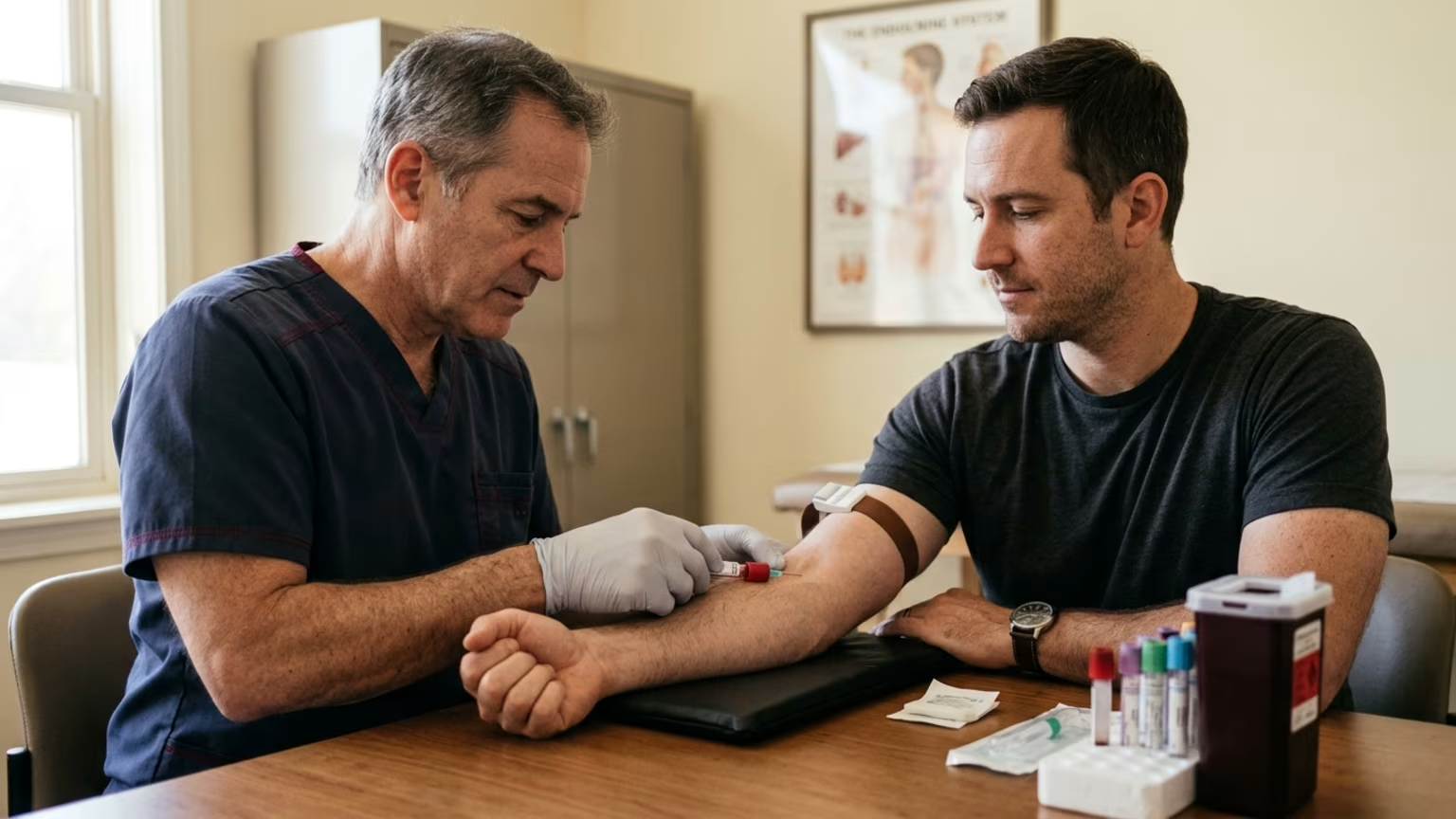

A clear guide to pre-analytic factors influencing testosterone testing, covering clinical guidelines on morning timing, repeat tests, illness, and fasting.





Testosterone testing is the clinical laboratory process used to measure the concentration of male sex hormones in the bloodstream. Pre-analytic factors are the biological, environmental, and behavioral variables that can alter these hormone levels before a blood sample is actually drawn. Understanding these external influences is a critical step in securing an accurate laboratory reading. Proper preparation ensures that the final measurement reflects a true physiological baseline rather than a temporary fluctuation.
The information provided in this article is for educational and informational purposes only. It is not intended as a substitute for professional medical advice, diagnosis, or treatment. Always follow the specific preparation instructions provided by your ordering clinician and laboratory.
Medical laboratories use a clinical reference range to define the expected concentration of testosterone circulating in a healthy adult male. This established window represents the boundaries where cellular and hormonal functions operate normally. When blood levels fall within this target bracket, the body typically has sufficient support for maintaining muscle tissue and sexual health. Results that drop below this range indicate a potential deficiency that might require further medical evaluation.
Because laboratories use different testing methodologies, the exact numerical thresholds for a normal reading can vary slightly between testing facilities. Clinicians rely on these specific local reference ranges to interpret individual patient results accurately. Comparing an individual score against this standardized baseline is a fundamental part of a comprehensive hormone assessment. Consistent testing conditions are strictly required to ensure this diagnostic comparison is clinically valid.
The reference range is carefully calibrated for blood samples drawn under specific baseline conditions. If a patient takes a test late in the afternoon, the resulting measurement cannot be accurately compared to a morning-calibrated reference standard. This discrepancy highlights exactly why standardizing the collection process is so critical for a reliable diagnosis. Proper preparation ensures that the laboratory numbers reflect actual biological production rather than temporary environmental changes.
Patients must understand that a reference range is not a measure of perfect health, but rather a statistical boundary of normal function. Minor variations within this acceptable window are a standard part of daily human biology. A clinician will evaluate the specific placement within the range alongside the patient's reported physical symptoms. This comprehensive approach prevents a diagnosis based solely on a single isolated number on a chart.
When testosterone levels decline below the clinical reference range, men often experience a clear reduction in their baseline physical vitality. A primary clinical symptom is a noticeable decrease in sexual desire and erectile function. These specific biological changes often serve as the initial prompt for adult men to seek a medical evaluation. The presentation of these symptoms can vary in intensity from person to person.
Beyond sexual health, a deficiency often presents through generalized fatigue and a persistent lack of physical stamina. Men frequently report feeling completely drained even after securing a full night of rest. This continuous loss of energy can interfere with daily work tasks and standard exercise routines. Difficulty concentrating and maintaining mental focus are also commonly reported clinical signs that prompt further medical investigation.
Changes in physical body composition represent another clear symptom of a sustained hormonal decline. Adult men might notice a gradual loss of lean muscle mass alongside a distinct increase in central body fat. These physical shifts can occur steadily even when daily diet and exercise habits remain entirely consistent. Recognizing these common clinical presentations helps patients understand when a formal medical assessment is truly necessary.
Some men may also experience subtle shifts in mood, including increased irritability or a generalized lack of motivation. These psychological symptoms often overlap with the physical fatigue, creating a compounding effect on overall daily well-being. Because these signs are entirely non-specific, a proper laboratory panel is the only way to confirm a hormonal root cause. Men researching low testosterone signs should always consult a doctor rather than self-diagnosing based on physical changes alone.
Hormone levels do not remain static throughout the day, which makes the specific timing of a blood draw a critical variable. Medical guidelines emphasize early-morning collection to standardize the evaluation process across all patients. This approach ensures that a clinician can accurately compare a patient's measurement against established diagnostic criteria. Testing later in the day increases the risk of comparing a naturally lower afternoon result against a morning-based reference standard.
The Endocrine Society's 2018 guideline is summarized as recommending an accurate morning total-testosterone measurement as the initial diagnostic test. Published clinical summaries show that the AUA also recommends obtaining early-morning measurements. While professional guidelines agree on the importance of morning testing, the reviewed sources do not establish one exact clock-time window as a universal requirement. Patients should work closely with their clinician to define the appropriate morning window for their individual sleep schedule.
The biological rhythm of hormone production typically peaks in the early morning hours shortly after waking. Capturing this peak concentration provides the most reliable metric for evaluating testicular function and overall endocrine health. Testing during this specific window eliminates the unpredictable daily variables that influence hormone secretion. Consistency in this timing is the foundation of a reliable clinical assessment.
Understanding this early-morning requirement helps patients avoid the frustration of invalid laboratory results. If a blood sample is drawn late in the afternoon, the laboratory may reject the reading or the physician may demand a completely new test. Complying with the designated timing window saves time, reduces medical costs, and accelerates the diagnostic process. Following these fundamental timing guidelines ensures the medical team has the best possible data to work with.
A single blood test is rarely sufficient to establish a definitive clinical diagnosis for adult men. Both major medical guidelines emphasize the absolute necessity of confirming any initial low result with a subsequent laboratory measurement. According to a summary of the AUA guideline, a proper diagnosis should be based on two early-morning measurements taken on separate occasions. This repetition helps rule out temporary fluctuations caused by daily environmental factors.
A physician quoted by UCHealth notes that her clinical group typically obtains two fasting morning measurements to establish a reliable baseline. This careful approach prevents patients from reacting prematurely to a single anomalous laboratory result. By requiring multiple data points, clinicians can track a stable hormonal trend rather than relying on an isolated snapshot. Those interested in testosterone testing and biomarkers must prioritize this structured confirmation process.
The human endocrine system operates through dynamic feedback loops that respond continuously to internal and external stimuli. A temporary dip in hormone production can occur naturally without indicating an underlying permanent medical condition. This biological variability is exactly why clinical guidelines mandate a second confirming test. Patience during this diagnostic phase prevents unnecessary medical interventions and protects the patient's long-term health.
Whether a patient needs to fast before a blood draw depends entirely on the specific guidelines their physician follows. The major medical organizations do not present a unified, uncontested requirement regarding food consumption before a test. According to published guideline summaries, the Endocrine Society recommends an accurate morning measurement taken after fasting. In contrast, the AUA recommendation is summarized as not insisting on fasting as a universal diagnostic condition.
Because these professional recommendations differ significantly, patients must rely on the precise instructions provided by their ordering clinician. This is particularly important when a blood draw includes multiple metabolic panels that might have their own distinct preparation rules. The available research does not provide quantified primary evidence detailing exactly how much a meal changes a measurement. Therefore, patients should never assume that every single laboratory visit strictly requires an empty stomach.
Restful sleep is a fundamental requirement for maintaining stable biological functions and accurate baseline laboratory results. Chronic sleep disturbances can significantly alter the physiological environment and influence the resulting blood panels. UCHealth reporting identifies obstructive sleep apnea as a known possible contributor to lower testosterone measurements. Men dealing with diagnosed sleep disorders must discuss these conditions with their doctor before evaluating their laboratory numbers.
Short-term sleep disruption also represents a potential pre-analytic variable that clinical researchers continue to evaluate. A 2011 JAMA study examined testosterone levels in young healthy men following one week of strict sleep restriction. While the specific numerical findings of that study are not detailed in the reviewed material, the research highlights the biological relationship between rest and hormone production. However, a single night of poor sleep does not automatically necessitate rescheduling a medical appointment.
Testing during a period of acute sickness can easily lead to a misinterpretation of baseline physiological health. Acute illness places the body under significant metabolic stress, which can temporarily suppress standard hormonal functions. Guideline summaries advise against measuring hormone levels during short-term illnesses because the results will not reflect typical biological operation. Waiting until the body has fully recovered ensures a much more accurate clinical picture.
Secondary reporting highlights that acute respiratory infections can trigger a noticeable decline in these laboratory measurements. A small study cited in a published clinical summary found a mean decline of 10 percent during an active respiratory infection. The exact same summary reported hormonal reductions of up to 30 percent in some specific medical cohorts. These figures clearly demonstrate the temporary impact of sickness but should not be treated as a guaranteed universal effect for every individual.
Various prescription medications and over-the-counter products can directly interfere with standard laboratory measurements. A clinician quoted by UCHealth identifies glucocorticoids, such as prednisone, as possible contributors to lower blood readings. The same UCHealth report specifically notes that opioid medications and certain dietary supplements can also influence the final numbers. Full transparency about daily substance use is an absolute requirement for an accurate clinical evaluation.
Patients must provide their physician with a comprehensive list of all daily medications and nutritional supplements prior to testing. The current research does not establish a universal washout protocol or justify stopping prescribed drugs independently before a blood draw. Altering a prescribed medication schedule without direct medical supervision carries significant health risks. A qualified doctor will use the patient's full medication history to contextualize the laboratory results appropriately.
Patients must understand how to prepare for a testosterone test and interpret the results accurately under their primary physician's guidance. Individualized advice from a medical professional always supersedes generalized online preparation checklists. Clear communication regarding lifestyle factors, recent illnesses, and daily medications ensures that the resulting data serves as a reliable diagnostic tool.
Patients should ask their physician exactly how they need to prepare for their specific blood draw, whether fasting is required, and how their current medications or recent sleep patterns might impact the interpretation of the results.
When men take a single hormone test without considering daily preparation factors, misinterpreting the resulting numbers can easily happen. Testostra steps in when men face difficulty understanding total testosterone, free testosterone, SHBG and related biomarkers, providing the precise clinical context needed to interpret these laboratory panels. This ensures readers can navigate their health conversations with clarity. Read Resources
Testostra follows testosterone research, clinical guidance and emerging evidence without turning general information into personal treatment advice.




Send us a question, research idea or topic suggestion. Reader questions help shape future Testostra content.
Contact Testostra