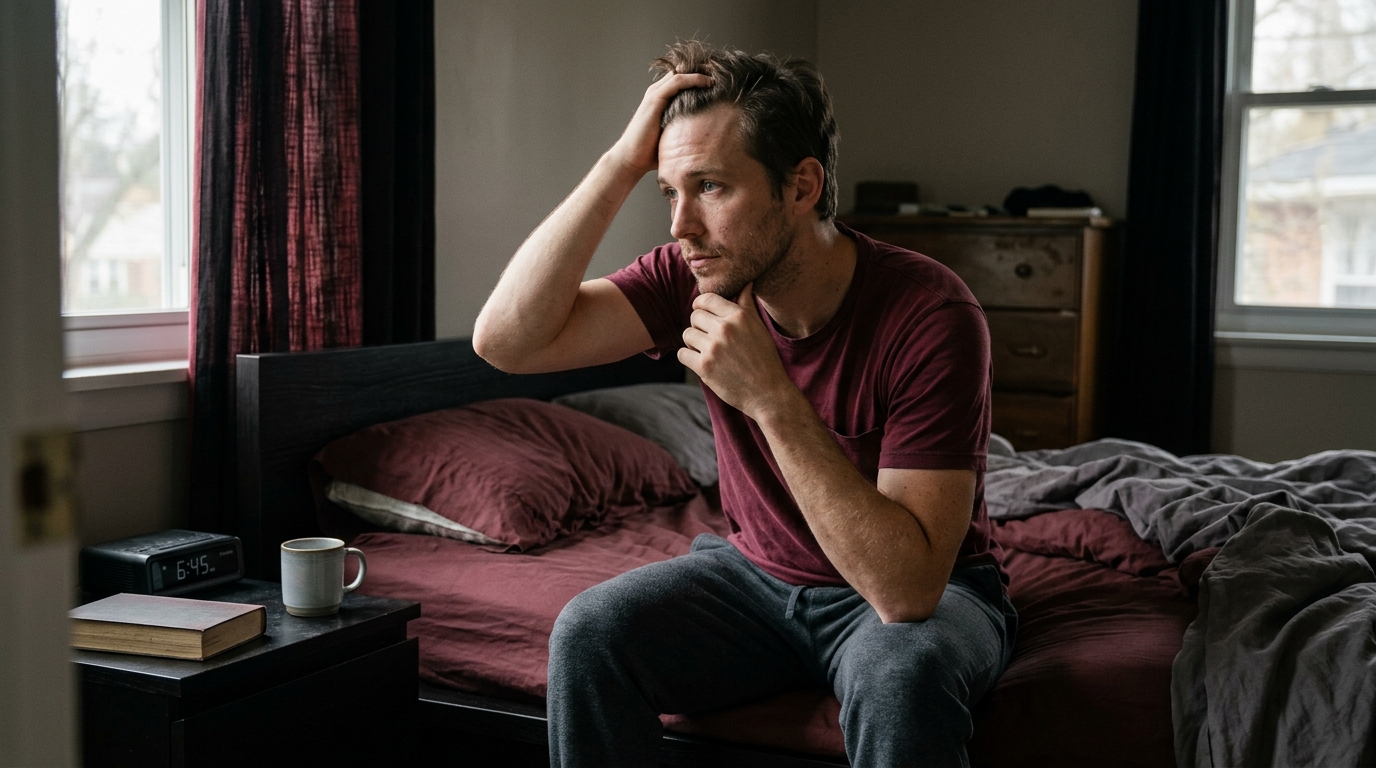

Many men assume chronic fatigue indicates low testosterone, but common health issues like depression and sleep apnea regularly produce the exact same symptoms.





You wake up feeling unrefreshed, notice your focus slipping during the workday, and realize your sex drive has dropped over the past several months. Searching these symptoms online often leads to a single conclusion, suggesting that low testosterone is the root cause of every complaint.
However, human physiology is rarely that simple. Fatigue, low mood, poor concentration, weight changes, and sexual difficulties are shared across multiple distinct medical conditions. This guide provides a definitive comparison of how low testosterone, thyroid disorders, depression, anemia, sleep apnea, and medication effects interact. It explains why a comprehensive medical evaluation is essential before drawing conclusions from a single blood test.
This article is for educational and informational purposes only and does not constitute personal medical advice. It is not intended to diagnose, treat, or replace the clinical judgment of a qualified healthcare professional. Always consult a physician or licensed healthcare provider regarding any medical condition, lab interpretation, or treatment plan.
Evaluating persistent fatigue, mood changes, or sexual dysfunction requires a broad clinical perspective. Understanding how guidelines approach these symptoms helps avoid misdiagnosis and ineffective treatments.
Interpreting hormone levels requires understanding normal physiological variability. A single low laboratory result does not automatically mean a person has clinical hypogonadism.
Clinical hypogonadism is defined by the coexistence of persistent symptoms and unequivocally low serum testosterone levels. The Endocrine Society emphasizes that neither symptoms alone nor an isolated low blood value is sufficient for a diagnosis. The American Urological Association similarly states that both clinical signs and biochemical confirmation are mandatory before considering treatment.
Testosterone production follows a circadian rhythm, peaking in the early morning hours among young and middle-aged men. Concentrations also fluctuate from day to day based on sleep quality, nutritional intake, acute illness, and physical stress. For these reasons, clinical guidelines recommend confirming low values with a repeat morning fasting test. In a cohort of middle-aged and older men, single measurements were found inadequate to characterize baseline hormone status reliably.
The American Urological Association identifies an early-morning total testosterone level of 300 ng/dL as a reasonable diagnostic threshold. However, clinical judgment remains essential. A number just above or below this cutoff must always be interpreted in the context of the patient's overall health, physical signs, and specific complaints.
When interpreting borderline results, clinicians often evaluate testosterone testing and biomarkers to understand the complete endocrine profile. Factors such as sex hormone-binding globulin can alter the amount of unbound hormone available to target tissues. A rigid reliance on numbers without clinical context can lead to inappropriate treatment or missed alternate diagnoses.
Once a low testosterone level is confirmed by repeat testing, identifying the underlying mechanism is the next clinical step. Measuring gonadotropins, specifically luteinizing hormone (LH) and follicle-stimulating hormone (FSH), clarifies where the endocrine pathway is disrupted.
This distinction is vital. Secondary hypogonadism may point toward pituitary lesions, hyperprolactinemia, systemic inflammatory conditions, or the suppression of hormonal signaling caused by medications such as opioids or glucocorticoids.
Many medical conditions create a nearly identical clinical picture to testosterone deficiency. When patients experience fatigue or cognitive sluggishness, several biological pathways should be evaluated.
An underactive thyroid gland slows the body's metabolic rate. According to National Health Service guidance, common symptoms of hypothyroidism include persistent fatigue, unexplained weight gain, cold intolerance, constipation, dry skin, thinning hair, and low mood.
Because thyroid hormones influence cellular energy throughout the entire body, their deficiency closely mimics the lethargy and low motivation often attributed to low testosterone. A man struggling with fatigue and unexpected weight gain might assume his testosterone has dropped. However, routine thyroid screening may reveal an elevated thyroid-stimulating hormone (TSH) level instead.
Mental health conditions share profound physiological overlap with endocrine deficiencies. The National Institute of Mental Health notes that depression frequently presents with fatigue, decreased energy, feeling slowed down, difficulty concentrating, sleep disturbances, and appetite changes.
A key diagnostic criterion for major depression is the presence of persistent low mood or a loss of interest and pleasure in daily activities for at least two weeks. While low testosterone can contribute to a flat affect or mild mood changes, it rarely accounts for severe clinical depression. Attributing major depressive episodes entirely to hormone levels risks delaying evidence-based psychological and psychiatric care.
Anemia occurs when the blood lacks adequate healthy red blood cells or hemoglobin to transport oxygen to tissues. The National Heart, Lung, and Blood Institute lists tiredness, physical weakness, pale skin, shortness of breath, dizziness, and headaches as classic signs of anemia.
An active man who suddenly feels exhausted during normal exertion might suspect his hormones are declining. Yet, a simple complete blood count may show reduced hemoglobin, pointing toward iron deficiency, chronic blood loss, or nutrient malabsorption. Notably, unexplained anemia is also recognized by urological guidelines as a potential sign of severe androgen deficiency, illustrating how these conditions intersect.
Obstructive sleep apnea (OSA) is characterized by repeated upper airway collapse during sleep, resulting in oxygen desaturation and fragmented rest. The American Academy of Sleep Medicine notes that OSA typically presents with loud snoring, witnessed breathing pauses, gasping awakenings, morning headaches, and severe daytime sleepiness.
Chronic sleep disruption impairs daytime cognitive function, lowers daytime energy, and reduces libido. Furthermore, fragmented sleep and chronic hypoxia directly suppress the hypothalamic-pituitary-gonadal axis, frequently lowering testosterone production as a secondary effect. Treating sleep apnea often restores nighttime oxygenation and daytime vitality, making a formal sleep study critical.
Prescription medications, alcohol use, and body composition exert substantial influence on hormone levels and daily energy. The Endocrine Society highlights that obesity, chronic opioid therapy, and systemic corticosteroids are common, reversible contributors to low testosterone levels.
Opioid medications directly suppress the pituitary release of luteinizing hormone, leading to drug-induced hypogonadism. Similarly, chronic glucocorticoid use can suppress both adrenal and testicular androgen pathways. When evaluating symptoms, reviewing a patient's current medication list and daily lifestyle habits often reveals the primary driver of their complaints.
Distinguishing between low testosterone and other conditions requires careful attention to specific differentiating features. While the initial symptoms often sound identical, unique clinical clues help guide the diagnostic process.
Both conditions can cause fatigue, low mood, poor memory, and modest weight gain. However, other physical features frequently diverge upon closer examination.
A patient experiencing constipation and cold intolerance alongside fatigue should have thyroid function checked before assuming hormones are the primary culprit.
Mood changes and cognitive slowing are prominent in both androgen deficiency and depressive disorders. Differentiating between the two involves examining the emotional context and sexual timeline.
While androgen therapy may provide modest mood improvements in hypogonadal men, it is not an established treatment for primary major depressive disorder.
Fatigue and unrefreshing sleep are central complaints in both disorders, and the two conditions frequently coexist in men with excess body weight.
Guidelines from the Endocrine Society explicitly warn against initiating testosterone therapy in men with untreated severe obstructive sleep apnea. Testosterone can worsen nocturnal airway collapsibility, making proper sleep assessment a safety priority.
A focused laboratory evaluation provides objective data to guide clinical decision-making. Testing should be selected based on the patient's individual history and physical findings.
When investigating male endocrine health, several key blood markers provide essential context regarding hormone production and transport:
Understanding these parameters allows clinicians to evaluate the physiological health of the entire endocrine system. Readers interested in broader endocrine topics can review our testosterone basics resource for deeper foundational insights.
To evaluate alternative causes of fatigue and low vitality, healthcare providers frequently utilize non-hormonal laboratory panels:
By interpreting these biomarkers together, clinicians can identify the true source of a patient's symptoms rather than focusing on a single, isolated hormone number.
Much of what is known regarding testosterone replacement and symptom resolution comes from large-scale clinical trials. Understanding this research helps set realistic expectations about what hormone therapy can and cannot achieve.
The Testosterone Trials were a coordinated set of seven double-blind, placebo-controlled trials conducted across multiple medical centers. The research evaluated 788 men aged 65 and older who had an average of two morning testosterone concentrations below 275 ng/dL, accompanied by symptoms of hypoandrogenism.
The study aimed to determine whether raising serum testosterone into the normal range for young men would produce measurable improvements in sexual function, physical mobility, vitality, cognitive performance, and anemia.
The results of the Testosterone Trials demonstrated that hormone therapy produces outcome-specific benefits rather than a universal cure for all age-related complaints:
These findings highlight that treatment responses vary by organ system. A therapy that reliably improves libido or corrects mild unexplained anemia may have minimal direct impact on generalized fatigue or mental fog.
Observational studies frequently show associations between low testosterone and various chronic conditions, including cardiovascular disease, metabolic syndrome, and cognitive decline. However, association does not prove causation.
In many instances, low circulating testosterone is a biomarker of underlying poor health, systemic inflammation, or chronic visceral adiposity, rather than the primary cause of the illness. Treating the underlying health condition through lifestyle changes, medical management, or weight reduction often improves endogenous hormone production naturally. For further reading on evidence-based strategies, explore our low testosterone resources for comprehensive clinical guides.
The following real-world clinical patterns illustrate how identical complaints can stem from entirely different root causes. These examples show why a methodical evaluation is essential.
A 44-year-old accountant presents with a six-month history of severe afternoon fatigue, modest weight gain around the midsection, and mental sluggishness. He suspected low testosterone after reading about male hormone decline online.
During his clinical interview, he also reports mild constipation and a heightened sensitivity to cold weather. His physical exam is unremarkable except for slightly dry skin.
A 51-year-old sales executive reports severe exhaustion, difficulty focusing on complex tasks, low motivation, and declining sexual intimacy with his partner over the past year.
Further questioning reveals that he wakes up multiple times per night with a dry throat, experiences morning headaches, and frequently dozes off during quiet meetings. His spouse notes that he snores loudly and occasionally pauses his breathing during sleep.
A 68-year-old retired teacher visits his primary care doctor complaining of physical weakness, shortness of breath when climbing stairs, and generalized fatigue that has worsened over several months. He has not noticed any change in his libido.
A 38-year-old software engineer feels stressed from long working hours and orders a direct-to-consumer blood test drawn at 3:30 PM. The result shows a total testosterone of 245 ng/dL, causing him significant anxiety about early hormone decline.
Preparing focused, objective questions can help you have a productive conversation with your physician about your symptoms and laboratory options.
To prepare thoroughly for your consultation, review our evidence-based guide on low testosterone signs and causes to better understand standard clinical protocols.
Evaluating medical literature requires distinguishing established consensus guidelines from preliminary research. High-quality clinical practice relies on randomized controlled trials and validated clinical frameworks.
The recommendations provided by major medical organizations, including the American Urological Association and the Endocrine Society, represent high-quality clinical guidance. These organizations emphasize that testosterone therapy should only be prescribed when consistent symptoms are paired with unequivocally low morning blood concentrations across multiple tests.
Their recommendations against treating men with untreated severe obstructive sleep apnea or using testosterone as a blanket cure for non-specific fatigue are based on robust safety data and clinical consensus.
Large randomized controlled trials, such as the Testosterone Trials, provide reliable evidence regarding what hormone replacement can realistically achieve. These studies demonstrate clear benefits for sexual interest and mild anemia, but they show minimal benefit for general fatigue, executive cognitive function, or daily physical vitality.
Patients and clinicians should avoid assuming that positive results in one functional domain will automatically apply to other unrelated symptoms.
While short- and medium-term effects of hormone therapy are well-documented, gaps remain regarding the long-term impact of therapy in younger men, optimal treatment protocols for subclinical hypogonadism, and individual variations in androgen receptor sensitivity.
Furthermore, observational data linking low testosterone to cardiovascular or metabolic disease cannot prove that low hormones caused the disease. Often, improving cardiovascular health and reducing visceral body fat leads to a spontaneous recovery of normal endocrine function. For an evidence-based overview of medical treatments, read our TRT and emerging science overview.
If you are experiencing persistent fatigue, changes in sexual function, or low mood, taking structured, practical steps will help you gather meaningful data for your healthcare provider.
Testostra explains testosterone biology, testing, symptoms, lifestyle factors and TRT with careful sourcing and clear clinical limits.



Send us a question, research idea or topic suggestion. Reader questions help shape future Testostra content.
Contact Testostra