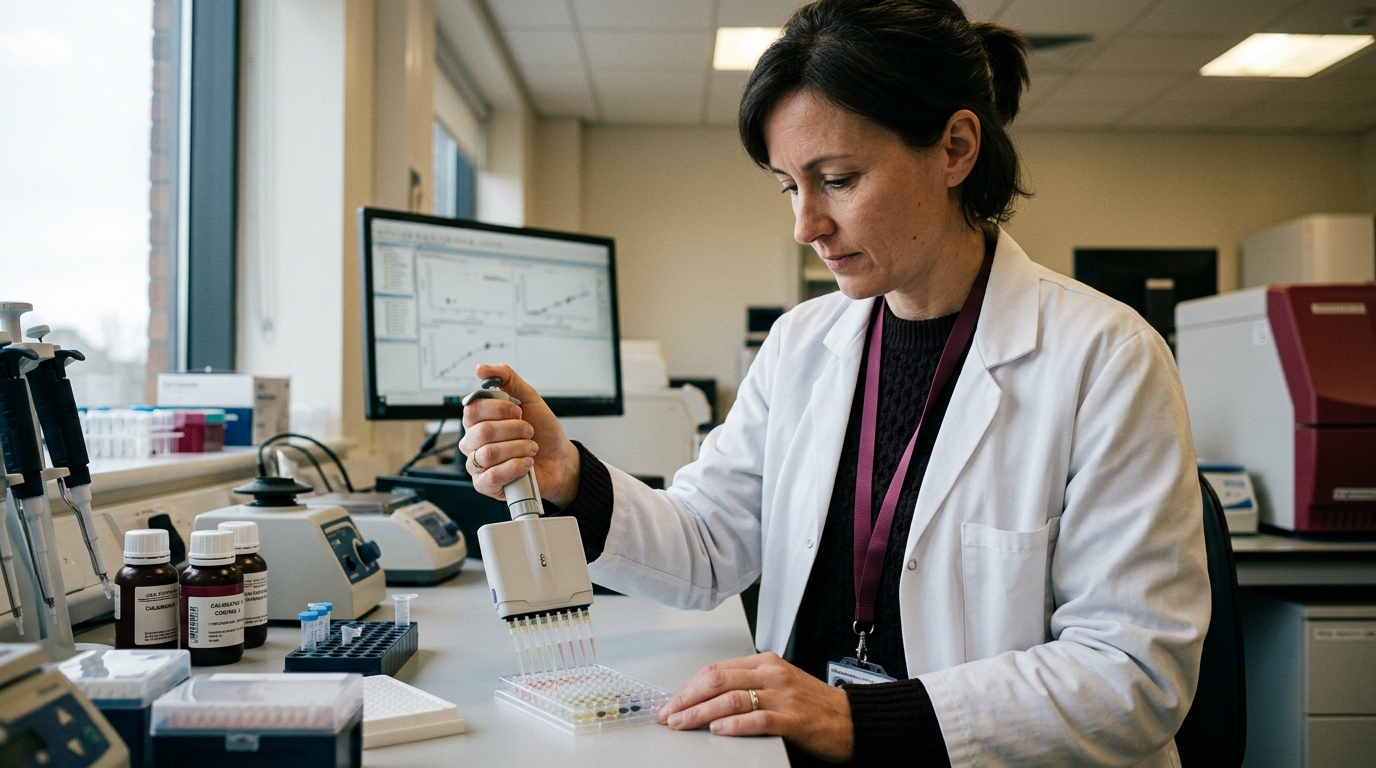

Men experiencing low energy or fertility challenges can use family health patterns to help clinicians identify genetic causes of hormone deficiency.





Many men search online to understand whether low testosterone is inherited from their father or brothers. If you have male relatives who dealt with fertility issues, delayed puberty, or hormone deficiencies, you may wonder if your current symptoms are part of a family pattern. This guide provides a definitive overview of what family history actually means for your hormonal health, what specific clues are worth sharing with your doctor, and how clinical evaluations separate genetics from lifestyle and acquired conditions.
This resource is designed solely for educational purposes and does not provide individual medical advice, diagnosis, or treatment protocols. Hormonal health is complex, and symptoms associated with testosterone deficiency often overlap with many common medical conditions. You should always review your medical history, symptoms, and laboratory test results with a qualified healthcare provider before making any healthcare decisions.
A family story or a single lab test is never a replacement for a formal clinical evaluation. Clinical practice guidelines established by the Endocrine Society emphasize that a diagnosis of male hypogonadism requires consistent symptoms alongside repeatedly documented low serum testosterone levels. In addition, professional guidelines advise against routine hormone screening in the general population without specific symptoms or recognized clinical indications.
If you suspect you have hormonal imbalances, understanding your background helps you have a more productive conversation with your clinician. It allows you to present clear facts about your relatives while helping your doctor select the most appropriate diagnostic pathway for your personal health.
A family history of reproductive or endocrine conditions serves as a clinical clue rather than a predetermined diagnosis. Inherited conditions account for a meaningful subset of hormone and fertility disorders, but many causes of low testosterone are acquired throughout adult life.
Medical guidelines emphasize several core principles when evaluating family background and hormonal health:
When evaluating male hormonal health, clinicians do not treat numbers or family trees in isolation. Professional guidelines from leading medical organizations emphasize a comprehensive diagnostic framework. This framework integrates clinical symptoms, physical examinations, personal medical history, and accurate laboratory assays.
Recognizing the signs of androgen deficiency requires evaluating both physical and psychological presentations. Symptoms such as diminished libido, fewer spontaneous morning erections, loss of body hair, low energy, and depressed mood can suggest low testosterone. However, these symptoms are non-specific and frequently occur due to sleep apnea, depression, metabolic disorders, or chronic stress.
For this reason, professional guidelines advise that a diagnosis of hypogonadism requires unequivocally and consistently low serum total testosterone. This must be confirmed using a repeat morning fasting measurement. Testosterone levels naturally fluctuate throughout the day, peaking in the early morning hours for younger and middle-aged men. Repeating the test on a separate morning while fasting helps avoid misdiagnosis caused by temporary biological variations or recent meals.
Your medical history provides essential context for these laboratory results. A history of childhood surgeries, undescended testes, mumps orchitis during adolescence, or radiation therapy can point toward acquired testicular damage. When you also share your family background, the doctor can compare your personal health timeline against known familial patterns. You can learn more about identifying low testosterone causes and risk factors to better prepare for your consultation.
Hormone production relies on a continuous communication loop known as the hypothalamic-pituitary-gonadal axis. The hypothalamus releases gonadotropin-releasing hormone, which prompts the pituitary gland to secrete luteinizing hormone and follicle-stimulating hormone. Luteinizing hormone signals the Leydig cells in the testes to produce testosterone, while follicle-stimulating hormone supports sperm production.
When testosterone production falls below reference ranges, clinicians measure luteinizing hormone and follicle-stimulating hormone to pinpoint the site of dysfunction. This distinction is critical when interpreting family risk:
Primary hypogonadism occurs when the testes themselves fail to respond adequately to pituitary stimulation. In this setting, the pituitary gland attempts to compensate by releasing larger quantities of gonadotropins. As a result, blood tests typically show low testosterone alongside elevated luteinizing hormone and follicle-stimulating hormone levels.
Familial or genetic causes of primary hypogonadism include sex-chromosome conditions such as Klinefelter syndrome. Acquired causes include testicular torsion, physical injury, severe infections, or exposure to toxic medications. If male relatives had testicular conditions or required early hormone support, your clinician may pay closer attention to your testicular health and physical exam findings.
Secondary hypogonadism occurs when the hypothalamus or pituitary gland fails to release adequate signaling hormones. In this scenario, total testosterone is low, but luteinizing hormone and follicle-stimulating hormone levels are low or inappropriately normal. The brain is not sending the necessary signals to stimulate normal testicular production.
Family histories involving pituitary tumors, hereditary iron overload conditions like hemochromatosis, or rare genetic signaling deficiencies often correlate with secondary hypogonadism patterns. Understanding whether a relative had a brain, pituitary, or systemic condition helps your clinician determine if pituitary imaging or specialized metabolic testing is warranted.
A common point of confusion among patients is the relationship between testosterone levels and fertility. Men frequently assume that an infertile relative must have had low testosterone, or that a diagnosis of low testosterone automatically means a man cannot father children. In reality, steroidogenesis (testosterone production) and spermatogenesis (sperm production) are closely linked but functionally distinct.
Leydig cells produce testosterone under the influence of luteinizing hormone, whereas Sertoli cells and germ cells manage sperm development under the influence of follicle-stimulating hormone and high intratesticular testosterone concentrations. A man can have normal testosterone levels and completely absent sperm due to a physical blockage, genetic microdeletion, or primary spermatogenic failure. Conversely, a man with low circulating testosterone may still produce viable sperm.
The American Urological Association and the American Society for Reproductive Medicine emphasize that male fertility evaluations should occur alongside the evaluation of the female partner. When male-factor infertility is suspected, initial testing focuses on a thorough reproductive history and at least two properly collected semen analyses. Semen parameters can vary significantly between samples, which makes repeat testing essential.
Endocrine testing for fertility patients is typically reserved for specific clinical circumstances. These include low sperm counts, impaired sexual function, testicular atrophy, or physical findings suggestive of an underlying endocrine disorder. Sharing a family history of male infertility can prompt earlier semen testing, but it does not confirm a hormone deficit on its own.
When gathering your family history, certain specific diagnoses and developmental patterns carry established clinical significance. Knowing the names and features of these conditions helps you communicate accurately with your clinician.
Klinefelter syndrome is a genetic condition where a male is born with an extra X chromosome, most commonly resulting in a 47,XXY karyotype. Recent clinical reviews estimate that Klinefelter syndrome occurs in approximately 1 in 450 to 1 in 600 male births, while other sources cite an incidence of around 1 in 650 male newborns. It represents the most common congenital cause of primary hypogonadism and male infertility.
Men with Klinefelter syndrome often exhibit small, firm testes, elevated gonadotropins, low or borderline testosterone, and azoospermia (absence of sperm in the ejaculate). Many individuals remain undiagnosed until adulthood when they seek medical evaluation for delayed puberty, gynecomastia, or difficulty conceiving. While natural conception is rare, specialized surgical techniques such as microdissection testicular sperm extraction can locate rare areas of active sperm production in 50 to 60 percent of affected men.
Congenital hypogonadotropic hypogonadism is a rare condition characterized by a deficiency in gonadotropin-releasing hormone production or action. This defect leads to absent or incomplete pubertal development and reproductive immaturity. It exhibits complex inheritance patterns, including autosomal dominant, autosomal recessive, and X-linked forms.
When congenital hypogonadotropic hypogonadism occurs alongside an impaired sense of smell (anosmia or hyposmia), it is clinically classified as Kallmann syndrome. Research reviews indicate that roughly 50 to 60 percent of individuals with congenital hypogonadotropic hypogonadism display an impaired sense of smell. In one clinical cohort study of 332 patients with congenital hypogonadotropic hypogonadism, 31.3 percent (104 patients) had a family history of pubertal delay or hypogonadism. While this specific percentage applies to that studied cohort rather than the general public, it highlights that familial pubertal timing can be a relevant clinical clue.
Microdeletions on the long arm of the Y chromosome represent another well-documented genetic cause of severe male infertility. These microdeletions involve specific regions known as azoospermia factors (AZFa, AZFb, and AZFc) that contain genes essential for sperm development. Men with these deletions typically present with severe oligozoospermia (very low sperm count) or non-obstructive azoospermia.
Guidelines from the American Urological Association recommend karyotype analysis and Y-chromosome microdeletion testing for men with primary infertility presenting with azoospermia or severe oligozoospermia (less than 5 million sperm per milliliter) when accompanied by elevated follicle-stimulating hormone or testicular atrophy. Because the Y chromosome is passed from father to son, these deletions are transmitted to male offspring conceived through assisted reproductive technologies.
Mutations in the CFTR gene can cause congenital bilateral absence of the vas deferens, leading to obstructive azoospermia. In these cases, sperm is produced normally in the testes but cannot travel into the ejaculate due to missing transport ducts. Men with this condition have normal testosterone production and normal secondary sexual characteristics.
When a clinician evaluates a family history of infertility associated with reproductive tract abnormalities, CFTR carrier testing is recommended. This testing protects future offspring by evaluating the genetic carrier status of both biological partners.
When reviewing medical literature regarding family history and endocrine health, it is essential to distinguish established clinical guidelines from observational studies and small research cohorts. Not all evidence carries equal weight in clinical decision-making.
Established clinical practice guidelines, such as those from the Endocrine Society and the American Urological Association, represent the highest level of consensus. These guidelines clearly define diagnostic thresholds, emphasize repeat testing protocols, and warn against inappropriate treatments. For instance, these guidelines firmly recommend against initiating testosterone therapy in men who are actively planning a pregnancy in the near term, as exogenous testosterone suppresses spermatogenesis.
Epidemiological data providing prevalence estimates for conditions like Klinefelter syndrome offer reliable population-level insights. However, population rates cannot tell a clinician whether an individual patient has a specific condition. A general prevalence of 1 in 500 does not mean an individual with low energy has a 1 in 500 risk; individual risk depends entirely on personal physical and laboratory findings.
Specialized cohort studies, such as research documenting the frequency of anosmia in Kallmann syndrome or family patterns in congenital hypogonadism, provide valuable diagnostic clues. Clinicians view these findings as targeted reference points rather than universal screening rules. When you discuss your history with a physician, they will weigh your family narrative against these established evidence tiers. You can read more about male hormone testing and biomarker interpretation to understand how these evidence standards apply to routine lab work.
A proper evaluation of male hormonal health requires measuring specific biomarkers in blood and semen. Rather than relying on a single total testosterone number, physicians use a panel of tests to gain a complete view of endocrine and reproductive function.
Total testosterone measures the entire amount of testosterone circulating in the bloodstream. This includes hormone bound tightly to sex hormone-binding globulin, hormone bound loosely to albumin, and unbound (free) hormone.
Assays should be performed using accurate, standardized methods on a morning fasting blood draw. Because levels can decline substantially after meals or late in the day, adherence to standardized testing conditions prevents false diagnoses. A normal total testosterone level generally rules out significant androgen deficiency in most men.
Sex hormone-binding globulin (SHBG) is a protein produced by the liver that binds tightly to testosterone. When SHBG concentrations are unusually high or low, total testosterone measurements can be misleading. For example, conditions such as obesity, diabetes, and hypothyroidism can lower SHBG levels, resulting in a low total testosterone number even when active free hormone levels are adequate.
In these situations, clinicians measure or calculate free testosterone using equilibrium dialysis or validated formulas. Free testosterone represents the unbound fraction that is immediately available to enter target tissues. Evaluating free testosterone helps determine whether a low total measurement represents a genuine physiological deficiency. Understanding the fundamentals of male hormonal balance helps clarify how these binding proteins operate.
Luteinizing hormone and follicle-stimulating hormone are pituitary gonadotropins that direct testicular activity. Measuring these hormones is necessary whenever low testosterone or impaired semen parameters are identified.
Elevated LH and FSH levels alongside low testosterone indicate primary testicular failure, as the brain is attempting to stimulate non-responsive tissue. Low or inappropriately normal LH and FSH levels point toward secondary hypogonadism, signaling a hypothalamic or pituitary issue. In fertility assessments, isolated high FSH levels often suggest significant impairment of sperm production within the seminiferous tubules.
Prolactin is another hormone secreted by the anterior pituitary gland. Clinicians frequently measure prolactin when investigating secondary hypogonadism or severe libido loss. Significantly elevated prolactin levels (hyperprolactinemia) can suppress gonadotropin secretion, leading to secondary low testosterone.
Markedly high prolactin levels may indicate the presence of a prolactinoma, a benign pituitary tumor, or the effect of specific psychiatric medications. Identifying elevated prolactin directs the clinician toward pituitary imaging and targeted therapies rather than primary testicular interventions. Reviewing standard testosterone testing guidelines can help you understand how these panels fit together.
For men concerned about fertility, semen analysis remains the cornerstone of laboratory assessment. Standard parameters evaluated in a semen analysis include total semen volume, sperm concentration (count per milliliter), total sperm count, motility (percentage of moving sperm), and morphology (sperm shape).
An abnormal semen analysis is not a direct indicator of low testosterone, and a normal semen analysis does not guarantee optimal hormone levels. Because semen parameters fluctuate based on recent illness, abstinence intervals, and heat exposure, guidelines recommend repeating the analysis after a one-to-three-month interval before reaching firm clinical conclusions.
To understand how clinicians evaluate family history alongside personal symptoms and lab results, consider these practical case patterns. These illustrative examples demonstrate how different clinical clues lead to different diagnostic steps.
A 32-year-old man visits his doctor after twelve months of unsuccessful attempts to conceive with his partner. He mentions that his older brother required medical assistance to conceive due to a very low sperm count. The patient feels energetic and reports no symptoms of low testosterone, such as reduced libido or muscle loss.
In this scenario, the family history of male-factor infertility justifies an efficient and focused fertility workup. The clinician orders two semen analyses separated by several weeks and recommends a concurrent evaluation for his partner. Because the patient exhibits no signs of androgen deficiency, broad hormone testing is deferred until semen analysis results are reviewed. If the semen analysis reveals severe oligozoospermia, the doctor will then order total testosterone, FSH, LH, and relevant genetic tests such as karyotyping and Y-chromosome microdeletion panels.
A 28-year-old man presents with persistent fatigue, diminished libido, and reduced body hair. Laboratory testing confirms unequivocally low morning fasting total testosterone on two separate occasions. During his clinical intake, he recalls that his father and paternal uncle did not experience puberty until age seventeen or eighteen and required medical evaluations during adolescence.
The clinician measures the patient's LH and FSH levels, which return as low-normal despite his low testosterone, confirming secondary hypogonadism. Given the familial pattern of delayed pubertal development, the clinician considers congenital hypogonadotropic hypogonadism. The physician assesses whether the patient has any impairment in his sense of smell to screen for Kallmann syndrome features. The patient is referred to an endocrinologist for comprehensive pituitary evaluation, genetic counseling, and specialized management.
A 24-year-old man schedules an appointment after learning that his maternal uncle was diagnosed with Klinefelter syndrome (47,XXY) in his late thirties. The patient is concerned about his own risk and wonders if he should begin hormone therapy proactively.
The clinician conducts a physical examination, noting normal testicular volume and typical secondary sexual characteristics. Baseline laboratory testing shows normal morning fasting total testosterone, normal LH, and normal FSH levels. The clinician explains that Klinefelter syndrome is a sex-chromosome variation that typically occurs as a spontaneous event during parental gamete formation rather than a directly inherited trait. The patient is reassured that his normal physical development and hormone levels indicate intact testicular function, requiring no treatment or routine karyotyping.
A 45-year-old man mentions during a routine physical that his mother was treated for a non-functioning pituitary macroadenoma. He feels healthy, exercises regularly, and reports no changes in energy, vision, or sexual function. He asks if he should undergo routine hormone screening and a brain MRI.
The clinician explains that routine screening of asymptomatic individuals is not recommended by clinical guidelines. Because the patient exhibits no symptoms or physical signs of hormone deficiency or local mass effects, specialized pituitary imaging is not indicated. The doctor documents the family history in the medical record and advises the patient to report any future changes in vision, unexplained headaches, or symptoms consistent with evaluating hypogonadism symptoms.
A 38-year-old man presents with low morning testosterone confirmed across multiple lab draws, accompanied by significantly elevated LH and FSH levels. He has no family history of hormone problems, infertility, or developmental delays. However, his personal history reveals an episode of severe bilateral mumps orchitis during his teenage years.
This presentation represents primary hypogonadism caused by an acquired infection rather than an inherited condition. The elevated gonadotropins confirm that the pituitary is functioning correctly while the testicular tissue has sustained past damage. The clinician focuses management on his current symptoms and metabolic health, recognizing that the absence of a family history does not rule out primary testicular failure.
A 30-year-old man seeking preconception guidance notes that his paternal uncle had children through assisted reproductive technology due to a congenital reproductive tract issue. The patient is worried that he has inherited low testosterone.
The clinician clarifies the distinction between hormone production and reproductive tract anatomy. The uncle's history suggests a structural or transport problem, such as congenital absence of the vas deferens, rather than an endocrine failure. A physical examination confirms that the patient has normal bilateral vas deferens and normal testicular volume. Routine semen analysis and primary carrier screening are discussed, reassuring the patient that structural transport abnormalities do not inherently impair testosterone production.
When preparing to discuss your hormonal or reproductive health with a healthcare provider, bringing clear questions can help guide the conversation. A structured list ensures that both family history and individual health markers are evaluated thoroughly:
If you are researching your family history and considering a medical evaluation, you can take several practical steps this week to prepare:
Testostra explains testosterone biology, testing, symptoms, lifestyle factors and TRT with careful sourcing and clear clinical limits.



Send us a question, research idea or topic suggestion. Reader questions help shape future Testostra content.
Contact Testostra