
Understand the exact differences between total and free testosterone, the role of SHBG and albumin, and how to interpret discordant laboratory results.





Total testosterone is the entire measurable amount of testosterone circulating in the blood. This comprehensive measurement includes both the testosterone bound to proteins and the small unbound fraction. Free testosterone refers exclusively to that active unbound fraction in your system. Sex hormone-binding globulin is a specific protein that tightly attaches to testosterone.
Clinicians and laboratories commonly refer to this binding protein as SHBG. Albumin is another common protein in the blood that also binds to circulating testosterone. However, albumin binds to testosterone with a much weaker attachment than SHBG does. These distinct measurements help clinicians understand exactly how hormones move through your body.
Most of the testosterone in an adult man is firmly bound to SHBG. A secondary portion is loosely bound to albumin. Only a tiny percentage remains completely free and unbound in the bloodstream. This free fraction is what your tissues and organs can readily use for physiological functions.
When evaluating testosterone fundamentals and hormonal function, understanding the difference between bound and unbound hormones is essential. Bioavailable testosterone is another term sometimes used in clinical literature. However, the exact definition and testing methodology for bioavailable testosterone can vary widely. Because of this persistent variation, total and free testosterone remain the primary clinical focus.
When a patient receives a laboratory report, seeing multiple unfamiliar acronyms often creates unnecessary confusion. Breaking down these terms helps clarify the clinical conversation with your doctor. Total testosterone gives the broadest view of your hormonal status. Meanwhile, the other markers provide the necessary detail to understand how that hormone is utilized.
Clinicians look at total testosterone, SHBG, and albumin together to interpret your overall hormonal health. This combined view provides more clarity than a single laboratory number ever could.
This article is provided for informational and educational purposes only. It is not intended to serve as medical advice under any circumstances. The information presented here should not be used to diagnose any health condition. It should not be used to determine a treatment plan or prescribe hormone therapy.
Always consult a qualified physician or endocrinologist regarding your personal laboratory results. You should discuss your specific physical symptoms and medical history directly with your healthcare provider. Medical decisions require professional evaluation of your complete clinical profile. Do not attempt to interpret complex laboratory panels without medical guidance.
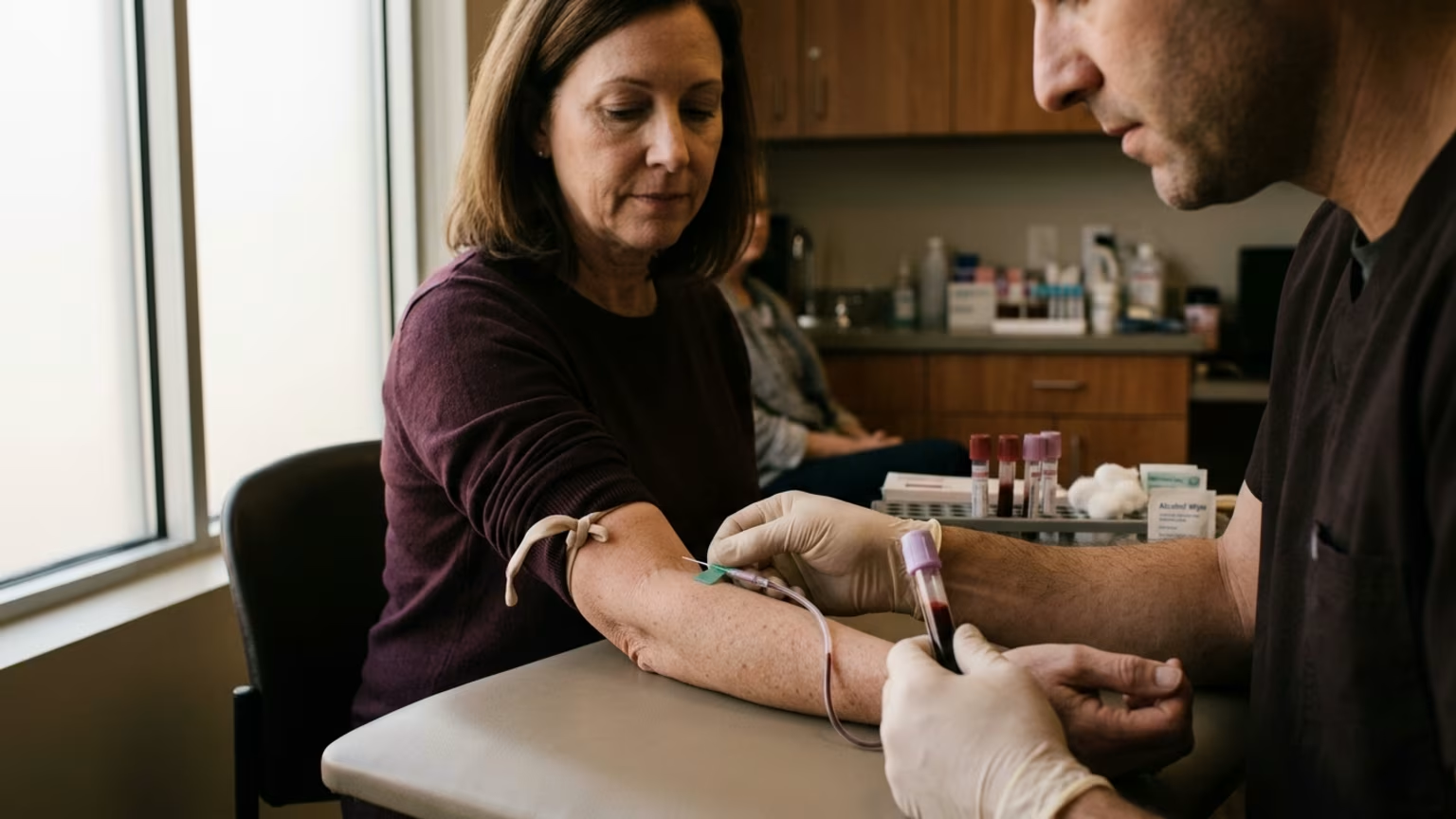
When a man undergoes a hormone evaluation, a total testosterone blood draw is usually the initial test. This test measures the entire pool of the hormone currently in your bloodstream. However, by itself, it does not reveal how much testosterone is unbound. It also cannot account for individual differences in binding proteins.
Relying solely on total testosterone might paint an incomplete picture of your hormonal availability. The clinical reference range for total testosterone can vary depending on the laboratory. Different diagnostic laboratories use different assays and testing equipment. Because of this inherent variation, clinical guidelines provide specific direction on how to proceed.
An Endocrine Society statement dated September 24, 2026, offers clear guidance on generalized testing. It says there is insufficient evidence to support population-level testosterone screening for hypogonadism in asymptomatic men. This statement refers directly to the clinical practice guideline of the Society. Testing is generally reserved for men who report specific clinical concerns to their doctor.
Free testosterone assessment becomes important under specific clinical circumstances. A summary of the Endocrine Society guideline says free testosterone may be useful when total testosterone is near the lower limit. It is also deemed useful when a condition may have altered your SHBG levels. Clinicians generally determine free testosterone levels through specialized laboratory techniques or mathematical formulas.
Equilibrium dialysis is considered a highly accurate laboratory method for directly measuring free testosterone. The process of equilibrium dialysis physically separates the unbound hormone from the bound hormone in a laboratory setting. Because this physical separation is time-consuming, a calculated estimate is much more common in standard practice. Both methods provide valuable data when used in the correct clinical context.
The sources describe calculated free testosterone as an estimate derived from total testosterone, SHBG, and albumin. This calculation is not a direct measurement of free testosterone in the blood. Instead, it is a mathematical calculation that predicts the free fraction based on the binding proteins present. If a calculated result seems unusual, your doctor might request a direct measurement using equilibrium dialysis.
Understanding testosterone testing and biomarkers requires evaluating the relationship between these different numbers. Total testosterone and free testosterone can easily tell different stories. A total result alone may not accurately reflect the free testosterone result in men with altered SHBG. This is why clinical guideline summaries suggest considering free testosterone in selected cases.
A comprehensive testing approach ensures that your clinician has all the necessary data. Single reference thresholds are not universally diagnostic.
Hormonal variation in adult men can present in ways that are difficult to interpret alone. A laboratory test might show total testosterone within a normal range while the patient still experiences symptoms. This discordance often occurs because high SHBG levels are binding too much of the circulating hormone. Consequently, the actual free testosterone available to the body remains functionally low.
A low total result does not automatically establish that free testosterone is also low. Likewise, a total result that is not low does not establish that free testosterone is normal. This discordance happens frequently when SHBG levels are altered by outside health factors. A free testosterone result requires careful clinical context to hold any medical meaning.
When numbers look completely discordant, men often report feelings of fatigue or changes in physical performance. However, these common symptoms can originate from many different underlying health conditions. A laboratory value alone cannot establish the precise cause of a low reading. It also cannot confirm that your symptoms are directly caused by a testosterone deficiency.
You need a professional medical evaluation to connect the symptoms with the blood work. The process for diagnosing male hypogonadism is highly specific and closely regulated. Guideline summaries describe diagnosis as requiring compatible symptoms or signs and consistently low testosterone results. This clinical presentation must be confirmed with repeat morning testing.
Evaluating low testosterone signs, causes and risk factors should never rest on a single blood draw. Hormone levels fluctuate naturally throughout the day. A mismatch between total and free testosterone is simply a reason to ask better questions. It is a prompt to discuss how the laboratory obtained and calculated the specific result.
The common symptoms of hormonal variation frequently overlap with other lifestyle issues. Chronic stress, poor sleep, and heavy workloads can mimic the physical signs of altered testosterone. Therefore, taking a careful clinical history is absolutely necessary before drawing conclusions. Relying strictly on a discordant laboratory panel without considering lifestyle factors can lead to misinterpretation.
Keeping treatment decisions out of the initial biomarker discussion is incredibly important for patient safety. The sources reviewed here do not provide primary evidence to recommend hormone therapy based on any one result. Clinical interpretation matters far more than an isolated number on a page.
Biological inputs and lifestyle factors heavily influence how these biomarkers behave in the human body. SHBG acts as the primary regulator of total and free testosterone dynamics. Research identifies several distinct physiological and environmental factors that affect SHBG production. Age is one of the most significant biological inputs for adult men.
As men age, their natural SHBG levels frequently increase. This upward shift can lower free testosterone even if the total testosterone measurement remains stable. Metabolic health also plays a vital role in determining binding protein levels. Obesity is a major factor that alters the relationship between total and free testosterone.
Men with high body fat often experience significant changes in how much SHBG their liver produces. Diabetes is another serious metabolic condition that directly impacts these hormone readings. Managing your blood sugar and overall body weight can positively influence these biological inputs. Men researching lifestyle and natural testosterone support should strongly consider these broader metabolic inputs.
Rapid weight changes can perturb SHBG production just as much as chronic obesity. Significant weight loss or rapid weight gain forces the liver to adjust its protein synthesis. These sudden metabolic shifts can create temporary discordance in your hormone panel. Maintaining a stable body composition is a practical way to support consistent binding protein levels.
Thyroid function is deeply connected to hormone binding proteins and overall metabolic rate. The thyroid gland regulates metabolism, which in turn influences SHBG synthesis in the body. Men with overactive or underactive thyroids may see unusual discordance in their testosterone panels. Addressing the underlying thyroid condition often helps stabilize these critical binding protein levels.
Liver health is equally crucial for understanding your testosterone laboratory results. The liver is the primary organ responsible for producing both SHBG and albumin. Any condition that impairs liver function can drastically alter the amount of binding proteins in your blood. Liver disease can cause total and free testosterone results to diverge significantly.
The direction and clinical significance of these physical changes always require clinical interpretation by a physician. Nutritional factors and body composition changes continuously influence how these proteins are manufactured. A healthy lifestyle provides a stable foundation for accurate hormone regulation. However, these lifestyle modifications do not replace the need for professional medical evaluation.
Patients should ask their physician whether their specific symptoms and total testosterone results warrant an additional laboratory assessment of free testosterone and SHBG.
When evaluating conflicting total and free testosterone results, determining whether those numbers explain physical changes requires clear clinical context. Testostra steps in when men face uncertainty about low testosterone symptoms and their possible causes. We provide the evidence-led framework needed to interpret discordant panels and understand binding proteins without exaggeration, ensuring you can navigate your next medical conversation calmly and confidently.
Testostra follows testosterone research, clinical guidance and emerging evidence without turning general information into personal treatment advice.






Send us a question, research idea or topic suggestion. Reader questions help shape future Testostra content.
Contact Testostra