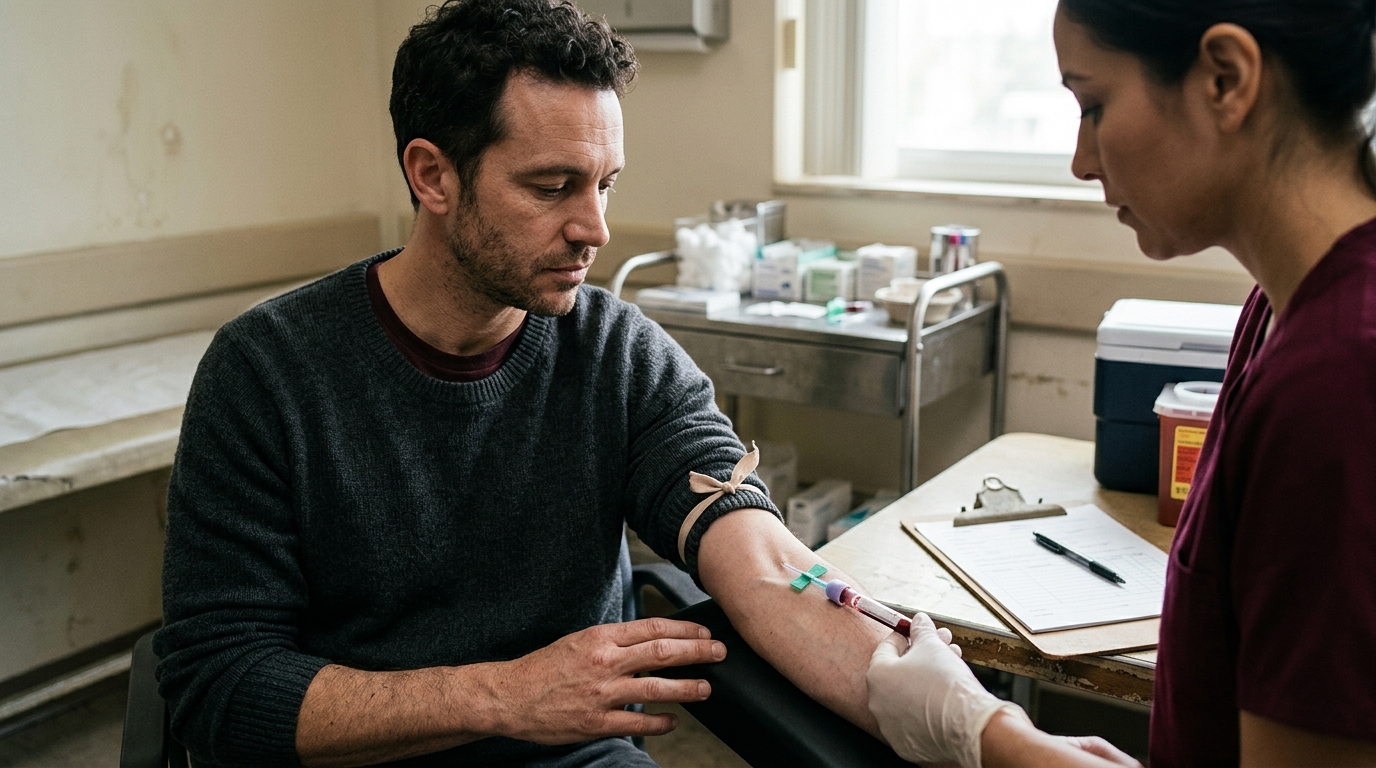

Roughly 50 to 60 percent of circulating testosterone binds to SHBG, heavily influencing calculated free testosterone results and the diagnostic value of different laboratory equations.





This guide provides educational information on hormone physiology, laboratory testing methods, and clinical research. It does not provide medical advice, diagnosis, or personalized treatment plans. Anyone evaluating hormone levels, unexplained symptoms, or laboratory results should consult a qualified healthcare professional.
Calculated free testosterone is a mathematical estimate of the unbound hormone circulating in the bloodstream. It is derived from measured total testosterone, sex hormone-binding globulin, and serum albumin using equations based on the law of mass action. It is not a direct physical measurement of free hormone molecules. It is also not interchangeable with every test labeled as free testosterone on a commercial laboratory panel.
Understanding how calculated free testosterone works requires looking closely at how hormones bind to blood proteins, how different equations behave, and where lab errors can skew the final number.
Before examining the underlying mathematics, several core facts help frame how calculated free testosterone fits into modern medicine.
Testosterone circulates through the bloodstream in three distinct states. The vast majority of circulating hormone is bound to proteins, while only a small fraction moves freely through the blood.
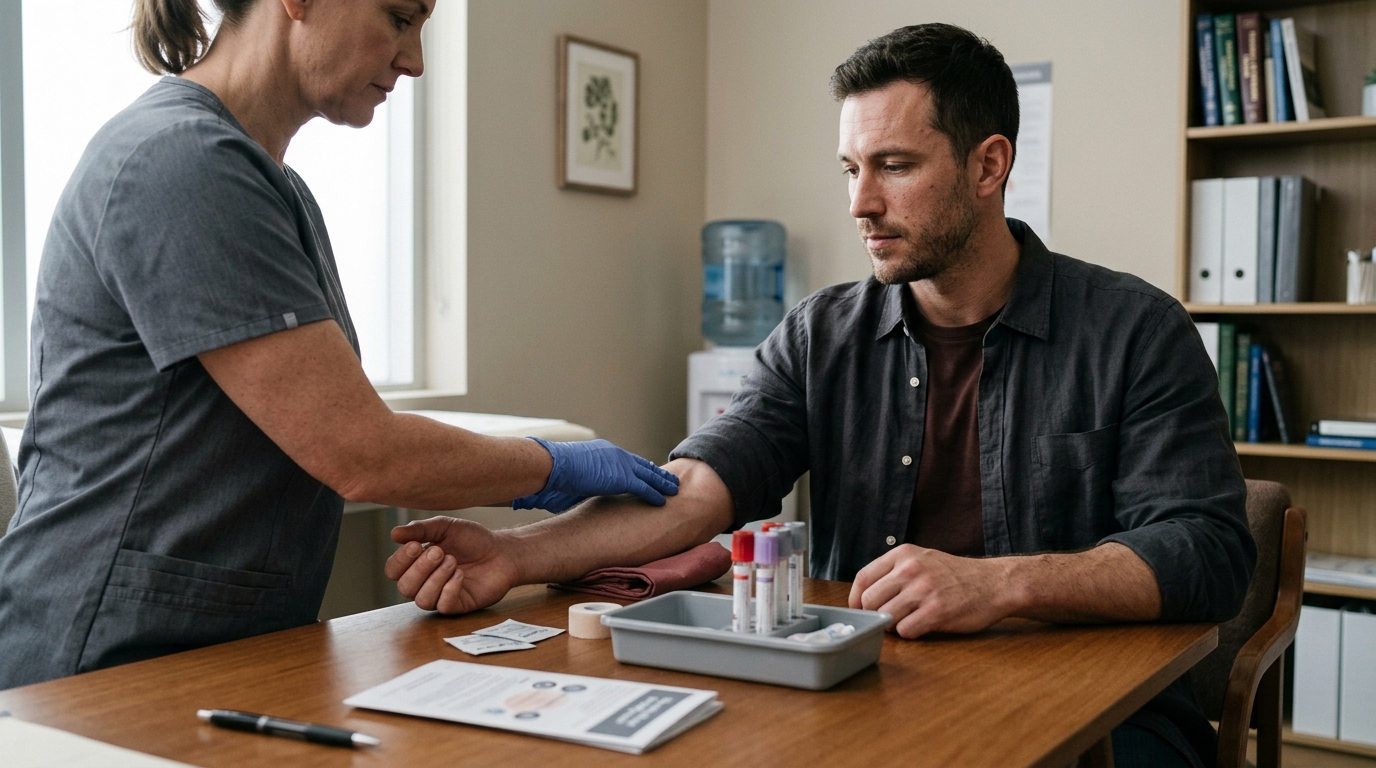
Total testosterone measures the absolute sum of all circulating testosterone. This includes the unbound hormone alongside hormone molecules bound to transport proteins. In healthy adult men, roughly 50 to 60 percent of total testosterone is tightly bound to sex hormone-binding globulin, also known as SHBG. Another 40 to 50 percent is bound loosely to albumin. Only about 1 to 2 percent circulates as unbound, free testosterone.
Free testosterone refers specifically to the unattached fraction. Because it is not bound to carrier proteins, free testosterone can readily diffuse across cell membranes and bind to androgen receptors in target tissues. For this reason, the free hormone hypothesis suggests that the unbound fraction is biologically active at the cellular level.
Bioavailable testosterone is a related but distinct concept. It includes both the free fraction and the albumin-bound fraction. Because the chemical bond between testosterone and albumin is relatively weak, albumin-bound hormone can dissociate rapidly as blood passes through capillary beds. As a result, bioavailable testosterone represents the total pool of hormone that is either immediately free or readily accessible to tissues. Bioavailable testosterone is not a synonym for free testosterone, and confusing the two terms can lead to misinterpretation of laboratory reports.
Learning the basics of testosterone physiology and circulating fractions helps clarify why a total testosterone number does not always tell the whole story.
Calculated free testosterone relies on the law of mass action. This principle describes how chemical reactions reach equilibrium based on the concentrations of reactants and products.
In blood serum, unattached testosterone molecules, unattached binding proteins, and bound protein complexes exist in a continuous dynamic balance. Testosterone constantly binds to and unbinds from SHBG and albumin. When the concentrations of the primary components are known, mathematical models can infer the concentration of unbound testosterone.
A standard calculation requires three measured or assumed biological inputs:
The formula also incorporates specific equilibrium association constants. These constants represent the binding affinity of testosterone for each carrier protein. In widely cited models, the association constant for testosterone binding to SHBG is approximately 1.0 multiplied by 10 to the ninth power liters per mole. SHBG functions as a homodimer with two steroid-binding sites. In contrast, the association constant for testosterone binding to albumin is much weaker, set at approximately 3.6 multiplied by 10 to the fourth power liters per mole.
Among the most common algorithms are the Vermeulen formula, published in 1999, and the Södergård formula. These equations solve quadratic or cubic equations to determine the free fraction based on the known association constants and serum concentrations.
For these formulas to work, all inputs must be converted into compatible units of measurement before running the calculation. Total testosterone is often reported in nanograms per deciliter or nanomoles per liter. SHBG is usually reported in nanomoles per liter, and albumin is reported in grams per deciliter. If a laboratory or online calculator applies incorrect unit conversions, the calculated output will be invalid.
A common point of confusion for patients and clinicians is that calculated free testosterone is not a single standardized number. Different published algorithms use slightly different assumptions, binding constants, and mathematical structures.
This divergence was highlighted in a landmark 2006 study by de Ronde and colleagues published in the journal Clinical Chemistry. The researchers evaluated five published calculation algorithms using blood samples from 399 independently living men between the ages of 40 and 80 years.
The study found substantial variations across the algorithms. For the exact same group of men, the mean calculated free testosterone was:
The authors noted that these mathematical discrepancies were large enough to alter clinical impressions if interpreted against a generic reference interval. They concluded that calculation algorithms must be validated locally against standard reference methods rather than assumed to be interchangeable.
Another comparative study evaluated four separate calculation equations alongside the free androgen index. It confirmed that numerical outputs varied considerably depending on the mathematical formula applied. Both the Vermeulen and Södergård methods rely on the core assumption that testosterone binds primarily to albumin and SHBG. However, differences in their mathematical execution produce distinct numerical ranges.
Because equations generate different results, a calculated free testosterone value must always be interpreted against the specific reference range established for that exact formula. Comparing a Vermeulen result to a Södergård reference range, or comparing values from two different commercial calculators, will introduce false discrepancies.
Because more than half of all circulating testosterone is bound to SHBG, any significant change in SHBG production directly impacts total testosterone measurements. This can create situations where total testosterone appears abnormal even when the unbound fraction remains stable.
When SHBG levels drop, total testosterone numbers decline. The body clears unbound hormone through hepatic metabolism and renal excretion, but the overall equilibrium shifts to maintain a stable unbound pool. A man with low SHBG may have a total testosterone reading below standard reference ranges, yet his actual circulating free testosterone may remain entirely normal.
Conversely, when SHBG levels rise, total testosterone numbers increase. The expanded pool of binding protein carries more bound hormone through the circulation. A man with high SHBG may present with a total testosterone value that looks completely normal or even elevated, while his unbound free testosterone is significantly depressed.
Several health conditions and physiological states are known to alter circulating SHBG levels:
When evaluating diagnosing low testosterone levels, understanding SHBG behavior prevents misinterpreting total hormone numbers. SHBG changes are not a reason to guess at a patient's status. Instead, they serve as a clear indication to evaluate free testosterone directly or via calculation.
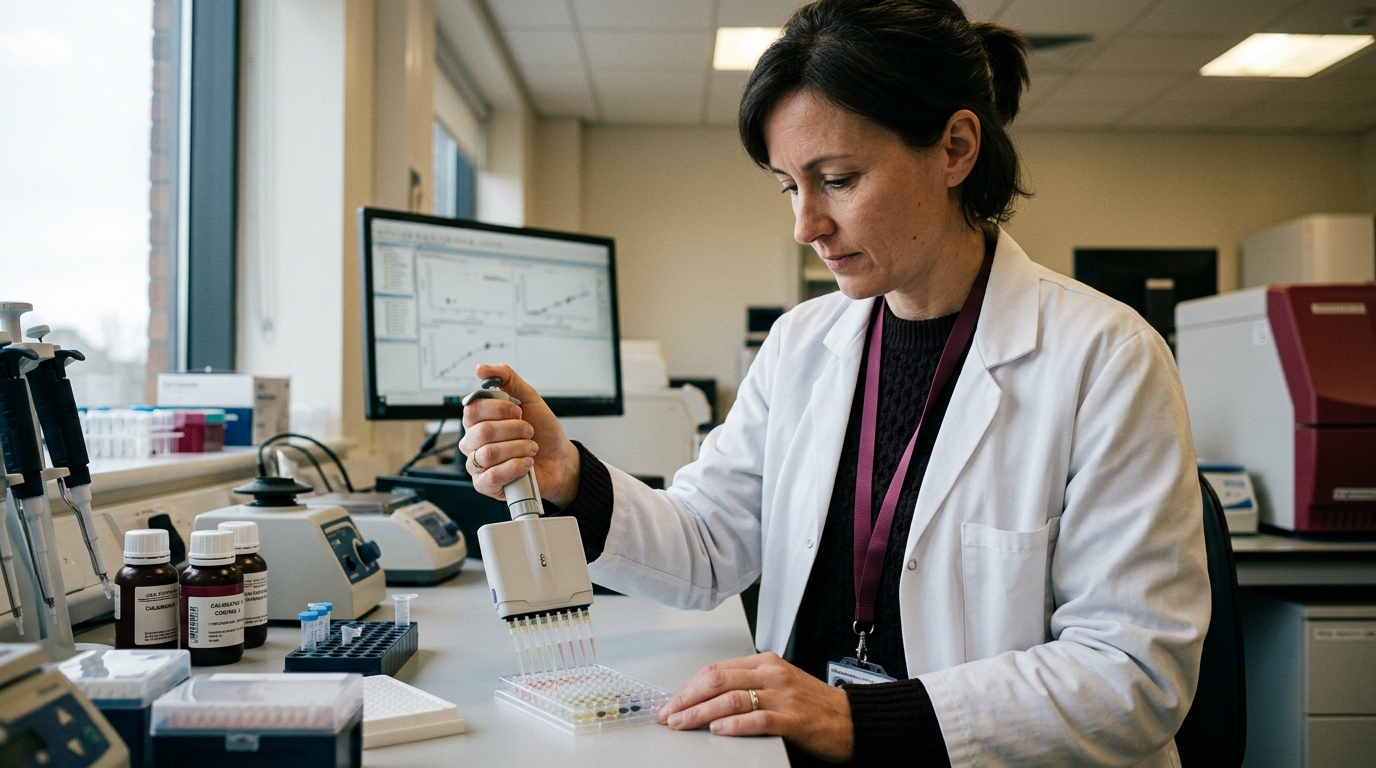
Laboratory reports labeled "free testosterone" can represent entirely different testing methodologies. Broadly, laboratory methods fall into three categories: physical separation methods, mathematical calculations, and direct analog immunoassays.
Equilibrium dialysis is widely regarded as the gold standard reference method for measuring free testosterone. In this assay, serum is placed on one side of a semipermeable membrane, while a physiological buffer is placed on the other. Unbound testosterone molecules are small enough to pass through the pores of the membrane, while large protein molecules like SHBG and albumin are blocked.
Once the system reaches equilibrium, the concentration of testosterone in the buffer dialysate matches the free hormone concentration in the serum. The dialysate is then measured using liquid chromatography-tandem mass spectrometry, known as LC-MS/MS. Ultrafiltration works on a similar physical principle, using centrifugal force to push unbound hormone through a filtration membrane.
While highly accurate, equilibrium dialysis is technically demanding, time-consuming, and expensive. It is not easily adapted to high-throughput commercial testing environments.
Because equilibrium dialysis is not universally available, validated mass-action calculations serve as a practical alternative. When input assays for total testosterone, SHBG, and albumin are accurate, calculations track reasonably well with equilibrium dialysis. However, calculated values are systematic approximations rather than physical extractions.
Direct analog immunoassays attempt to measure free testosterone without separating the bound proteins first. These tests use a labeled testosterone analog designed to compete with free testosterone for antibody binding sites without displacing protein-bound hormone.
Major professional organizations, including the Endocrine Society, strongly advise against using direct analog free testosterone immunoassays. Numerous validation studies have shown that these assays are analytically inaccurate and clinically unreliable. The analog tracers often bind unpredictably to serum proteins, and the presence of altered SHBG distorts the assay binding curves.
A published review on testosterone binding noted that in an ambulatory male population, direct analog immunoassay values were roughly one-eighth of the values generated by mass-action calculations. While this does not represent a universal conversion factor, it demonstrates the severe quantitative discordance between analog testing and validated methods.
When reviewing interpreting blood test results, confirming the exact testing method used by the laboratory is a necessary first step.
Interpreting a calculated free testosterone result requires looking at each biomarker in the calculation independently. A clinician must evaluate the complete biological picture rather than viewing any single number in isolation.
Total testosterone reflects the overall output of the hypothalamic-pituitary-gonadal axis combined with circulating protein carriage. Standard clinical guidelines, such as those from the American Urological Association, recommend confirming low total testosterone with at least two separate early-morning blood draws.
Testosterone production follows a circadian rhythm, peaking in the early morning hours between 7:00 AM and 10:00 AM in young and middle-aged men. Diurnal variation tends to flatten with advancing age, but morning testing remains the established clinical standard. Acute illness, poor sleep, psychological stress, and nutritional intake can all temporarily suppress morning testosterone production.
SHBG is a glycoprotein produced primarily by the liver. Its production is regulated by a complex balance of metabolic and hormonal signals. Thyroid hormones and estrogens stimulate hepatic SHBG synthesis, while insulin, pro-inflammatory cytokines, and androgens suppress it.
Because SHBG binds testosterone with high affinity, it acts as a circulating reservoir and modulates the rate at which testosterone leaves the vascular compartment. Measuring SHBG provides direct insight into why a total testosterone number might be unexpectedly high or low relative to a patient's clinical presentation.
Albumin is the most abundant protein in human blood plasma. Although its binding affinity for testosterone is thousands of times lower than that of SHBG, its high concentration makes it a major carrier of circulating androgens.
Many automated calculators and laboratory formulas use a fixed, assumed albumin concentration, typically 4.0 or 4.3 grams per deciliter, rather than a measured value. In healthy ambulatory men, this assumption introduces only minor variation. However, in individuals with liver disease, kidney dysfunction, systemic inflammation, or severe malnutrition, albumin levels can drop significantly. In those cases, relying on an assumed albumin value can distort the calculated free testosterone estimate.
The Free Androgen Index is a simple mathematical ratio calculated by dividing total testosterone by SHBG and multiplying by 100.
While FAI is frequently used in female reproductive endocrinology to assess hyperandrogenism, clinical guidelines and methodological reviews state that FAI is invalid for adult men. FAI assumes a linear relationship between total testosterone and SHBG that does not hold true at male physiological concentrations. Methodological studies show poor correlation between FAI and equilibrium dialysis in men. FAI should never be used as a substitute for a mass-action free testosterone calculation.
Hormone concentrations fluctuate continuously and must always be interpreted in the context of clinical symptoms, physical examination findings, and medical history. No single lab value should be used as a standalone diagnostic tool.
Guidelines from the Endocrine Society recommend evaluating free testosterone in specific clinical scenarios:
The American Urological Association guideline defines testosterone deficiency using a combination of clinical symptoms and at least two separate early-morning total testosterone measurements below 300 ng/dL. While total testosterone is the primary diagnostic benchmark, free testosterone serves as a vital secondary metric when binding abnormalities complicate the picture.
To understand how calculated free testosterone functions in clinical decision-making, consider these four common educational scenarios:
An adult male with obesity and insulin resistance presents with fatigue and reduced physical endurance. His early morning total testosterone is 260 ng/dL, which is below the standard reference cutoff. However, his SHBG is also low, measuring 14 nmol/L.
When free testosterone is calculated using his measured albumin, the estimated free testosterone falls comfortably within the normal range. In this scenario, the low total testosterone is driven largely by low carrier protein capacity rather than primary testicular failure. Addressing the underlying metabolic health and insulin sensitivity is the appropriate clinical focus.
A 58-year-old male presents with persistent low libido, loss of muscle mass, and erectile difficulties. His total testosterone is measured at 420 ng/dL, which appears reassuring on a standard lab panel. However, his SHBG is elevated at 72 nmol/L.
Calculating his free testosterone reveals a significantly suppressed unbound fraction. Despite a normal total testosterone level, the expanded SHBG pool restricts hormone availability to peripheral tissues. In this case, relying solely on total testosterone would miss the underlying androgen deficiency.
A patient presents with non-specific symptoms and an initial morning total testosterone of 315 ng/dL, followed by a repeat test of 305 ng/dL. Because these values sit right at the diagnostic threshold, clinical guidelines support assessing free testosterone.
A mass-action calculation or equilibrium dialysis measurement provides the necessary detail to determine whether his unbound hormone levels are truly deficient or well-maintained within reference norms.
A patient uses an online direct-to-consumer testing service and receives a free testosterone result that is severely flagged as low, despite having a normal total testosterone and normal SHBG.
Reviewing the laboratory documentation reveals that the test was performed using a direct analog immunoassay. Because analog assays are prone to substantial negative bias and analytical artifacts, the low result does not confirm a clinical problem. The appropriate next step is repeat evaluation using a validated mass-action calculation or equilibrium dialysis.
A comprehensive approach to hormone testing and biomarker analysis ensures that clinical decisions are based on accurate, context-specific data rather than isolated laboratory artifacts.
Evaluating hormonal health requires distinguishing established clinical consensus from observational data and early scientific hypotheses.
Major endocrine and urological societies have established clear, consensus-driven guidelines regarding free testosterone testing:
While clinical guidelines provide clear rules of thumb, laboratory research reveals nuanced complexities that remain active areas of study:
Understanding these boundaries helps patients and clinicians recognize what a calculated test can reliably show, and what remains an approximation.
Reviewing the latest clinical research on testosterone therapy highlights how diagnostic standards continue to evolve as analytical testing methods improve.
When reviewing hormone testing with a doctor or endocrinologist, having specific, structured questions can help clarify your results:
Yes, provided you have accurate laboratory measurements for total testosterone, SHBG, and albumin from the same blood draw. However, you must ensure that all units are correctly matched. Furthermore, an online calculation cannot diagnose a medical condition. A calculated value must always be interpreted by a qualified healthcare provider alongside your clinical symptoms and reference intervals.
Direct analog immunoassays are automated, fast, and inexpensive to run on standard high-throughput laboratory analyzers. In contrast, equilibrium dialysis is labor-intensive and costly. While clinical guidelines explicitly recommend against analog assays due to poor accuracy, their lower cost and convenience mean some commercial facilities continue to include them on standard requisition menus.
No. Hormone levels must interact with cellular androgen receptors, co-activators, and downstream signaling pathways to produce physiological effects. Individual tissue sensitivity, receptor density, and overall health status all influence how the body responds to circulating hormone concentrations.
When total and calculated free testosterone point in different directions, the discrepancy is usually explained by altered SHBG levels. Bring the complete laboratory panel, including total testosterone, SHBG, and albumin, to a qualified physician. They will evaluate whether underlying metabolic, thyroid, liver, or lifestyle factors are influencing your binding proteins.
Testostra explains testosterone biology, testing, symptoms, lifestyle factors and TRT with careful sourcing and clear clinical limits.



Send us a question, research idea or topic suggestion. Reader questions help shape future Testostra content.
Contact Testostra