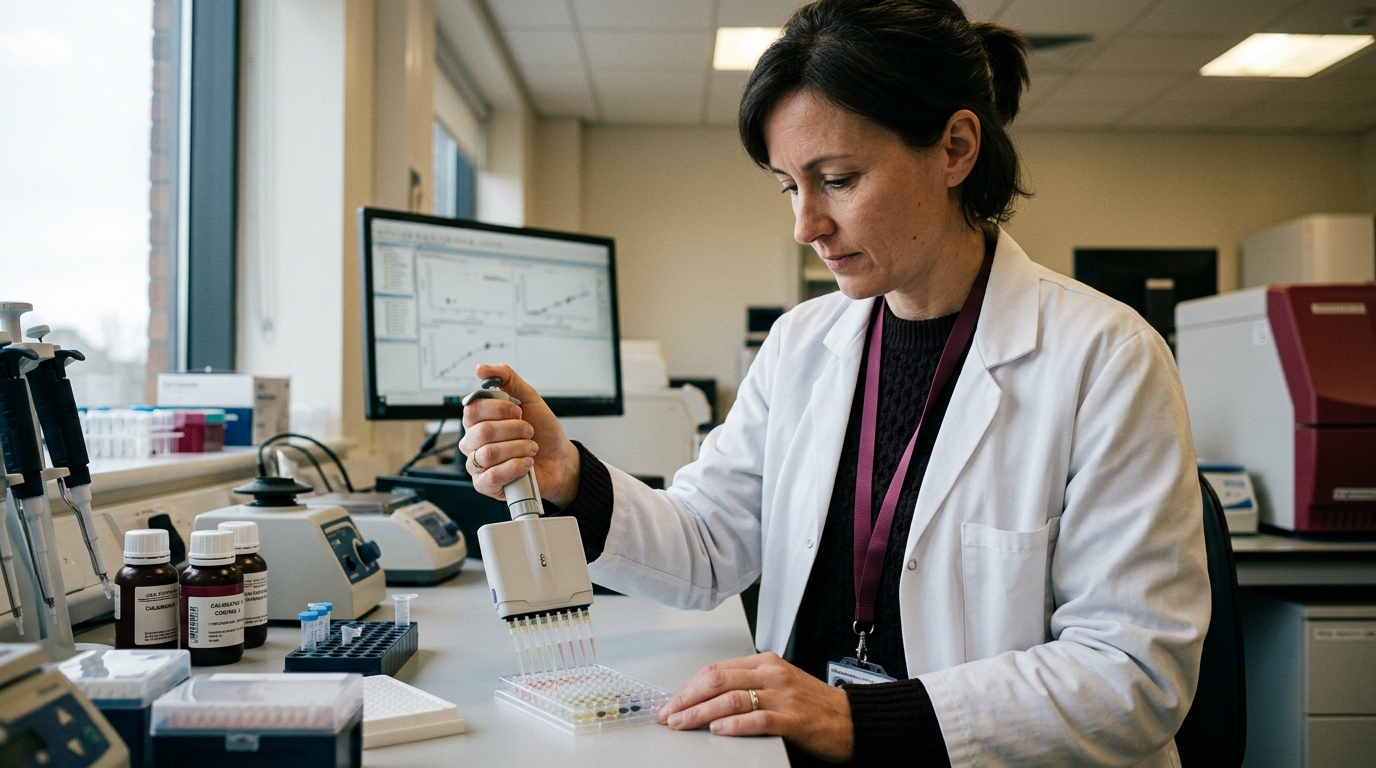

A 12-week clinical trial in 30 men shows how dietary cholesterol influences testosterone production, biomarker testing, and related strength outcomes.





You sit down for breakfast and look at a carton of eggs. Over the years, you have heard competing claims about them. Some fitness forums claim that eating whole eggs raises your testosterone because cholesterol is the raw building block for steroid hormones. Other sources warn that the cholesterol in egg yolks poses a threat to your heart.
Understanding how diet intersects with male endocrine health requires looking past marketing claims and social media trends. While biochemistry confirms that testosterone is derived from cholesterol, the relationship between dietary cholesterol, whole foods, and blood hormone levels is far more nuanced. This guide examines the clinical research on eggs, dietary cholesterol, and male hormones, alongside cardiovascular considerations and proper diagnostic standards.
This article is for educational and informational purposes only. It is not personal medical advice, diagnosis, or treatment. Dietary adjustments cannot replace a formal medical evaluation for hormonal or cardiovascular concerns. Always consult a qualified healthcare provider regarding your lab results, personal health history, or changes to your nutrition plan.
Before examining the clinical studies in detail, consider the fundamental conclusions supported by current nutritional and endocrine research:
To understand why eggs are frequently discussed in male hormone research, it helps to examine basic steroidogenesis. Steroidogenesis is the biological process by which the body produces steroid hormones.
Every steroid hormone in the human body originates from cholesterol. This includes testosterone, estradiol, cortisol, aldosterone, and progesterone. Inside the testes, specialized Leydig cells take up cholesterol and transport it into the mitochondria. A specialized enzyme system then converts cholesterol into pregnenolone, which undergoes several enzymatic steps to ultimately produce testosterone.
Because cholesterol is the starting substrate for this pathway, it is easy to assume that consuming more cholesterol will accelerate hormone production. However, human physiology is tightly regulated. The body does not rely solely on the cholesterol you eat to maintain hormone synthesis.
Most circulating and cellular cholesterol is synthesized internally by your own organs, primarily the liver. The testes also have the capacity to synthesize cholesterol locally if supply drops. Furthermore, steroid hormone production is governed by feedback loops involving the brain. The hypothalamus and pituitary gland monitor circulating hormone levels and adjust signaling accordingly. The presence of extra raw material does not force the body to produce excess hormones beyond its regulated set points.
To learn more about the biological foundations of hormone synthesis, you can review our guide on testosterone fundamentals and hormonal function.
The idea that whole eggs specifically alter testosterone gained scientific attention through a randomized controlled trial led by researcher Bagheri and colleagues. Because this study is frequently cited in fitness communities, looking closely at its design and findings provides helpful clarity.
The trial evaluated 30 resistance-trained young men over a 12-week period. All participants completed a supervised, whole-body resistance training program three days per week. The men were split into two dietary intervention groups:
Both groups consumed equal amounts of protein from their post-workout egg intake. The primary difference was that the whole-egg group consumed the egg yolk, which contained dietary fat, cholesterol, and various micronutrients, while the egg-white group received pure protein without the yolk lipids.
At the end of the 12 weeks, the researchers noted several differences between the two groups:
This study provides a valuable piece of evidence, but its boundaries are important to understand. The trial was conducted in a small sample of 30 young, athletic, eugonadal men engaging in rigorous resistance training. It cannot tell us how whole eggs affect sedentary adults, older men, or individuals with clinically low testosterone.
Additionally, the trial compared whole eggs to egg whites rather than isolating dietary cholesterol. Egg yolks contain choline, vitamin D, selenium, phosphorus, and specific fatty acids alongside cholesterol. Any of these components, or their combined nutritional matrix, could have influenced the observed outcomes. Finally, despite the measured difference in serum testosterone, the whole-egg group did not gain more muscle mass than the egg-white group. This demonstrates that a modest change in circulating hormone levels does not automatically translate into altered structural outcomes.
For a broader perspective on how dietary habits and daily routines intersect with endocrine health, see our overview of lifestyle and natural testosterone support.
While the Bagheri trial evaluated an active post-workout intervention, larger epidemiological studies provide insight into how dietary cholesterol relates to hormone levels across the general population.
A notable United States population analysis investigated men between the ages of 20 and 80. The researchers examined whether dietary cholesterol intake or measured serum total cholesterol was correlated with total testosterone concentrations.
The analysis adjusted for numerous potential confounding variables. These included total energy intake, dietary fat, alcohol consumption, smoking status, age, physical activity levels, income, marital status, race, education, diabetes, hypertension, and body mass index.
After accounting for these variables, the researchers found no association between dietary cholesterol intake and serum total testosterone. Similarly, they found no association between circulating blood cholesterol levels and testosterone concentrations.
This population-level finding provides a critical counterweight to small intervention trials. It shows that in free-living adults across diverse age groups, eating more cholesterol does not reliably predict higher testosterone. A person with high dietary cholesterol intake is just as likely to have average or low testosterone as someone with lower intake.
In discussions about nutrition and hormones, laboratory numbers are often treated as simple scores that can be pushed up or down through specific meals. In clinical practice, male hormonal health is evaluated through a much broader framework.
If you suspect you have hormonal imbalances, understanding how clinicians approach evaluation can help set realistic expectations. For a deeper look at identifying potential deficiency symptoms, you can read our resource on low testosterone signs and risk factors.
A lab test showing a lower total testosterone concentration does not, by itself, establish a medical condition. The Endocrine Society emphasizes that a diagnosis of male hypogonadism requires both compatible symptoms and unequivocally low hormone concentrations.
Common symptoms that warrant clinical evaluation include:
Without clinical symptoms, a minor fluctuation in blood hormone values carries limited medical significance.
Testosterone levels follow a circadian rhythm in healthy adult men. Levels peak in the early morning hours, typically between 7:00 AM and 10:00 AM, and decline progressively throughout the afternoon and evening. This diurnal variation is most pronounced in younger men and gradually dampens with age.
Because of this natural fluctuation, clinical guidelines established by the Endocrine Society require at least two separate blood tests taken in the early morning. A single random test, especially one drawn in the afternoon or during a period of acute illness, poor sleep, or intense stress, can produce a misleadingly low result.
Before concluding that a hormonal issue requires treatment, clinicians evaluate reversible lifestyle and medical factors. A 2026 statement from the Endocrine Society emphasizes looking for underlying issues that suppress testosterone production naturally.
Common reversible contributors include:
Eating eggs or adjusting dietary cholesterol will not overcome an unaddressed sleep disorder, significant obesity, or medication-induced suppression.
When evaluating male hormonal and metabolic health, physicians evaluate a panel of related markers rather than relying on a single measurement.
Total testosterone measures the entire amount of testosterone circulating in your bloodstream. It includes hormone that is tightly bound to proteins, loosely bound to proteins, and completely unbound. While total testosterone is the standard initial screening tool, it does not always reflect the amount of hormone available to target tissues.
Approximately 40 to 65 percent of circulating testosterone is bound tightly to sex hormone-binding globulin (SHBG), rendering it largely inactive for immediate cellular uptake. Another 30 to 50 percent is bound loosely to albumin.
Free testosterone refers to the small fraction (typically 1 to 3 percent) that floats unbound in the blood. Bioavailable testosterone includes free testosterone plus the albumin-bound portion. When SHBG levels are unusually high or low, measuring or calculating free testosterone provides a clearer clinical picture than total testosterone alone.
SHBG is a glycoprotein produced by the liver that binds to sex steroids. Levels of SHBG can be influenced by thyroid status, liver health, insulin levels, and diet. A high-protein or lower-carbohydrate diet can sometimes alter SHBG concentrations, which changes the balance between bound and free hormone without altering total testicular production.
LH and FSH are gonadotropins secreted by the pituitary gland. LH signals the Leydig cells in the testes to produce testosterone, while FSH supports sperm production in the Sertoli cells. Measuring LH and FSH helps clinicians distinguish between primary hypogonadism (testicular failure) and secondary hypogonadism (pituitary or hypothalamic signaling failure).
Because dietary cholesterol intake is tied to cardiovascular discussions, lipid markers are an essential part of the picture:
You can learn more about how diagnostic panels are structured in our guide to testosterone testing and biomarkers.
Discussions about eggs cannot occur in isolation from cardiovascular health. For decades, public health guidance advised strictly limiting dietary cholesterol to protect against cardiovascular disease (CVD). While scientific understanding of dietary cholesterol has evolved, evidence regarding whole eggs remains nuanced.
Observational studies evaluating egg intake and heart health present mixed outcomes across large populations:
These contrasting results do not mean that one study is correct and another is wrong. Instead, they demonstrate that observational nutrition studies are subject to confounding factors, such as overall diet quality, cooking methods, physical activity, and baseline participant health.
The American Heart Association (AHA) published a comprehensive science advisory on dietary cholesterol and cardiovascular risk. The AHA concluded that focusing on dietary patterns is far more effective for heart health than targeting individual nutrients in isolation.
According to the AHA, dietary cholesterol itself has a relatively modest effect on blood LDL cholesterol compared to saturated fat. Replacing saturated fats (found in fatty meats, butter, and processed items) with unsaturated fats (found in olive oil, nuts, seeds, and avocados) produces a much greater reduction in atherogenic lipoproteins.
The AHA provides the following practical considerations regarding eggs:
When evaluating eggs in your diet, what you eat alongside them matters significantly. Consuming poached or boiled eggs with whole-grain toast, spinach, and avocado creates a very different metabolic environment than consuming eggs fried in butter alongside processed breakfast meats high in saturated fat and sodium.
A heart-healthy dietary pattern emphasizes:
To make informed health decisions, it is helpful to organize nutrition and hormone research by its level of scientific rigor.
These principles are supported by extensive clinical validation and professional medical consensus:
These findings provide valuable insight but cannot prove direct cause and effect:
These findings represent initial signals that require confirmation in larger, more diverse populations:
Understanding where a claim falls on this spectrum helps prevent overreacting to single studies or social media summaries.
Rather than searching for individual foods to raise testosterone, research supports establishing an overall dietary pattern that maintains metabolic health, provides essential micronutrients, and preserves cardiovascular function.
Prolonged, severe caloric restriction suppresses luteinizing hormone secretion and lowers circulating testosterone. Conversely, chronic overconsumption leading to significant visceral fat gain increases aromatase activity and lowers free testosterone. Eating at a caloric level that supports a stable, healthy body weight is one of the most effective nutritional foundations for hormonal balance.
Very low-fat diets (where fat accounts for less than 15 to 20 percent of total calories) have been shown in some studies to cause modest reductions in circulating testosterone. However, this does not mean consuming excessive saturated fat is beneficial.
A sensible approach includes:
Adequate protein intake is necessary to preserve lean body mass, support muscle recovery, and maintain healthy enzyme function. Whole eggs provide a complete amino acid profile with high bioavailability. Combining whole eggs or egg whites with plant proteins, poultry, fish, and dairy ensures a broad spectrum of nutrients without over-relying on any single food.
Several vitamins and minerals serve as cofactors in steroidogenesis and general metabolic regulation:
and endocrine health. Egg yolks provide a natural dietary source of vitamin D, alongside sunlight exposure or targeted supplementation if deficient.
If you are evaluating your hormone levels, dietary habits, or cardiovascular markers, structured conversations with a healthcare provider can yield the most actionable guidance. Consider asking these questions at your next appointment:
Revisit this resource whenever you encounter bold nutritional claims online promising dramatic hormonal changes from specific foods, or if you receive updated blood lipid panels and want to review how dietary fats fit into a balanced health plan.
Making informed decisions about your nutrition and hormonal health requires looking at comprehensive evidence, maintaining realistic expectations about food, and partnering with a qualified physician.
Testostra explains testosterone biology, testing, symptoms, lifestyle factors and TRT with careful sourcing and clear clinical limits.



Send us a question, research idea or topic suggestion. Reader questions help shape future Testostra content.
Contact Testostra