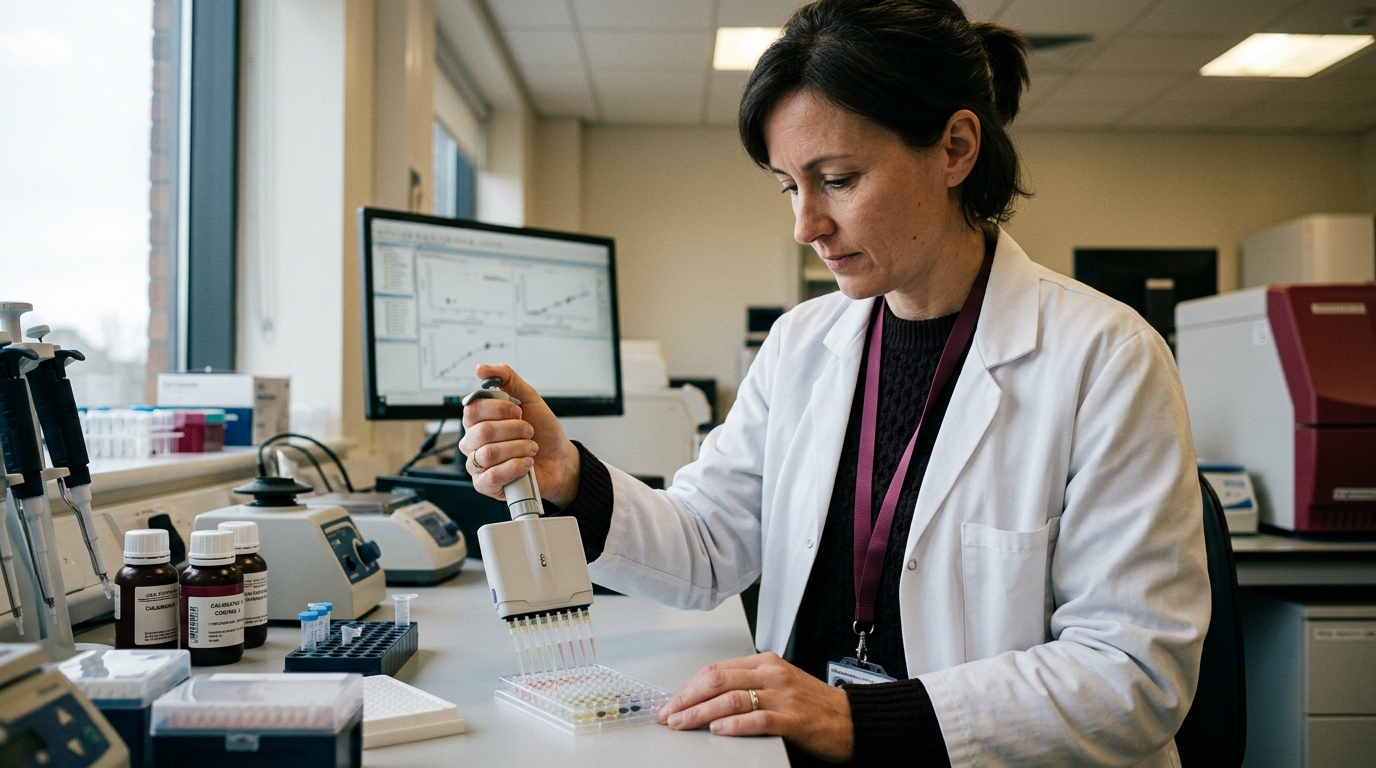

Accurate testosterone assessment requires distinguishing natural daily fluctuations from true hypogonadism through standardized morning fasting lab draws and complete biomarker evaluations.





Medical Disclaimer: The information provided in this guide is for educational purposes only. It is not intended to serve as personal medical advice, diagnosis, or treatment. Hormone levels, laboratory results, and clinical symptoms must always be evaluated in partnership with a qualified healthcare professional.
Most men assume a blood test delivers a permanent truth about their internal biology. When a lab report shows a low testosterone reading, the immediate reaction is often alarm, followed by a search for rapid treatment.
Yet circulating hormone levels are dynamic rather than fixed. A single blood draw captures only a single moment in time. In healthy men, testosterone concentrations shift across the day, change from one week to the next, and respond to temporary physiological stress.
Treating a single low reading as an absolute diagnosis is one of the most common mistakes in male endocrine care. Major medical organizations explicitly caution against this practice. A thorough diagnostic process requires confirming results through standardized repeat testing and interpreting numbers alongside physical symptoms.
Understanding why hormone levels fluctuate allows you to interpret your lab results with clarity and patience. This comprehensive guide explains the biological mechanisms behind hormone variation, outlines clinical testing standards, breaks down essential biomarkers, and details the exact steps required to establish whether low testosterone is a temporary shift or a persistent clinical condition.
To make sense of hormone testing, you must separate a transient lab value from a true medical condition. A low testosterone reading can occur for several distinct reasons, ranging from poor sleep the night before a blood draw to genuine endocrine dysfunction.
Clinical guidelines define three distinct categories that help clarify what a laboratory result actually means.
Short-term variation refers to a temporary decline in circulating testosterone caused by transient external or physiological factors. These factors include the time of day the blood was drawn, recent meals, acute viral illnesses, short-term sleep disruption, or intense physical exhaustion.
When the underlying stressor resolves or the test is repeated at the correct time of day, testosterone levels naturally return to their normal baseline. A short-term drop is not a disease, and it does not require hormone therapy.
Persistent biochemical low testosterone occurs when laboratory testing repeatedly shows low concentrations across multiple blood draws. To meet this definition, each test must be performed under identical, standardized conditions.
This means drawing blood in the early morning while fasting, during periods when you are free from acute illness. Demonstrating persistence is essential because it rules out laboratory error and temporary biological dips. However, a persistent low number by itself is still not a complete clinical diagnosis.
Clinical hypogonadism is a formal medical diagnosis established by a physician. According to clinical guidance from the American Urological Association (AUA) and the Endocrine Society, hypogonadism requires two distinct elements.
First, a patient must exhibit clear symptoms or physical signs consistent with androgen deficiency. Second, the patient must have unequivocally and consistently low serum testosterone concentrations confirmed on at least two separate morning blood tests.
Both elements must be present simultaneously. Having symptoms with normal lab values does not constitute hypogonadism, nor does having a low lab value with no symptoms or signs.
Understanding this distinction protects you from unnecessary or premature medical interventions. If you are researching hormone health, exploring evaluating low testosterone provides foundational context on how clinical criteria are applied in practice.
Because testosterone concentrations change in response to your environment, blood testing protocols must be tightly controlled. If you draw blood under irregular conditions, the result can easily misclassify your hormonal status.
Clinical guidelines emphasize several critical variables that must be controlled whenever hormone levels are evaluated.
In healthy young and middle-aged men, testosterone production follows a distinct 24-hour circadian rhythm. Hormone concentrations typically reach their highest peak in the early morning hours, around the time of waking.
Levels gradually decline throughout the day, reaching their lowest point in the late afternoon and evening. The AUA laboratory white paper notes that evening testosterone values are roughly 15 percent lower than morning values across the general population. In younger men, this daily swing can be as large as 50 percent.
Research published by Bremner and colleagues demonstrated that men aged 30 to 40 had testosterone concentrations 20 to 25 percent lower at 4:00 p.m. compared to 8:00 a.m. By contrast, in men aged 70, the difference narrowed to approximately 10 percent.
In that same study, 17 men who recorded an afternoon level below 300 ng/dL showed completely normal values across all three of their morning visits. Drawing blood in the afternoon can create the illusion of a hormone deficiency where none exists.
However, diurnal variation is not identical for every individual. A 2024 study examining men with symptoms of androgen deficiency revealed substantial variation in how people fluctuate.
In that study, 63 percent of participants showed no significant difference between morning and afternoon draws, defined as a shift within a range of plus or minus 100 ng/dL. Meanwhile, 24 percent experienced a decrease greater than 100 ng/dL in the afternoon, and 13 percent actually showed an afternoon increase greater than 100 ng/dL.
Because population averages show a clear morning peak, both the Endocrine Society and the AUA recommend that diagnostic testing always take place in the early morning, typically between 7:00 a.m. and 10:00 a.m.
Even when blood is drawn at the exact same hour under identical conditions, testosterone levels fluctuate from day to day. The AUA laboratory white paper reports that healthy individuals experience approximately 10 percent intra-individual variation when tested at the same time across consecutive days.
Furthermore, approximately 15 percent of completely healthy men may register a testosterone value below the normal reference range at some point during a standard 24-hour cycle.
This natural noise in biological data explains why a single lab test is never definitive. The white paper highlights that among men whose initial test fell into the mildly hypogonadal range, roughly 30 percent had completely normal testosterone levels upon repeat measurement.
Relying on one test would result in nearly one-third of these men being incorrectly labeled as hormone-deficient. For more details on collection rules, review our comprehensive testosterone testing and biomarker guides.
Testosterone testing should generally be performed in a fasting state. Ingesting food, particularly meals rich in simple carbohydrates or glucose, causes a temporary reduction in circulating total testosterone.
Research indicates that a standard glucose tolerance test or a heavy carbohydrate meal can temporarily suppress serum testosterone levels by up to 25 percent for several hours. If you eat breakfast before a morning blood draw, you risk artificially suppressing your test result. Fasting ensures that metabolic responses to digestion do not skew the measurement.
Acute systemic illness has a powerful, suppressive effect on the hypothalamic-pituitary-gonadal (HPG) axis. Common viral infections, respiratory illnesses, systemic inflammation, or recent surgical procedures can cause a temporary, dramatic drop in circulating testosterone.
The AUA explicitly warns that acute illness impairs test accuracy and leads to artificially decreased measurements. The Endocrine Society advises clinicians against testing men who are currently experiencing or recovering from acute illness.
If you have recently had the flu, a severe cold, or an infection, postpone hormone testing until you have fully recovered for several weeks. Diagnosing hypogonadism during or immediately following an acute illness is clinically invalid.
A variety of common medications can transiently suppress testosterone synthesis or alter laboratory readings. Short-term use of opioid pain medications directly inhibits the release of gonadotropins from the pituitary gland, causing rapid drops in circulating testosterone.
Glucocorticoids such as prednisone, anabolic steroids, and certain psychiatric medications can also alter hormone output. Always provide your clinician with a complete list of prescription drugs, over-the-counter medications, and dietary supplements before undergoing hormone testing.
When assessing male endocrine health, total testosterone is only the starting point. Testosterone circulates in the bloodstream in several distinct chemical states, largely bound to transport proteins.
Understanding these fractions is critical when total testosterone readings appear borderline or conflict with your physical symptoms.
Total testosterone measures the absolute concentration of all testosterone molecules circulating in your bloodstream. According to the AUA laboratory white paper, this total pool is divided into three primary components:
Because total testosterone captures all of these fractions, changes in the concentrations of binding proteins will directly alter your total testosterone result, even if the amount of active hormone remains unchanged.
Sex hormone-binding globulin is a glycoprotein produced by the liver. SHBG binds to testosterone with high affinity, effectively preventing the bound hormone from easily entering target cells and activating androgen receptors.
Conditions that alter liver function, metabolism, or body weight can cause profound shifts in SHBG levels:
Free testosterone represents the small fraction of hormone that is entirely unbound and readily diffuses into target tissues. Bioavailable testosterone includes both free testosterone and the fraction loosely bound to albumin, as albumin-bound hormone dissociates easily at the tissue level.
When a patient presents with borderline total testosterone, or when their total level contradicts their physical symptoms, evaluating free testosterone is essential. The Endocrine Society recommends assessing free testosterone in diagnostic pathways when indicated, particularly in men with conditions known to alter SHBG.
Free testosterone can be measured directly using equilibrium dialysis assays, or calculated mathematically using total testosterone, SHBG, and albumin measurements. The AUA white paper notes that while calculated values are useful, their accuracy depends entirely on the precision of the underlying laboratory tests. To learn more about these mechanisms, read our guide on testosterone physiology basics.
When repeat morning testing confirms that low testosterone is persistent, the diagnostic focus shifts from verification to cause. Identifying the root mechanism is essential for determining safe and appropriate medical management.
Hormone production is regulated by a feedback loop involving the brain and the testes.
The hypothalamus releases Gonadotropin-Releasing Hormone (GnRH), which prompts the pituitary gland to secrete Luteinizing Hormone (LH) and Follicle-Stimulating Hormone (FSH). LH stimulates the Leydig cells in the testes to manufacture testosterone, while FSH supports sperm production.
The Endocrine Society guidelines recommend measuring serum LH and FSH once persistent low testosterone has been established. These gonadotropins allow clinicians to categorize the condition into one of two primary types:
When a patient demonstrates persistent low testosterone accompanied by low or low-normal LH, additional pituitary investigations may be warranted. The AUA guidelines recommend measuring serum prolactin in men with low testosterone and low-normal LH to screen for hyperprolactinemia, which can stem from a prolactin-secreting pituitary adenoma.
Furthermore, the AUA guideline explicitly states that when total testosterone falls below 150 ng/dL in the presence of low or low-normal LH, a comprehensive pituitary evaluation is indicated.
This evaluation may include pituitary magnetic resonance imaging (MRI) and assessment of other pituitary hormone axes. These advanced diagnostic steps highlight why persistent low hormone numbers require structured clinical investigation rather than unsupervised self-treatment.
When researching hormone testing online, it is easy to conflate established clinical consensus with early observational studies. Evaluating the strength of evidence behind different testing concepts helps maintain a balanced perspective.
Leading organizations such as the American Urological Association and the Endocrine Society base their clinical guidelines on extensive reviews of high-quality evidence. The core principles of established guidance include:
These clinical recommendations represent standard medical practice designed to maximize diagnostic accuracy and protect patients from inappropriate treatment.
In contrast to rigid clinical rules, the relationship between lifestyle disruptions and hormone variation involves a wider degree of variability. Sleep disruption is frequently cited as a major driver of low testosterone, but the underlying research presents a complex picture.
Testosterone production follows a sleep-dependent rhythm, with concentrations rising during undisturbed sleep and peaking during early rapid eye movement (REM) phases. A widely cited study summarized in endocrine reviews demonstrated that restricting healthy young men to five hours of sleep per night for eight consecutive nights reduced daytime testosterone by 10 to 15 percent.
However, other scientific trials have yielded conflicting results. A study examining healthy young men subjected to severe short-term sleep restriction and milder longer-term sleep restriction observed no statistically significant changes in serum testosterone levels.
Comprehensive scientific reviews describe the existing evidence on sleep restriction as mixed, noting that acute total sleep deprivation often produces different physiological effects than chronic, moderate sleep restriction.
While prioritizing healthy sleep habits is critical for overall well-being, current scientific literature does not support using a single night of poor sleep as a universal explanation for a low lab result.
Lifestyle variables must be viewed as contributing factors rather than absolute diagnostic answers. To understand how daily habits influence endocrine function, explore our resources on hormone testing protocols.
Interpreting testosterone test results requires navigating several clinical nuances. Overlooking these factors can easily lead to misinterpretation, missed diagnoses, or unnecessary therapies.
One of the most frequent errors occurs when a clinician orders routine blood work during a late afternoon appointment. A healthy 35-year-old man may register a total testosterone of 260 ng/dL at 4:30 p.m. simply due to natural diurnal decline.
If this value is treated as a clinical baseline, he might be incorrectly labeled as hypogonadal. Repeating the test at 8:00 a.m. under fasting conditions frequently reveals a normal reading well above 450 ng/dL.
The AUA guideline suggests a total testosterone threshold of below 300 ng/dL as a reasonable cutoff to support a clinical diagnosis of deficiency. However, the AUA laboratory white paper emphasizes that there is no universal biological boundary that cleanly separates normal from deficient men across the entire population.
A patient with a total testosterone of 295 ng/dL who has no physical symptoms, normal body composition, and robust energy does not have clinical hypogonadism. Conversely, a patient with a total testosterone of 310 ng/dL who presents with loss of secondary sexual characteristics, profound fatigue, and low bone mineral density warrants thorough clinical assessment.
Laboratory numbers must always serve as clinical aids rather than rigid, automated decision-makers.
Metabolic syndrome, insulin resistance, and visceral obesity significantly suppress hepatic SHBG synthesis. A man with moderate obesity may show a total testosterone level of 240 ng/dL on repeat testing.
However, because his SHBG is low, his circulating free testosterone may remain completely within the normal physiological range. Diagnosing him based solely on total testosterone fails to capture the true biological availability of the hormone. In such cases, addressing metabolic health and insulin sensitivity often normalizes both SHBG and total testosterone.
Symptoms often attributed to low testosterone, such as fatigue, mild mood changes, poor concentration, and low physical endurance, are highly nonspecific. These symptoms occur frequently in depression, chronic work stress, obstructive sleep apnea, thyroid dysfunction, and vitamin deficiencies.
Assuming that nonspecific fatigue must be caused by a borderline testosterone level can lead patients to overlook underlying medical conditions that require entirely different treatments.
Men who work permanent night shifts or rotating shift schedules present a unique challenge for standardized testing. The standard recommendation to test between 7:00 a.m. and 10:00 a.m. assumes a standard nocturnal sleep cycle.
For a night-shift worker, drawing blood at 8:00 a.m. occurs at the end of their waking shift, capturing their daily hormonal nadir rather than their peak.
The AUA laboratory white paper recommends that shift workers undergo testosterone testing on their scheduled days off, allowing their sleep-wake schedule to stabilize.
Alternatively, blood should be collected within the first two to three hours after the individual wakes from their primary sleep block, regardless of clock time. Discuss your specific work schedule with your physician to establish an appropriate testing window.
A critical clinical consideration involves reproductive planning. Exogenous testosterone therapy suppresses the pituitary release of LH and FSH, which halts intratesticular testosterone production and dramatically impairs spermatogenesis, often leading to azoospermia.
The Endocrine Society explicitly recommends against initiating testosterone therapy in men who are actively planning a pregnancy in the near term. If hormone deficiency is confirmed in a man seeking to maintain fertility, alternative medical strategies that preserve testicular function, such as gonadotropin therapy or selective estrogen receptor modulators, must be evaluated by an experienced specialist. To read more on reproductive and physical health, see our guide on testosterone and sexual performance.
To navigate hormone testing safely and effectively, you can follow a structured four-stage evaluation process. This framework aligns with major endocrine guidelines and ensures that diagnostic decisions are based on reliable clinical evidence.
Begin by eliminating common sources of external variation before your blood is drawn:
If your initial total testosterone result returns low or near the lower reference limit, do not jump to conclusions:
Work with your clinician to view the laboratory numbers through a comprehensive clinical lens:
If repeatedly low testosterone is confirmed alongside persistent clinical symptoms, identify the specific physiological mechanism:
Approaching your doctor with structured, informed questions ensures a productive discussion and helps prevent unnecessary testing or hasty diagnostic decisions. Use the following questions as a starting point for your consultation:
Approaching hormone testing with a clear understanding of biological variation ensures that your health decisions are grounded in sound clinical evidence rather than short-term fluctuations.
Testostra explains testosterone biology, testing, symptoms, lifestyle factors and TRT with careful sourcing and clear clinical limits.



Send us a question, research idea or topic suggestion. Reader questions help shape future Testostra content.
Contact Testostra