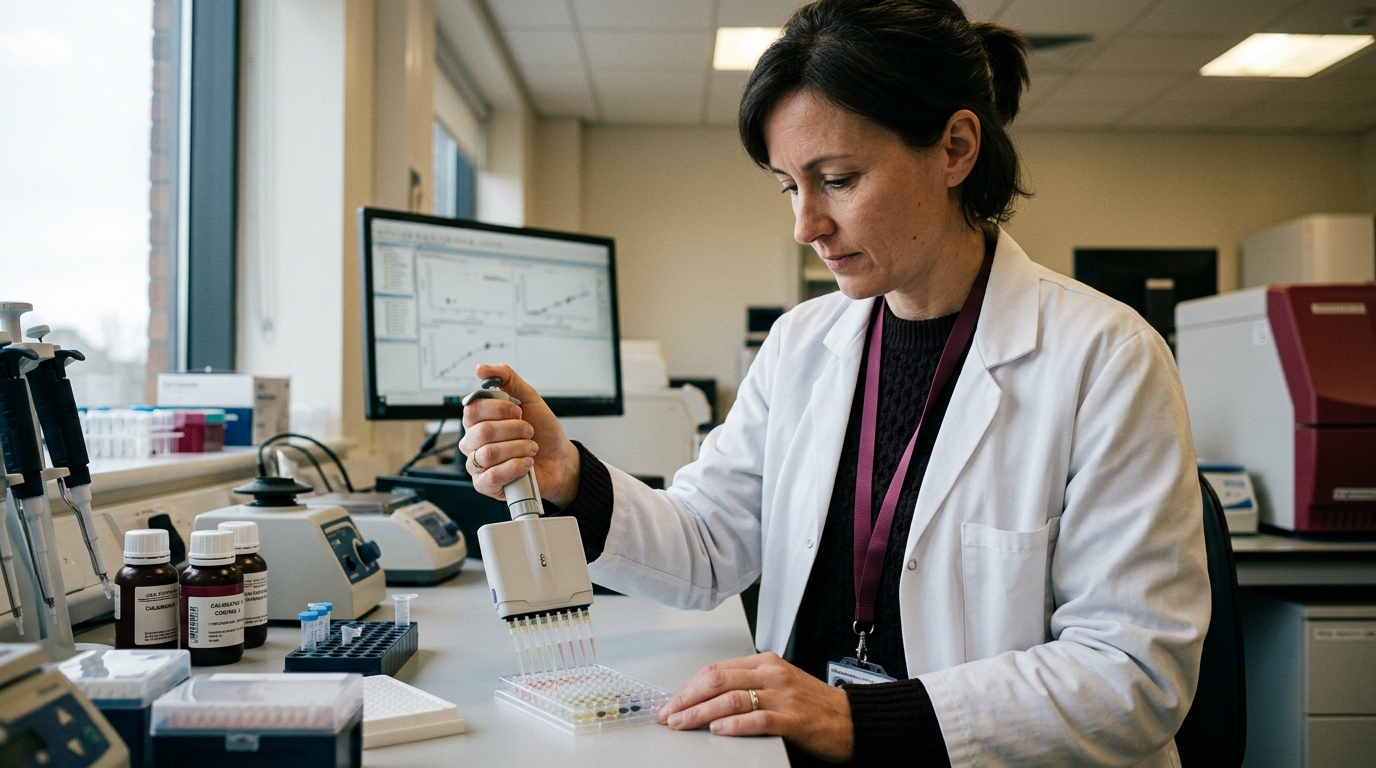

Men facing low testosterone who also plan to have children can evaluate the clinical trade-offs between TRT and alternative fertility-preserving protocols.





Raising testosterone does not automatically restore male fertility. In clinical reality, conventional testosterone replacement therapy often halts sperm production entirely.
Treating androgen deficiency is distinct from restoring reproductive function. Exogenous testosterone supplies the body with the hormone it lacks, but it simultaneously signals the brain to shut down the body's natural production. For men who wish to father biological children, standard hormone replacement can create a serious clinical obstacle.
Navigating this trade-off requires understanding your hormonal physiology, diagnostic testing, and medical options. Whether your priority is immediate symptom relief, maintaining future fertility, or actively pursuing pregnancy, this guide examines the clinical pathways, evidence base, and monitoring protocols necessary to make an informed decision with your healthcare provider.
This guide provides educational information regarding testosterone deficiency, reproductive physiology, and medical management options. It is not personal medical advice, a diagnosis, or a formal treatment protocol.
Hormonal therapies, fertility assessments, and endocrine evaluations require individual medical supervision. You should never alter, start, or stop prescribed medications without direct guidance from a qualified clinician. If you are experiencing symptoms of hormone deficiency or facing fertility challenges, seek comprehensive evaluation from a board-certified urologist, endocrinologist, or reproductive specialist.
The choice between testosterone replacement therapy and fertility-preserving treatment depends on your immediate and long-term reproductive goals. Understanding the distinct biological mechanisms of each approach is essential before initiating any therapy.
A valid diagnosis of testosterone deficiency requires both biochemical confirmation and compatible clinical symptoms. Clinicians do not diagnose hypogonadism based solely on an isolated laboratory number.
Typical symptoms of low testosterone include reduced sexual desire, erectile dysfunction, decreased spontaneous morning erections, persistent fatigue, loss of lean muscle mass, and depressed mood. However, these symptoms are non-specific and can easily stem from sleep apnea, metabolic dysfunction, chronic stress, or thyroid disorders. This is why thorough low testosterone evaluations require structured clinical context and medical history.
Laboratory guidelines from major endocrine and urological organizations emphasize strict testing protocols. Total testosterone levels fluctuate naturally throughout the day, peaking in the early morning hours. Consequently, guidelines recommend obtaining at least two separate fasting morning blood draws taken between 8:00 AM and 10:00 AM.
The American Urological Association suggests a total testosterone cutoff below 300 ng/dL as a reasonable diagnostic threshold when accompanied by consistent clinical symptoms. If a single morning test shows low testosterone, a clinician must confirm that result with a repeat fasting morning test before considering any medical intervention.
A comprehensive clinical assessment also evaluates personal medical history, medication use, previous exposure to anabolic steroids, and baseline reproductive goals. Initiating therapy without clarifying a patient's desire for future biological children can lead to unintended, long-lasting reproductive suppression.
Understanding why testosterone is low represents the most crucial step in choosing an appropriate treatment path. Hypogonadism falls into two primary classifications: primary testicular failure and secondary pituitary dysfunction.
Primary hypogonadism originates within the testes themselves. In this condition, the Leydig cells in the testicles cannot produce sufficient testosterone despite receiving strong hormonal signals from the brain.
Laboratory testing in primary hypogonadism reveals low serum testosterone paired with elevated levels of luteinizing hormone and follicle-stimulating hormone. Because the testicular tissue is intrinsically damaged or non-functional, medications designed to stimulate the testes, such as gonadotropins or selective estrogen receptor modulators, are generally ineffective. For men with primary testicular failure, exogenous testosterone is often the primary medical option for symptom management, though active fertility preservation options may require specialized reproductive interventions such as surgical sperm retrieval.
Secondary hypogonadism, also known as hypogonadotropic hypogonadism, stems from a disruption in the hypothalamic-pituitary-gonadal axis. The hypothalamus fails to secrete sufficient gonadotropin-releasing hormone, or the pituitary gland fails to release adequate amounts of luteinizing hormone and follicle-stimulating hormone.
In secondary hypogonadism, laboratory testing shows low total testosterone alongside low or inappropriately normal gonadotropin levels. Because the testicles remain biologically capable of responding to hormonal stimulation, secondary hypogonadism is often responsive to fertility-preserving therapies. Clinicians can administer medications that mimic or stimulate pituitary gonadotropins, thereby encouraging the testicles to produce both endogenous testosterone and mature sperm.
When a patient presents with low testosterone and low gonadotropins, clinicians must also evaluate potential underlying central causes. The American Urological Association recommends measuring serum prolactin in men with low testosterone and low or low-normal luteinizing hormone. Significantly elevated prolactin levels or total testosterone concentrations falling below 150 ng/dL warrant specialized pituitary imaging to rule out prolactinomas or other central sellar lesions.
Evaluating male hormonal health requires looking past total testosterone in isolation. A complete diagnostic workup tracks several key biomarkers to establish the underlying cause of deficiency and monitor treatment safety. You can learn more about these laboratory markers in our testing and biomarkers section.
Total testosterone measures all circulating testosterone in the bloodstream. This includes hormone bound tightly to sex hormone-binding globulin, hormone bound loosely to albumin, and unbound hormone.
Free testosterone represents the small fraction, typically one to two percent, of circulating hormone that is not bound to carrier proteins. In men with altered sex hormone-binding globulin levels, such as those with obesity, liver disease, or metabolic syndrome, total testosterone can appear falsely low while free testosterone remains adequate. Measuring free testosterone provides essential clinical clarity when total testosterone values fall into borderline ranges.
Luteinizing hormone signals the Leydig cells within the testes to synthesize and release testosterone. Follicle-stimulating hormone acts on the Sertoli cells in the seminiferous tubules to support and maintain normal spermatogenesis.
Measuring baseline LH and FSH allows clinicians to immediately differentiate between primary testicular failure and central signaling dysfunction. During exogenous testosterone therapy, both LH and FSH drop toward undetectable levels due to negative feedback on the pituitary gland.
Sex hormone-binding globulin is a liver-derived protein that binds circulating sex steroids with high affinity. Higher SHBG concentrations reduce the proportion of bioavailable and free testosterone, while low SHBG concentrations increase clearance rates. Tracking SHBG helps clinicians interpret ambiguous total testosterone results and tailor individualized treatment plans.
Estradiol is the primary female sex hormone, but it plays a vital role in male bone density, cognitive health, and sexual function. In men, circulating estradiol is derived primarily from the peripheral aromatization of testosterone by the aromatase enzyme.
Excessive estradiol concentrations can exert strong negative feedback on the hypothalamus and pituitary gland, suppressing natural gonadotropin secretion. Evaluating estradiol helps clinicians determine whether an aromatase inhibitor might be appropriate in specific clinical presentations.
Prolactin is a pituitary hormone that, when pathologically elevated, suppresses the pulsatile secretion of gonadotropin-releasing hormone. Measuring prolactin is essential in the workup of secondary hypogonadism to exclude pituitary microadenomas or macroadenomas.
A semen analysis evaluates sperm concentration, total sperm count, progressive motility, and normal morphology. A standard blood test cannot determine whether an individual is fertile or actively producing functional sperm. For any man who values current or future fertility, obtaining a baseline semen analysis before starting any hormonal therapy is critical for documenting reproductive status.
Medical management of low testosterone involves choosing between replacing circulating hormones directly or stimulating the body's natural endocrine machinery. Each pathway involves distinct mechanisms, administration methods, and physiological trade-offs.
Exogenous testosterone therapy introduces bioidentical testosterone directly into the body. It is available in multiple delivery formulations, including intramuscular and subcutaneous injections, transdermal gels, transdermal patches, and subcutaneous slow-release pellets.
The primary goal of TRT is to restore circulating serum testosterone to the mid-normal physiological range, resolving the symptoms of androgen deficiency. However, introducing exogenous testosterone triggers a powerful negative feedback loop. The hypothalamus and pituitary gland sense sufficient circulating androgens and consequently cease the secretion of gonadotropin-releasing hormone, luteinizing hormone, and follicle-stimulating hormone.
Without LH and FSH signaling, the local concentration of testosterone within the testicles, known as intratesticular testosterone, plummets. Intratesticular testosterone is naturally up to one hundred times higher than circulating blood levels, and it is strictly required to sustain spermatogenesis. As a result, standard TRT rapidly suppresses sperm production, leading to severe oligospermia or complete azoospermia in the majority of men.
Human chorionic gonadotropin is an injectable peptide hormone that shares structural homology with luteinizing hormone. It binds directly to LH receptors on testicular Leydig cells, mimicking the pituitary signal that drives natural testosterone synthesis.
Because hCG acts downstream of the pituitary gland, it stimulates intratesticular testosterone production directly. This allows men with secondary hypogonadism to maintain high intratesticular androgen levels, preserving the local environment necessary for sperm development. Clinicians often use hCG as a primary monotherapy for men seeking to maintain or restore endogenous testosterone production and testicular volume.
In cases where sperm production remains suboptimal on hCG alone, clinicians may introduce recombinant or purified follicle-stimulating hormone. While hCG supports testosterone synthesis and early sperm maturation, FSH acts directly on Sertoli cells to drive full sperm development.
Selective estrogen receptor modulators, such as clomiphene citrate and enclomiphene, are oral medications that act as competitive antagonists at estrogen receptors within the hypothalamus and pituitary gland.
Under normal physiological conditions, circulating estradiol binds to hypothalamic and pituitary receptors, exerting negative feedback that moderates LH and FSH secretion. By blocking these estrogen receptors, SERMs prevent the brain from sensing circulating estrogen levels. The hypothalamus responds by increasing the pulsatile release of gonadotropin-releasing hormone, which prompts the pituitary to secrete more LH and FSH.
The resulting rise in endogenous gonadotropins stimulates the testes to produce more testosterone and sustain spermatogenesis. SERMs offer the convenience of oral administration without suppressing the hypothalamic-pituitary-gonadal axis, making them a common clinician-directed option for men who desire fertility preservation.
Aromatase inhibitors, such as anastrozole, block the aromatase enzyme responsible for converting androgens into estrogens in peripheral tissues, particularly adipose tissue.
In men with elevated estradiol levels, excessive body fat, or an abnormally low testosterone-to-estradiol ratio, elevated estrogen exerts disproportionate negative feedback on the pituitary gland. Administering an aromatase inhibitor reduces circulating estradiol, thereby relieving central inhibition and allowing LH and FSH secretion to rise. Clinicians use aromatase inhibitors selectively in men with documented hormonal imbalances rather than as a universal therapy for low testosterone.
Some clinicians prescribe low-dose hCG alongside exogenous testosterone replacement therapy in an effort to maintain intratesticular testosterone and preserve testicular volume.
The biological rationale is that exogenous testosterone supplies stable systemic androgen concentrations while concurrent hCG provides the localized testicular stimulation necessary to maintain spermatogenesis. While small clinical investigations have demonstrated that this combination can prevent azoospermia in select cohorts, current clinical guidelines maintain caution. Major urological guidelines continue to advise against using exogenous testosterone in any form for men who are actively attempting to achieve pregnancy.
Evaluating medical literature requires distinguishing established clinical guidance from emerging, low-certainty, or off-label research. Understanding where the evidence is robust and where it remains limited helps prevent unrealistic expectations. For broader insights into clinical literature, visit our TRT and emerging research resources.
The suppressive effects of exogenous testosterone on spermatogenesis are thoroughly established across decades of clinical literature. Landmark contraceptive studies coordinated by the World Health Organization demonstrated that exogenous androgens reliably induce azoospermia or severe oligospermia in over ninety-five percent of healthy men.
Research evaluating the recovery of spermatogenesis after stopping testosterone therapy provides valuable clinical insight. A comprehensive pooled analysis of male hormonal contraceptive trials evaluated the time course of sperm recovery following treatment cessation:
While these findings demonstrate that testosterone-induced suppression is generally reversible, clinical recovery is not instantaneous. Furthermore, these contraceptive trials enrolled healthy volunteers with documented normal baseline fertility. In everyday clinical practice, men presenting with baseline subfertility, older age, or prolonged exposure to high-dose anabolic compounds may experience significantly delayed or incomplete recovery.
The evidence supporting gonadotropin therapy is strongest in men with documented congenital or acquired secondary hypogonadism. Because the underlying issue is a lack of pituitary signaling to biologically intact testes, replacement of LH and FSH activity addresses the primary defect directly.
A systematic review published in the Journal of Clinical Endocrinology and Metabolism highlighted the effectiveness of gonadotropin therapy in this defined population:
Clinical guidelines from the European Association of Urology recommend initiating treatment with hCG alone in post-pubertal-onset hypogonadotropic hypogonadism, monitoring serum testosterone response, and adding FSH if sperm concentrations do not respond adequately after several months of therapy.
While selective estrogen receptor modulators are widely prescribed off-label to raise testosterone and improve sperm parameters, the evidence supporting their use in idiopathic male infertility is less definitive.
The joint guideline from the American Urological Association and the American Society for Reproductive Medicine conditionally permits the use of SERMs, aromatase inhibitors, or hCG for infertile men with low serum testosterone. However, this recommendation is assigned a Grade C evidence rating, reflecting reliance on observational studies and small clinical trials with limited statistical power.
A comprehensive systematic review evaluated the impact of SERMs on sperm concentration compared to placebo in men with idiopathic infertility:
Furthermore, systematic comparisons between clomiphene citrate and standard testosterone replacement therapy show that while clomiphene reliably elevates endogenous total testosterone, published comparative studies rarely measure hard reproductive endpoints such as clinical pregnancy rates or time to conception. Raising serum testosterone with a SERM does not guarantee an improvement in real-world fertility outcomes.
The practice of co-administering low-dose hCG with standard TRT to preserve fertility remains an area of ongoing investigation supported primarily by small-scale studies.
In one randomized controlled trial evaluating 29 healthy men receiving testosterone enanthate, participants were assigned to receive concurrent low-dose hCG or a placebo. Over the course of one year, researchers observed that men receiving concurrent hCG maintained baseline semen parameters, and none developed azoospermia. Similar observational findings were documented in a small clinical series where low-dose subcutaneous hCG administered alongside TRT maintained sperm counts over a mean follow-up period of six months.
Despite these encouraging preliminary findings, this approach has not been evaluated in large-scale, long-term randomized clinical trials. The existing evidence is derived from small cohorts of healthy men rather than subfertile patients. Consequently, clinical guidelines do not endorse TRT plus hCG as a proven strategy for couples actively trying to conceive.
Clinical decisions regarding testosterone therapy and fertility preservation are rarely one-size-fits-all. The appropriate medical strategy depends heavily on a man's age, baseline reproductive status, underlying endocrine pathology, and personal timeline for expanding his family.
A 32-year-old man presents with chronic fatigue, low libido, and two confirmed morning total testosterone readings of 220 ng/dL and 240 ng/dL. He and his partner have been actively trying to achieve pregnancy for eight months without success.
A 28-year-old man presents with symptomatic low testosterone confirmed by repeated laboratory testing. He is not currently in a relationship and does not plan to have children for at least five years, but he firmly desires the option to father biological children in the future.
A 38-year-old man presents with low total testosterone (180 ng/dL), inappropriately low-normal LH (1.2 mIU/mL), and low FSH (1.4 mIU/mL). He experiences pronounced lethargy and decreased muscle strength.
A 35-year-old man presents after discontinuing unsupervised exogenous testosterone and anabolic steroid use six months prior. He is currently azoospermic on semen analysis and suffers from severe fatigue, low mood, and profound androgen deficiency.
A 34-year-old man presents with normal total testosterone (420 ng/dL) and mild oligospermia. He and his partner have been unable to conceive for over a year, and comprehensive medical workups reveal no identifiable structural, genetic, or hormonal abnormalities.
A 30-year-old man presents with severe oligospermia (sperm concentration less than 2 million/mL) and borderline low testosterone.
Advocating for your health requires having structured, transparent conversations with your healthcare provider. Use these questions to guide your clinical consultation:
Navigating the choice between standard testosterone replacement therapy and fertility-preserving strategies requires balancing symptom relief with reproductive biology. Making an informed decision involves keeping the fundamental clinical evidence in mind:
Discussing your reproductive plans openly with a qualified physician ensures that your treatment plan aligns with your long-term health, symptom management, and family goals.
Testostra explains testosterone biology, testing, symptoms, lifestyle factors and TRT with careful sourcing and clear clinical limits.



Send us a question, research idea or topic suggestion. Reader questions help shape future Testostra content.
Contact Testostra