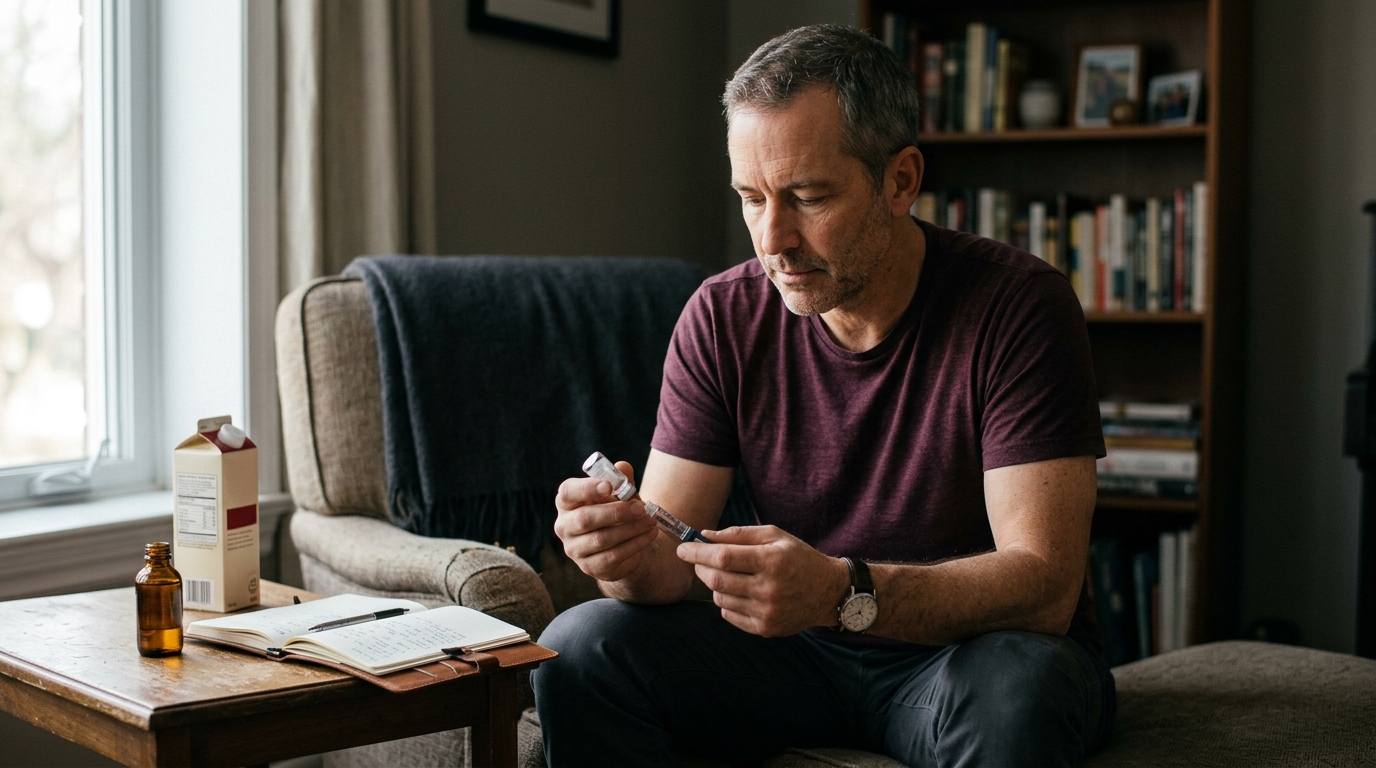

Chronic fatigue is commonly attributed to low testosterone, but untreated sleep apnea often shares identical symptoms and requires formal diagnosis before beginning treatment.





Medical Disclaimer: The information in this guide is for educational purposes only. It is not personal medical advice, a diagnosis, or a treatment plan. Always consult a qualified healthcare provider regarding symptoms, laboratory testing, and treatment decisions.
Men often assume that testosterone replacement therapy directly ruins breathing during sleep. Others believe that treating poor sleep will automatically fix low testosterone levels. Both assumptions oversimplify a complex medical relationship.
The connection between obstructive sleep apnea and testosterone therapy involves multiple biological systems. Sleep architecture, hormone production, body composition, and blood thickness all interact. Because symptoms like exhaustion and brain fog overlap across multiple conditions, guessing the root cause without testing creates clinical risks.
Evaluating both conditions thoroughly protects your health. When clinicians review hormone levels alongside nighttime breathing patterns, they can create safe, personalized care plans. Understanding how these systems interact allows you to have more informed conversations with your doctor.
Obstructive sleep apnea, or OSA, occurs when the muscles in the throat relax excessively during sleep. This relaxation causes the airway to narrow or close completely. Breathing stops temporarily, which leads to repeated drops in blood oxygen levels. The brain wakes the body briefly to reopen the airway, fragmenting sleep throughout the night.
Men experiencing obstructive sleep apnea often report distinct signs during sleep and waking hours. Common nighttime symptoms include loud snoring, witnessed breathing pauses, and gasping or choking sensations. Daytime symptoms include chronic fatigue, poor concentration, morning dry mouth, and waking multiple times at night to urinate.
These symptoms frequently mimic low testosterone symptoms. When a man feels exhausted and struggles with brain fog, he may assume his hormones are low. However, sleep fragmentation alone causes severe daytime sleepiness, reduced physical stamina, and mood changes.
Relying solely on how you feel to identify the problem is unreliable. Fatigue is a non-specific symptom that can stem from poor sleep, hormonal deficiency, thyroid dysfunction, or lifestyle stress. Assuming that tiredness means low testosterone can lead men to seek hormone therapy while ignoring an underlying breathing disorder.
A proper clinical work-up separates these issues through dedicated diagnostic pathways. Sleep problems require objective respiratory testing. Hormone deficiencies require structured laboratory assessments. Separating these two medical issues ensures that neither condition is overlooked or mistreated.
A formal medical assessment is necessary to confirm obstructive sleep apnea. The American Academy of Sleep Medicine recommends a comprehensive sleep evaluation rather than relying on self-reported questionnaires or symptoms alone. Snoring indicates airway resistance, but it does not tell a clinician how severe oxygen drops are during the night.
The diagnostic gold standard is an in-lab sleep study called polysomnography. During polysomnography, medical equipment monitors brain waves, eye movements, heart rate, breathing effort, airflow, and blood oxygen saturation. This detailed overnight test gives clinicians an exact count of how many times the airway narrows or closes per hour of sleep.
Home sleep apnea tests serve as an alternative for certain patients. Clinicians typically use home tests for uncomplicated adults who have a high likelihood of moderate to severe obstructive sleep apnea. These devices measure breathing parameters and oxygen levels in your own bed.
Home testing has clear diagnostic limitations that patients must understand. A home test records fewer physiological signals than an in-lab study. If a home sleep test produces a negative, inconclusive, or technically inadequate result, the American Academy of Sleep Medicine advises following up with full polysomnography. A negative home test does not completely rule out sleep-disordered breathing when clinical suspicion remains high.
The severity of sleep apnea is categorized by the Apnea-Hypopnea Index, or AHI. The AHI measures the average number of apneas (complete breathing pauses) and hypopneas (partial airway reductions) per hour:
An AHI between 5 and 14 events per hour represents mild sleep-disordered breathing. Patients may notice mild fatigue, occasional snoring, and minor daytime sleepiness.
An AHI between 15 and 29 events per hour indicates moderate obstruction. Oxygen drops become more frequent, and daytime fatigue is typically more pronounced.
An AHI of 30 or more events per hour signifies severe disease. Severe obstructive sleep apnea causes significant oxygen desaturation, severe cardiovascular strain, and high daytime sleepiness.
Getting an accurate diagnosis ensures that treatment decisions match the true severity of the breathing disorder.
Sleep and testosterone production share an intricate, bidirectional relationship. Testosterone is synthesized and released in a pulsatile rhythm, with peak production occurring during deep, restorative sleep. When sleep is repeatedly interrupted by airway collapse, normal hormone synthesis can become disrupted.
Intermittent hypoxia, the repeated drop in oxygen levels throughout the night, places physiological stress on the endocrine system. Oxygen deprivation combined with constant sleep fragmentation can impair the signaling pathway between the brain and the testes. Research demonstrates that men with severe sleep disruption often show lower circulating testosterone levels than men with consolidated sleep.
However, clinical evidence shows that obesity and aging are major driving factors behind both conditions. Excess adipose tissue around the neck and upper chest mechanically narrows the airway, increasing the risk of obstructive sleep apnea. Concurrently, visceral fat contains the aromatase enzyme, which converts testosterone into estrogen, lowering circulating androgen levels.
Because weight influences both breathing mechanics and hormone metabolism, obesity is often a primary shared cause. It is clinically inaccurate to claim that sleep apnea is the sole cause of low testosterone. Many men have low testosterone due to age, testicular dysfunction, or metabolic changes independent of their sleep quality.
Patients often wonder if treating sleep apnea with continuous positive airway pressure (CPAP) will cure low testosterone. CPAP keeps the airway open with gentle air pressure, preventing oxygen drops and restoring sleep continuity. While CPAP improves energy, daytime alertness, and cardiovascular health, its effects on testosterone levels remain variable in medical literature.
A comprehensive review of CPAP studies revealed inconsistent endocrine outcomes. Some smaller trials noted modest increases in testosterone concentrations after regular CPAP use. However, the majority of clinical studies found no significant changes in total testosterone, luteinizing hormone, or follicle-stimulating hormone after CPAP therapy.
Patients should view CPAP as a critical treatment for breathing obstruction and long-term health, rather than a reliable method to raise testosterone levels. Understanding testosterone fundamentals and hormonal function helps men set realistic expectations regarding what sleep therapy can and cannot resolve.
Leading medical organizations establish clear clinical safety standards for hormone replacement. The Endocrine Society clinical practice guideline specifically recommends against starting testosterone therapy in men with untreated severe obstructive sleep apnea. This recommendation is designed to protect patient safety.
The guideline focuses specifically on untreated severe disease, not every case of sleep disruption. Mild or moderate sleep apnea does not represent an automatic, universal exclusion from testosterone therapy. Furthermore, properly treated severe sleep apnea, managed effectively with CPAP or other therapies, presents a different clinical scenario.
Clinicians evaluate sleep disorders as part of a complete safety profile before prescribing hormone replacement. The Endocrine Society identifies several conditions where initiating testosterone therapy is contraindicated or requires caution:
Physicians weigh these factors together during an initial medical evaluation. Sleep apnea is one vital piece of a comprehensive risk assessment.
When a man has diagnosed severe sleep apnea, stabilizing airway function is the first clinical priority. Once airway collapse and oxygen desaturation are controlled with appropriate treatment, a physician can re-evaluate the patient for emerging testosterone therapies and clinical care.
The relationship between testosterone replacement therapy and respiratory function during sleep has been investigated in clinical trials. Medical literature indicates that exogenous testosterone can influence breathing control and airway stability in certain individuals. However, the evidence does not show that testosterone therapy causes sleep apnea in every patient.
The most prominent randomized, double-blind, placebo-controlled trial evaluating this question studied 67 obese men with pre-existing severe obstructive sleep apnea over 18 weeks. The trial, conducted by Hoyos and colleagues, monitored respiratory measures at regular intervals.
At week 7 of the trial, men receiving testosterone showed a worsening in their oxygen desaturation index. The oxygen desaturation index measures how many times per hour blood oxygen drops by a specific amount. The testosterone group experienced an increase of 10.3 events per hour compared to the placebo group.
Additionally, the percentage of total sleep time spent with blood oxygen saturation below 90% increased by 6.1 percentage points at week 7. These findings confirmed that testosterone can temporarily worsen oxygen desaturation in men who already have severe breathing obstruction and obesity.
However, the trial produced a critical finding at week 18. By the end of the 18-week study, the differences between the testosterone group and the placebo group were no longer statistically significant for oxygen desaturation index or time spent below 90% oxygen saturation. The researchers characterized the effect as a mild, time-limited worsening in a high-risk group.
This clinical trial provides valuable context, but its results must not be overgeneralized. The study looked specifically at obese men with existing severe sleep apnea. It does not establish that testosterone therapy causes new sleep apnea in lean men or individuals with normal baseline breathing.
Medical reviews conclude that the broader evidence regarding testosterone and respiratory worsening remains mixed. Testosterone may alter ventilatory sensitivity to carbon dioxide or influence upper airway neuromuscular tone in vulnerable men. Because individual responses vary, clinicians assess baseline risks rather than assuming a universal negative outcome.
Medical evidence exists on a spectrum ranging from rigorous guideline consensus to early observational data. Understanding where different concepts fall on this spectrum helps patients evaluate health information critically.
Guideline recommendations from organizations like the Endocrine Society and the American Urological Association carry the highest clinical weight. These consensus standards include confirming hypogonadism through repeat fasting morning blood tests, withholding therapy in untreated severe sleep apnea, and routinely monitoring hematocrit.
Randomized, placebo-controlled trials, such as the 18-week study in obese men with severe sleep apnea, provide clear, high-level data. These trials demonstrate specific physiological responses within controlled populations, though their findings apply primarily to the patient groups studied.
Observational research connects low testosterone with metabolic syndrome, sleep fragmentation, and obesity. While these studies identify strong correlations, they cannot establish direct cause-and-effect relationships due to confounding health variables.
Preliminary studies examining how distinct testosterone formulations affect airway collapsibility represent early research. These findings are hypothesis-generating and should never replace standard diagnostic testing or established clinical guidelines.
Recognizing the strength of each piece of evidence prevents patients from mistaking early theories for established medical rules.
Safe management of testosterone therapy involves regular blood testing before and during treatment. Specific biomarkers allow clinicians to confirm hormone deficiencies and track biological safety markers over time.
Total testosterone measures the entire amount of testosterone circulating in the bloodstream, including both bound and unbound fractions. The Endocrine Society recommends confirming low levels with at least two separate morning fasting blood draws. Morning testing is essential because testosterone levels peak in the early morning hours.
Free testosterone represents the small fraction of hormone not attached to transport proteins. It is available to enter tissues and exert biological effects. Testing free testosterone is useful when sex hormone-binding globulin levels are abnormally high or low due to age, thyroid status, or obesity.
SHBG is a protein produced by the liver that binds tightly to testosterone. Alterations in SHBG change the ratio of bound to active hormone. Measuring SHBG helps clinicians interpret total testosterone levels accurately.
LH and FSH are pituitary hormones that stimulate testicular testosterone and sperm production. Measuring these gonadotropins allows physicians to differentiate between primary hypogonadism (testicular failure) and secondary hypogonadism (pituitary or hypothalamic signaling issues).
Prolactin is a pituitary hormone that, when significantly elevated, can suppress testosterone production. Clinicians measure prolactin during a diagnostic work-up to rule out prolactin-secreting pituitary adenomas or other endocrine disorders.
Hematocrit measures the percentage of whole blood made up of red blood cells. Tracking hematocrit is crucial when evaluating both testosterone therapy and sleep apnea.
The American Urological Association provides clear guidance regarding hematocrit management. Exogenous testosterone stimulates red blood cell production in the bone marrow, an effect known as erythrocytosis. Obstructive sleep apnea can also drive up hematocrit levels because chronic nighttime oxygen drops trigger the kidneys to produce more erythropoietin.
According to American Urological Association guidelines, physicians should measure baseline hemoglobin and hematocrit before initiating testosterone therapy. If a patient has a baseline hematocrit above 50%, clinicians are advised to withhold therapy until the underlying cause is explained. Sleep apnea is explicitly recognized alongside smoking, high altitude, and bone marrow disorders as a potential contributor to elevated baseline hematocrit.
While a patient is receiving testosterone therapy, a hematocrit reaching 54% or higher warrants clinical intervention. Managing elevated hematocrit may involve adjusting the testosterone dose, treating coexisting sleep-disordered breathing, or utilizing therapeutic phlebotomy. Proper testing and biomarker evaluation ensures that red blood cell mass remains within safe boundaries.
Hormone health and sleep medicine intersect across several recognizable clinical situations. The following illustrative scenarios show how clinicians navigate these overlapping issues in practice.
A 45-year-old man visits his doctor complaining of severe afternoon fatigue and poor recovery. Initial blood work shows a low total testosterone level. During the interview, his clinician learns that the patient snores heavily and experiences morning headaches.
The clinician does not immediately prescribe testosterone based on a single test and generalized fatigue. Instead, the doctor orders a repeat morning fasting testosterone measurement to confirm the hormone deficiency. Concurrently, the clinician refers the patient for a comprehensive sleep evaluation and an appropriate sleep study.
If the sleep study reveals moderate sleep apnea, treating the breathing obstruction becomes an integral part of his care plan. Addressing both conditions methodically prevents masking a respiratory disorder with hormone therapy.
A 52-year-old man has unequivocal, repeatedly low morning testosterone levels accompanied by reduced bone density and loss of muscle mass. However, a recent sleep study diagnosed severe obstructive sleep apnea with an AHI of 38 events per hour, which remains untreated.
Under Endocrine Society guidelines, starting testosterone therapy is not recommended while severe sleep apnea remains unmanaged. The clinician explains that initiating testosterone therapy could temporarily worsen his nocturnal oxygen drops and increase red blood cell production excessively.
The medical team focuses on establishing effective CPAP therapy first. Once his airway is stabilized and follow-up data confirms compliant, successful CPAP use, the clinician can safely reconsider initiating testosterone therapy.
A 40-year-old man has been receiving testosterone replacement therapy for six months with good symptomatic improvement in energy and strength. Recently, his partner notices that he has started gasping for air and pausing his breathing during sleep.
The patient contacts his prescribing physician to report these new signs. The clinician reviews his recent health changes and orders an objective sleep study to evaluate for emerging sleep-disordered breathing. The physician also checks his complete blood count to evaluate hematocrit levels.
Depending on the sleep study results, the clinician may recommend CPAP therapy to maintain airway stability. In medical literature, if CPAP cannot be tolerated or proves ineffective, physicians may consider reducing the testosterone dose or temporarily discontinuing therapy. The patient avoids altering his medication dose without direct medical supervision.
A 55-year-old man is undergoing an evaluation for classic hypogonadism symptoms. His morning testosterone levels are consistently low. However, routine baseline blood work reveals a hematocrit of 52%, which is above the standard safety threshold.
Following American Urological Association guidance, the physician pauses the initiation of testosterone therapy to investigate the elevated hematocrit. The doctor explores potential causes, including chronic pulmonary conditions, tobacco use, and unrecognized sleep-disordered breathing.
A diagnostic sleep evaluation confirms that the patient experiences frequent nocturnal oxygen desaturations due to undiagnosed sleep apnea. Treating the sleep apnea helps stabilize his oxygen levels and red blood cell production. Once his hematocrit normalizes below 50%, the physician can safely proceed with a structured hormone therapy plan.
A 48-year-old man has used CPAP therapy consistently for two years, successfully controlling his moderate sleep apnea. Despite excellent sleep quality and good CPAP compliance, he continues to experience low libido, reduced muscle mass, and repeatedly low fasting testosterone levels.
Because research demonstrates that CPAP does not consistently raise testosterone levels, persistent hypogonadism is not unexpected. The clinician conducts a complete endocrine work-up, measuring LH, FSH, and prolactin to identify the underlying cause of the hormone deficiency.
Because his sleep apnea is actively and effectively treated, the patient does not have a contraindication to hormone replacement. The physician initiates testosterone therapy with regular monitoring of testosterone levels, hematocrit, and ongoing CPAP adherence. A deeper review of treatment options and emerging science helps patients navigate long-term therapy safely.
Open communication with your healthcare provider ensures that all aspects of your hormonal and respiratory health are addressed. When preparing for an appointment, bring specific details regarding your daily symptoms, sleep quality, and medical history.
Consider discussing these practical questions with your physician:
These focused questions help you and your doctor build a safe, evidence-based care strategy.
Coordinating sleep evaluations with endocrine testing ensures that treatment decisions are safe, comprehensive, and tailored to your specific health profile.
Testostra explains testosterone biology, testing, symptoms, lifestyle factors and TRT with careful sourcing and clear clinical limits.



Send us a question, research idea or topic suggestion. Reader questions help shape future Testostra content.
Contact Testostra