
Men planning to discontinue testosterone replacement therapy can prepare for the transition by tracking essential biomarkers and anticipating natural hormone recovery timelines.





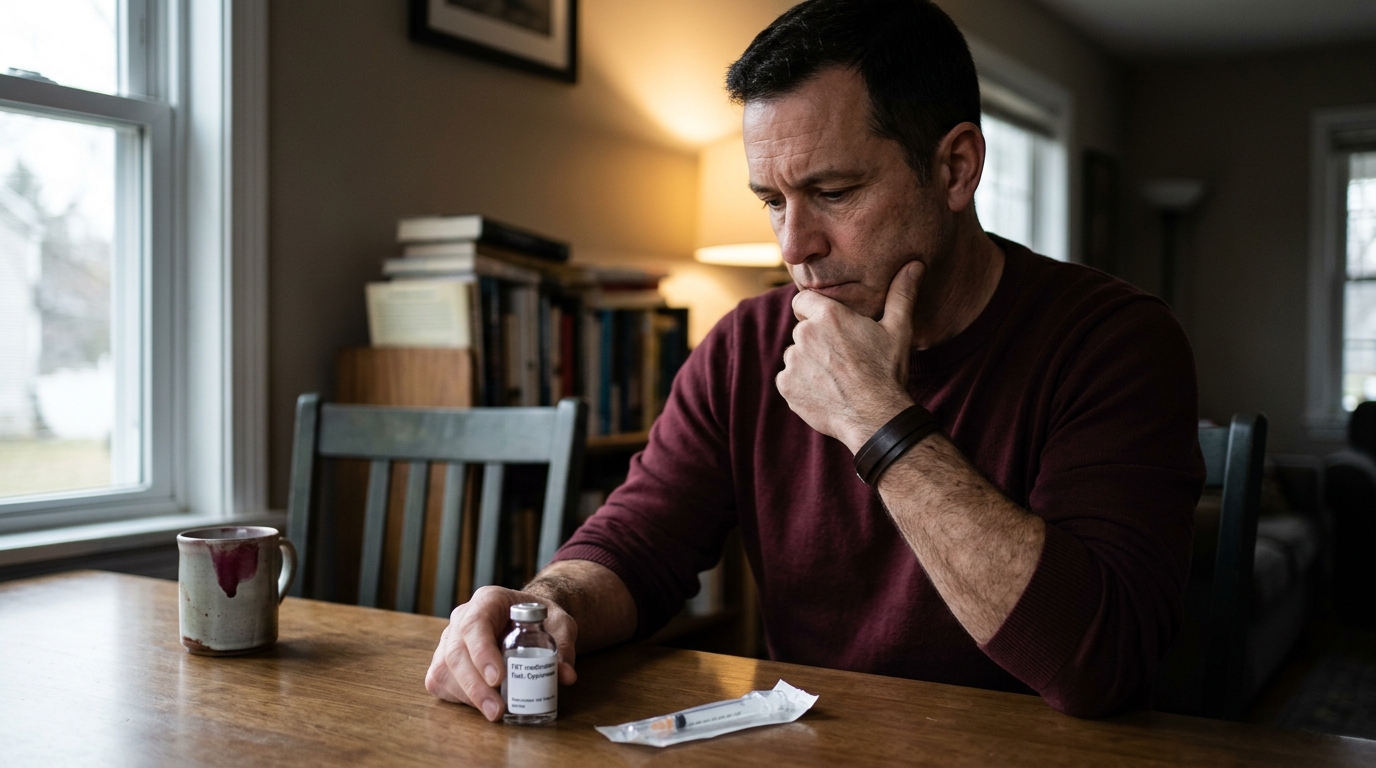
A man sits in his car after a routine follow-up appointment, looking at his latest laboratory printout. His total testosterone has returned to the normal range, yet the fatigue and low mood that brought him to the clinic remain unchanged. In another setting, a man who has used prescribed testosterone for two years decides he and his partner want to start a family. Both situations lead to the same complex question: what happens if testosterone replacement therapy is paused or stopped?
Stepping away from prescribed hormone therapy is rarely as simple as stopping a daily supplement. Because treatment alters the body's natural hormone production, discontinuation requires careful clinical thought. Understanding how your body produces hormones, why your original diagnosis matters, and what to expect during a transition can help you have a productive conversation with your doctor.
Medical Disclaimer: This resource is published for educational and informational purposes only. It does not constitute personal medical advice, diagnosis, or treatment planning. Any change to a prescribed medication, including testosterone replacement therapy, should always be discussed with and managed by a qualified healthcare professional.
Stopping testosterone replacement therapy (TRT) involves several biological systems that do not reset overnight. The following core points summarize what current clinical evidence shows about this transition:
When considering whether to pause or discontinue treatment, the most critical piece of information is why you started therapy in the first place. The Endocrine Society emphasizes that hypogonadism is not merely a single low laboratory number. It is a clinical condition defined by clear, persistent symptoms paired with consistently low morning testosterone levels confirmed across multiple testing days.
Understanding how your initial diagnosis was established helps predict what your hormone levels might look like after stopping. If you want to review the diagnostic foundations of male hormonal health, exploring testosterone basics can provide valuable background.
In organic hypogonadism, an identifiable medical condition affects the testes or the pituitary gland. Examples include genetic conditions, past testicular trauma, severe infections, or pituitary tumors.
In these situations, the body lacks the biological machinery to produce sufficient testosterone on its own. Stopping therapy in a patient with permanent organic hypogonadism will almost certainly result in a return to baseline low hormone levels. Discontinuation in this group is typically considered only if a serious medical contraindication arises.
Many men start testosterone therapy for what clinicians classify as functional hypogonadism. In these cases, the reproductive organs are physically capable of making testosterone, but signaling from the brain is blunted. Common contributors include severe obesity, chronic sleep apnea, extreme emotional stress, overtraining, or the use of certain medications like opioids.
If a patient addresses the root cause of functional suppression while on therapy, their body may have the potential to produce adequate testosterone again once treatment stops. However, if the underlying lifestyle factors or metabolic issues remain unchanged, hormone levels will likely return to the suppressed levels seen before treatment began.
A surprising number of men are prescribed testosterone after a single borderline blood test without proper confirmation. Clinical guidelines from the American Urological Association (AUA) and the Endocrine Society state that testosterone levels must be measured in the morning while fasting on at least two separate occasions. Testosterone fluctuates significantly throughout the day, peaking in the early morning hours.
If your treatment was started without repeat testing or without checking pituitary signaling hormones, your true baseline may never have been established. Stopping therapy under medical supervision allows your clinician to run a proper diagnostic workup once external hormones have cleared. For a deeper understanding of diagnostic standards, reviewing testing and biomarkers can clarify how comprehensive evaluations should be structured.
To understand why stopping TRT causes a transition period, you must understand the hypothalamic-pituitary-gonadal (HPG) axis. This communication network relies on a continuous feedback loop between the brain and the testes.
Under normal conditions, the hypothalamus in the brain releases Gonadotropin-Releasing Hormone (GnRH) in rhythmic pulses. This signals the pituitary gland to release two vital hormones into the bloodstream:
When circulating testosterone levels rise, the hypothalamus and pituitary detect this increase and reduce their output of LH and FSH. This prevents hormone levels from climbing too high.
When you administer external testosterone through injections, gels, patches, or pellets, your brain senses high levels of circulating androgen. It interprets this constant supply as a signal that the body has more than enough testosterone.
In response, the pituitary gland stops producing LH and FSH. Without LH, the Leydig cells in the testes enter a dormant state and stop manufacturing testosterone. Without FSH, sperm production slows dramatically or halts entirely. Over months of therapy, the testes often decrease in volume because local testosterone production within the testicular tissue has shut down.
When you stop taking testosterone, the external hormone clears from your bloodstream over several days to weeks, depending on the formulation used. However, the HPG axis does not restart instantaneously.
The pituitary gland requires time to resume producing LH and FSH in adequate amounts. Even after pituitary signaling returns, the dormant Leydig cells in the testes may take additional weeks or months to respond to that stimulation. During this lag, circulating testosterone levels can drop well below your pretreatment baseline. This temporary state is known as post-therapy hypogonadism.
When researching what happens after stopping testosterone, you will encounter a wide range of timelines, recovery statistics, and symptom reports. It is vital to evaluate the quality of this evidence and understand which patient populations were studied.
Much of the published data regarding hormonal recovery after testosterone cessation comes from male contraceptive trials. In these studies, healthy young men with completely normal baseline fertility and hormone levels were given high doses of testosterone to suppress sperm production.
When researchers stopped the testosterone, they tracked how long it took for sperm counts to recover. A well-known meta-analysis of contraceptive trials by Liu and colleagues showed that the probability of achieving a sperm concentration of 20 million per milliliter was 67 percent at six months, 90 percent at 12 months, and 100 percent at 24 months.
While these numbers show that the reproductive axis can recover from exogenous suppression, they cannot be applied directly to a 48-year-old man taking TRT for clinical hypogonadism. Men in contraceptive trials had healthy, robust baseline hormone production, which is not the case for men being treated for a medical deficiency.
Another major source of recovery literature comes from observational studies of men who used non-prescribed anabolic-androgenic steroids (AAS). These individuals often take supra-physiological doses of multiple synthetic hormones simultaneously for extended periods.
Studies on AAS cessation describe severe withdrawal symptoms, profound mood disturbances, and prolonged suppression lasting a year or more. While this research highlights the biological reality of HPG axis shutdown, it represents an extreme scenario. Prescribed TRT uses physiological doses intended to restore normal blood levels, so the recovery curve is generally less severe than that seen in high-dose steroid abuse.
Data tracking men who discontinue therapeutic, doctor-supervised TRT shows that recovery is highly variable. A joint position statement on male hypogonadism notes that axis recovery can take anywhere from several weeks to several months.
Because rigorous, prospective withdrawal studies in older men with metabolic comorbidities are limited, your clinician cannot give you an exact date when your hormone levels will stabilize. Every individual clears medication and restarts endogenous production at a different rate.
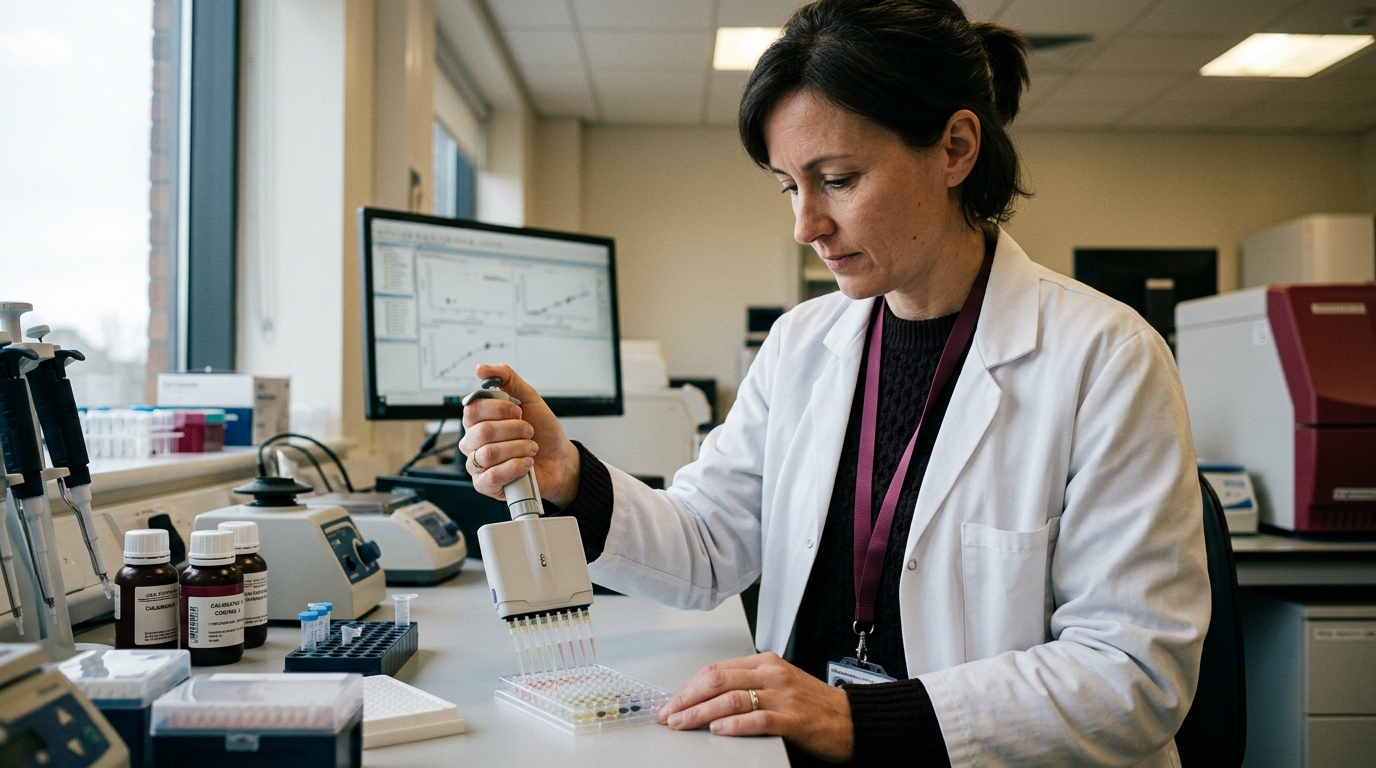
Evaluating your hormonal health during a treatment pause requires looking beyond a single total testosterone number. A complete laboratory assessment evaluates several interrelated biomarkers to determine how well the brain and testes are communicating. For readers researching these measurements, Testostra provides structured resources on low testosterone and diagnostic evaluation.
Total testosterone measures all the testosterone circulating in your bloodstream. This includes hormone bound tightly to sex hormone-binding globulin (SHBG), hormone loosely bound to albumin, and unbound hormone.
After stopping therapy, total testosterone will initially fall as the medication leaves your system. In the early weeks, this number may register below normal before natural production begins to contribute. Testing should always occur in the early morning, between 7:00 AM and 10:00 AM, when natural diurnal rhythms are highest.
Only a small fraction of your total testosterone is free and biologically active. The rest is attached to carrier proteins. Measuring free testosterone provides insight into how much hormone is actually available to enter target tissues.
If your SHBG levels are unusually high or low due to thyroid status, liver function, or metabolic health, your total testosterone number can be misleading. Calculating free testosterone helps clarify the true hormonal state during recovery.
Measuring LH and FSH is essential when stopping therapy because these gonadotropins reveal where your body is in the recovery process:
SHBG is a protein produced by the liver that binds to testosterone and estradiol. Exogenous testosterone, especially at higher doses, often suppresses SHBG levels.
As you stop therapy and androgen levels change, SHBG concentrations will shift. Tracking SHBG helps your doctor interpret whether changes in total testosterone reflect actual changes in free, active hormone.
Prolactin is a pituitary hormone that, when significantly elevated, can suppress GnRH secretion and cause secondary hypogonadism. Checking prolactin ensures that delayed recovery is not being driven by an undiagnosed pituitary issue, such as a microprolactinoma, or by medications that increase prolactin levels.
For men stopping therapy to restore fertility, blood tests alone are insufficient. Serum testosterone levels do not tell you how many viable sperm are present in the ejaculate.
A formal semen analysis evaluating sperm concentration, motility, and morphology is the only reliable way to assess reproductive recovery. Clinicians typically recommend waiting at least three months after stopping therapy before performing the first semen analysis, as a full cycle of sperm development takes approximately 74 days.
Testosterone stimulates the kidneys to produce erythropoietin, which increases red blood cell production. Many men experience an elevated hematocrit while on TRT.
When therapy is discontinued, hematocrit levels typically drift downward toward baseline over the course of several months. Monitoring this marker confirms that blood thickness is returning to normal if elevated hematocrit was a reason for stopping.
Discontinuing hormone replacement is not always a permanent farewell to treatment. It is often a deliberate clinical decision made to address specific health changes, evaluate treatment efficacy, or protect fertility.
One of the most common reasons to re-evaluate therapy is a disconnect between lab results and daily well-being. A patient may achieve perfect mid-range testosterone numbers on paper, yet their original fatigue, brain fog, and low libido persist.
The American Urological Association guidelines clearly state that clinicians should discuss stopping testosterone therapy if a patient achieves normal testosterone levels but experiences no improvement in symptoms after three to six months. Continuing a medication that provides no tangible clinical benefit exposes the patient to potential risks and ongoing financial costs without a clear upside.
In these cases, pausing therapy helps determine whether the original symptoms were caused by something else entirely, such as a sleep disorder, thyroid dysfunction, depression, or nutritional deficiencies.
Exogenous testosterone acts as a male contraceptive by shutting down the FSH signals required for sperm production. The Endocrine Society strongly recommends against starting testosterone in men who desire near-term fertility, and the AUA advises that testosterone should not be given to men actively trying to conceive.
When a man on TRT decides he wants to have children, stopping exogenous testosterone is almost always necessary. Because sperm production takes months to resume, family planning discussions should occur well before conception is desired. To learn more about medical approaches and clinical frameworks in this area, you can review our section on TRT and emerging research.
Therapy may be paused or stopped if significant side effects or health contraindications develop during treatment. These situations require close medical oversight:
The following examples demonstrate how different clinical backgrounds change the approach to stopping therapy. These models illustrate clinical decision-making:
When external testosterone is discontinued, most men experience a temporary decline in physical and psychological well-being. Knowing what to expect can reduce anxiety and help you distinguish between expected withdrawal effects and permanent deficiency.
As circulating hormone levels fall, many men experience fatigue, reduced physical stamina, and slower recovery from exercise. Muscle fullness may decrease, primarily due to changes in water retention and glycogen storage within muscle tissue rather than immediate muscle loss.
These physical symptoms often peak within the first three to six weeks after stopping, depending on how quickly the specific testosterone ester or delivery method clears the body. As natural signaling slowly resumes, energy levels generally begin to stabilize.
Decreased libido and less frequent spontaneous erections are common during the post-cessation lag. Because sexual function is sensitive to androgen levels, the temporary drop below baseline can make sexual desire feel entirely absent for a period.
It is important to remember that these changes reflect the temporary absence of both external and internal hormones. They do not prove that you are incapable of natural sexual function. Tracking the timing and severity of these symptoms provides helpful information for your doctor at your follow-up visit.
Hormones interact directly with neurotransmitter systems in the brain that regulate mood, focus, and emotional resilience. During the transition phase, some men notice increased irritability, mild low mood, brain fog, or sleep disturbances.
Understanding that these mood shifts are a predictable biological consequence of fluctuating hormone levels can help you navigate the transition. However, if severe depressive symptoms, severe anxiety, or thoughts of self-harm occur, you must contact your healthcare provider immediately.
While your medical team manages your clinical care, establishing healthy lifestyle habits provides the best foundation for natural hormone production. Focusing on evidence-based lifestyle factors can support your overall well-being:
For many men, the primary motivation for stopping TRT is the desire to have biological children. Navigating this process requires realistic expectations and an understanding of male reproductive physiology.
Sperm development, known biologically as spermatogenesis, is a slow process. It takes approximately 64 to 74 days for a germ cell in the testes to develop into a fully mature sperm capable of fertilization, followed by additional transport time through the epididymis.
Because of this biological timeline, any intervention designed to stimulate sperm production will not show measurable results on a semen analysis for at least two to three months. Patience and consistent monitoring are essential components of fertility planning.
While most men recover sperm production after stopping testosterone, recovery is not instantaneous and is never completely guaranteed.
Guidance from the American Urological Association and the American Society for Reproductive Medicine (AUA/ASRM) notes that while two-thirds of men in contraceptive studies recovered sperm in their ejaculate within six months, full recovery can take a year or longer. In rare cases, especially in older men or those who used high doses for many years without interruption, sperm parameters may not return to optimal baseline levels.
Men with a history of fertility challenges prior to starting testosterone should work closely with a reproductive urologist. Baseline semen quality before therapy began plays a significant role in determining how robust the recovery will be.
In clinical practice, physicians sometimes use non-testosterone medications off-label to help stimulate the testes while exogenous testosterone is discontinued:
These medications are strictly prescription therapies that require careful clinical oversight, dose titration, and regular blood monitoring. They are not self-treatment protocols and should never be used without a physician's guidance.
Before making any changes to your prescribed treatment, schedule a dedicated appointment with your prescribing doctor. Having an organized list of questions ensures that all relevant medical factors are addressed.
Hormonal health is an ongoing process that changes with age, lifestyle, and medical circumstances. You may want to revisit this guide:
Navigating changes in hormone therapy requires patience, clear communication with your doctor, and an understanding of your body's underlying biology. By focusing on confirmed medical evidence rather than generalized online claims, you and your healthcare provider can build a safe, personalized plan that supports your long-term health and well-being.
Testostra explains testosterone biology, testing, symptoms, lifestyle factors and TRT with careful sourcing and clear clinical limits.



Send us a question, research idea or topic suggestion. Reader questions help shape future Testostra content.
Contact Testostra