
Better treatment decisions follow a clearer understanding of how nocturnal breathing disruptions, hormone production pathways, and shared metabolic factors interact.





Medical Disclaimer: The information in this article is for educational purposes only and does not constitute personal medical advice. Always consult a qualified healthcare professional for the diagnosis and management of any medical condition, including sleep disorders and hormonal imbalances.
The relationship between obstructive sleep apnea and low testosterone is often misunderstood. It is neither a simple cause-and-effect relationship nor a single combined disorder. Instead, obstructive sleep apnea and male hypogonadism are two independent clinical issues that share common risk factors, overlapping symptoms, and complex biological interactions.
When an adult experiences persistent exhaustion, reduced physical drive, and brain fog, it is easy to assume a single hormone deficiency is to blame. Many men seek hormone testing hoping for a simple explanation for their fatigue. However, sleep disorders like obstructive sleep apnea often produce the exact same daily difficulties.
Understanding how these conditions interact requires looking past superficial symptom lists. Sleep architecture directly influences how the brain signals the testes to produce hormones. At the same time, body weight, metabolic health, and airway structure influence both breathing patterns and endocrine function.
This guide examines the distinct mechanisms of both conditions, the scientific evidence connecting them, and the diagnostic processes required for each. By breaking down the clinical evidence, you can better understand what your symptoms might mean and prepare for productive conversations with your doctor. Learning more about low testosterone signs and causes can help clarify where these conditions diverge.
To understand how symptoms overlap, one must first look at the unique physical mechanisms that define each condition. While both conditions can leave you feeling drained, they arise in entirely different organ systems.
Obstructive sleep apnea, commonly abbreviated as OSA, is a physical sleep-related breathing disorder. It occurs when the muscles and soft tissues in the back of the throat relax excessively during sleep. This relaxation causes the upper airway to narrow partially or collapse completely.
When airflow is partially blocked, it is known as a hypopnea. When airflow stops entirely for ten seconds or longer, it is classified as an apnea. These events cause temporary drops in blood oxygen saturation, known as nocturnal hypoxia.
The brain responds to these breathing interruptions by briefly waking the body up to restore airway tone. These micro-arousals happen dozens or even hundreds of times each night. Although the person rarely remembers waking up, this process shatters normal sleep architecture and prevents deep, restorative rest.
The clinical severity of obstructive sleep apnea is measured using the Apnea-Hypopnea Index (AHI). The AHI tracks the average number of apnea and hypopnea events that occur per hour of sleep:
An AHI over 15 can establish a diagnosis even if a patient does not report classic symptoms. However, the AHI is purely a metric of respiratory stability during sleep. It does not measure hormone levels or indicate how well the endocrine system is functioning.
Testosterone deficiency, clinically termed male hypogonadism, is an endocrine disorder rather than a structural breathing problem. Testosterone is the primary male androgen. It plays key roles in maintaining muscle mass, bone density, red blood cell production, mood, and sexual function.
The production of testosterone is regulated by the hypothalamic-pituitary-gonadal (HPG) axis. The hypothalamus in the brain releases gonadotropin-releasing hormone (GnRH) in rhythmic pulses. This signals the anterior pituitary gland to release luteinizing hormone (LH) and follicle-stimulating hormone (FSH). Luteinizing hormone travels through the bloodstream to the testes, where it stimulates the Leydig cells to manufacture testosterone.
Under normal conditions, testosterone production follows a distinct circadian rhythm. Blood levels begin to rise in the evening, peak during the early morning hours, and gradually decline throughout the day. Much of this nocturnal rise is closely linked to deep, uninterrupted sleep cycles, particularly rapid eye movement (REM) and slow-wave sleep.
Major clinical organizations have established strict criteria for diagnosing testosterone deficiency. According to the American Urological Association (AUA), a diagnosis requires two distinct criteria:
Crucially, the AUA and the Endocrine Society require that hormone measurements be taken on two separate early-morning blood draws. A single low measurement is never enough to diagnose hypogonadism.
Because sleep fragmentation and hormone deficiencies both drain the body of energy, their daily presentations can look remarkably similar. A clinician must carefully distinguish between general symptoms and condition-specific signs.
Many symptoms reported by men seeking hormone testing are completely nonspecific. They reflect a body running on poor recovery rather than pointing to a single root cause.
When a patient describes these issues, they could stem from obstructive sleep apnea, low testosterone, chronic psychological stress, thyroid disorders, or clinical depression. Assuming that fatigue automatically means low testosterone skips vital steps in differential diagnosis.
Certain physical signs during the night strongly suggest upper airway obstruction. These signs are rarely caused by a hormone deficiency alone:
A bed partner is often the most important source of information for these clues. Many people with severe sleep apnea believe they sleep soundly because they do not remember their brief micro-arousals.
While sexual symptoms can be influenced by vascular health and poor sleep, certain clinical features point more directly toward an endocrine issue:
The Endocrine Society notes that sexual symptoms are among the most specific clinical indicators of low testosterone. However, even these symptoms require laboratory confirmation. Exploring general resources on testosterone basics can help you understand how hormones interact with overall physical performance.
Researchers have long investigated how sleep architecture influences the endocrine system. The physiological links between disrupted breathing and altered hormone levels involve several overlapping pathways.
Testosterone production depends heavily on normal sleep continuity. Peak testosterone synthesis occurs during undisturbed, consolidated sleep, particularly during slow-wave and REM stages.
When obstructive sleep apnea causes repetitive micro-arousals, sleep architecture becomes heavily fragmented. The body spends less time in deep restorative stages and more time in light stage 1 and stage 2 sleep. This disruption blunts the normal nocturnal pulsatile release of GnRH and LH from the brain. Without strong, rhythmic signals from the pituitary gland, the Leydig cells in the testes produce less total testosterone over a 24-hour cycle.
Repeated drops in blood oxygen saturation create a hostile environment for sensitive endocrine tissues. When blood oxygen drops sharply during an apnea event, tissues throughout the body experience brief periods of cellular hypoxia.
Hypoxia triggers the release of reactive oxygen species and inflammatory cytokines. In animal models and laboratory studies, oxidative stress has been shown to impair Leydig cell enzyme activity. This reduces the cells' ability to convert cholesterol into testosterone. Furthermore, chronic hypoxia may alter the sensitivity of central brain receptors, interfering with the feedback loops that regulate hormone production.
It is important to distinguish between experimental sleep deprivation and clinical sleep apnea. In a well-known study conducted at the University of Chicago, healthy young men were subjected to one week of sleep restriction, sleeping only five hours per night. The researchers observed a 10% to 15% reduction in daytime testosterone levels compared to their well-rested baseline.
While this study demonstrates that adequate sleep duration is vital for endocrine health, sleep restriction is not the same as obstructive sleep apnea. Men with sleep apnea often spend eight or nine hours in bed, but their sleep quality is degraded by mechanical airway obstruction. Sleep restriction data provides valuable proof of concept, but it cannot be used to predict how treating sleep apnea will change hormone levels in an individual.
When examining the link between sleep apnea and low testosterone, obesity is the most significant confounding variable. Increased body mass index (BMI) and central adiposity contribute heavily to both conditions simultaneously.
Excess adipose tissue in the neck, soft palate, and pharyngeal walls physically narrows the upper airway, dramatically increasing the risk of mechanical collapse during sleep. At the same time, visceral fat tissue contains high amounts of the aromatase enzyme. Aromatase converts circulating testosterone into estradiol, lowering total testosterone levels.
Furthermore, obesity promotes chronic low-grade systemic inflammation and insulin resistance. Both of these states suppress sex hormone-binding globulin (SHBG) production in the liver and impair pituitary signaling.
Because obesity drives both airway collapse and testosterone suppression, it can make sleep apnea and low testosterone appear directly linked when they are actually parallel consequences of metabolic health. Some observational studies find an association between severe sleep apnea and low testosterone independent of BMI. However, separating the independent impact of airway obstruction from metabolic factors remains a major challenge in clinical research.
Because the symptoms of these conditions overlap so heavily, relying on clinical intuition alone often leads to misdiagnosis. Accurate diagnosis requires following validated, standardized testing protocols for both airway function and hormone levels.
The American Academy of Sleep Medicine (AASM) recommends that any evaluation for suspected sleep apnea begin with a comprehensive clinical sleep assessment. During this assessment, a doctor evaluates sleep history, daytime sleepiness scores, neck circumference, airway anatomy, and cardiovascular risk factors.
The AASM identifies a clear clinical risk profile. This profile combines excessive daytime sleepiness with at least two of the following signs:
If clinical evaluation suggests moderate-to-severe risk, objective diagnostic testing is required:
Polysomnography is the gold standard diagnostic test for sleep disorders. It is conducted overnight in a dedicated sleep laboratory under the supervision of a sleep technologist.
PSG tracks multiple physiological channels simultaneously, including:
In-lab PSG is specifically recommended for patients with significant cardiorespiratory disease, suspected nocturnal hypoventilation, chronic opioid use, a history of stroke, or severe insomnia.
Home sleep apnea testing is a convenient alternative for uncomplicated adult patients who show an increased risk of moderate-to-severe OSA. HSAT devices are portable monitors worn at home.
These devices measure fewer parameters than an in-lab study, typically recording respiratory airflow, respiratory effort, and blood oxygen levels. While HSAT is effective for diagnosing clear cases of obstructive sleep apnea, it does not record brain waves (EEG). As a result, it cannot calculate exact sleep stages or total actual sleep time, which can occasionally underestimate the severity of mild sleep apnea.
The diagnosis of testosterone deficiency must be handled with equal clinical rigor. A doctor cannot diagnose hypogonadism based solely on a patient's complaints of fatigue or a single blood test.
The American Urological Association and the Endocrine Society have established clear testing standards:
Testosterone levels naturally fluctuate throughout the day. Levels reach their peak between 7:00 AM and 10:00 AM in healthy adult men, before declining steadily into the evening.
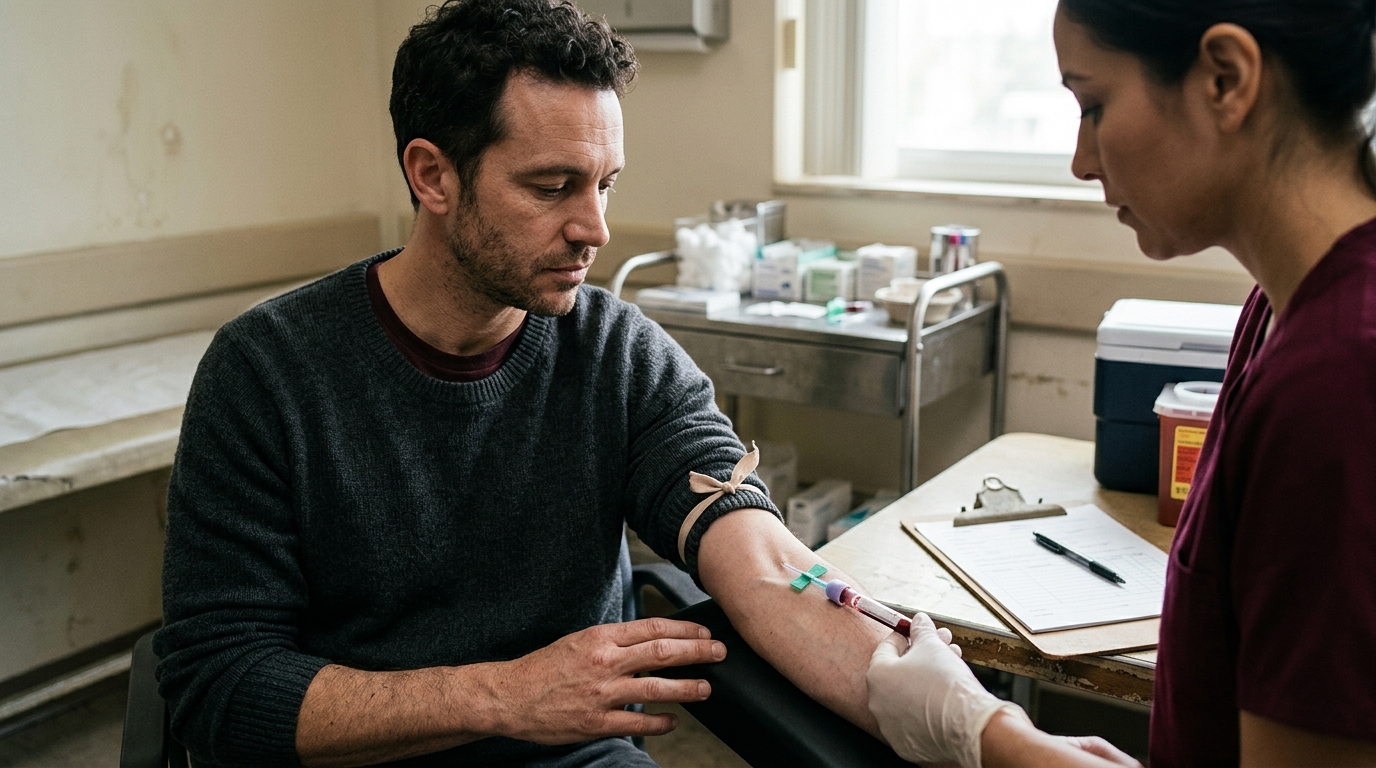
To obtain an accurate baseline, blood must be drawn in the early morning while fasting, on two separate days. If a blood draw is performed in the afternoon, the natural diurnal drop can produce a falsely low result, leading to an incorrect diagnosis.
A laboratory value below 300 ng/dL is not a diagnosis on its own. Clinicians must confirm that the biochemical reading is accompanied by recognizable signs or symptoms of deficiency.
If a man has a total testosterone level of 280 ng/dL but feels energetic, has normal sexual function, and shows no physical signs of hypogonadism, immediate treatment may not be warranted. Conversely, if a man has severe fatigue but his early-morning total testosterone is 550 ng/dL, hormone therapy is not indicated, and other causes like sleep apnea must be investigated. You can read more about proper clinical assessment through testing and biomarker guides.
Evaluating a patient with overlapping fatigue, sleep issues, and sexual symptoms requires looking at a broad panel of laboratory and physiological markers. Evaluating these values in context prevents premature conclusions.
Understanding these values requires evaluating the whole picture. For a more detailed breakdown of hormone testing methods, consult our resource on testosterone testing biomarkers.
A common question among men diagnosed with obstructive sleep apnea is whether treating their airway obstruction will naturally restore their testosterone levels to normal. Because poor sleep suppresses hormone production, it seems logical that restoring normal breathing would fix the hormonal deficit.
However, clinical trials and meta-analyses show that this assumption is incorrect.
Continuous positive airway pressure (CPAP) is the gold standard treatment for obstructive sleep apnea. A CPAP machine delivers pressurized room air through a mask, acting as a pneumatic splint that keeps the upper airway open throughout the night. CPAP successfully eliminates apneas, stops snoring, normalizes blood oxygen levels, and restores continuous sleep architecture.
Despite these proven physical benefits, pooled clinical studies show that CPAP therapy does not consistently raise serum testosterone levels:
These findings indicate that CPAP is a treatment for upper airway obstruction, not a guaranteed hormone-restoration therapy.
There are several biological reasons why resolving airway obstruction might not automatically restore testosterone:
While CPAP may not reliably boost testosterone, it dramatically reduces daytime sleepiness, improves cardiovascular health, lowers blood pressure, and improves overall quality of life. Patients should judge the success of CPAP by how well they breathe and feel, rather than expecting it to act as hormone therapy.
The link between sleep apnea and sexual health goes beyond hormone numbers. A systematic review and meta-analysis covering 1,275 participants across nine studies found a pooled relative risk of erectile dysfunction of 1.82 (95% CI 1.12 to 2.97) among individuals with obstructive sleep apnea.
Erectile function depends heavily on vascular health and endothelial nitric oxide production. Intermittent nocturnal hypoxia damages the vascular endothelium and increases sympathetic nervous system activity, constricting blood vessels throughout the body.
Therefore, sleep apnea can directly impair erectile capacity through vascular and neural pathways, even in men whose testosterone levels remain completely normal. For men with both conditions, treating airway obstruction is essential for protecting the vascular system.
The interaction between these two conditions becomes especially important when considering testosterone replacement therapy (TRT).
Clinical practice guidelines from the Endocrine Society explicitly recommend against starting testosterone therapy in men with untreated, severe obstructive sleep apnea. This recommendation is based on clinical trials showing that initiating high-dose testosterone can temporarily worsen sleep-disordered breathing and nocturnal hypoxemia in some men.
Testosterone therapy may influence sleep apnea through several mechanisms:
Furthermore, both untreated sleep apnea and testosterone therapy independently stimulate erythropoiesis, increasing red blood cell count. Combining high-dose testosterone with severe nighttime hypoxia can cause hematocrit levels to rise above safe thresholds, increasing blood viscosity and cardiovascular strain.
Importantly, this guideline does not mean that a man with sleep apnea can never receive hormone therapy. Instead, it means that severe sleep apnea must be diagnosed, stabilized, and treated with CPAP or other therapies before starting testosterone replacement. When sleep apnea is well controlled, testosterone therapy can be administered safely under regular medical monitoring. Learn more about clinical management strategies in our TRT and emerging research section.
To see how these principles apply in practice, consider the following illustrative clinical models. These examples show why a methodical diagnostic approach is necessary.
An illustrative case involves a 45-year-old man who visits a clinic complaining of severe afternoon fatigue, poor concentration, and low motivation at work. He assumes his testosterone is low and asks for a prescription.
During the consultation, his doctor discovers that his spouse sleeps in a separate room due to his loud, chronic snoring and occasional choking sounds. His body mass index is 31 kg/m².
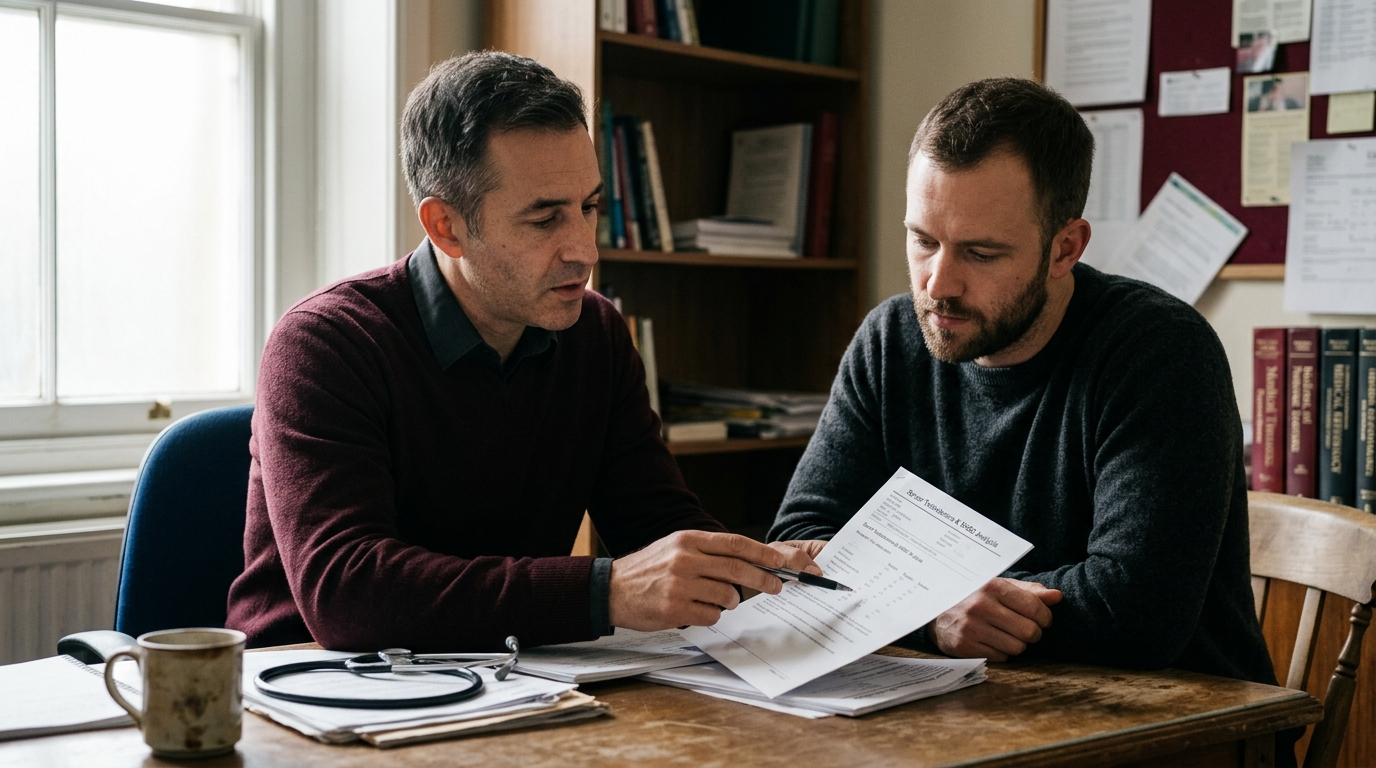
The physician orders two early-morning fasting blood tests along with a home sleep apnea test. The blood tests show a total testosterone of 380 ng/dL, which is within the normal range.
However, the sleep study reveals an Apnea-Hypopnea Index of 34 events per hour, confirming severe obstructive sleep apnea. Initiating CPAP therapy resolves his daytime fatigue and brain fog within several weeks, without requiring any hormone interventions.
Another common scenario involves a 38-year-old man who takes an online health screening. He gets his blood drawn at 2:30 PM after a stressful week of poor sleep and working late shifts.
The lab report flags his total testosterone at 240 ng/dL. Alarmed by the red number on the page, he believes he has permanent hypogonadism.
His physician explains that testosterone levels drop significantly in the afternoon and fall further following acute sleep restriction. The doctor schedules two confirmatory tests taken at 7:45 AM on separate mornings after restful nights.
His repeat morning results come back at 410 ng/dL and 435 ng/dL. The low afternoon reading was an artifact of circadian timing and temporary sleep loss, rather than true endocrine failure.
Consider an illustrative model of a 52-year-old man who was diagnosed with moderate sleep apnea two years ago. He uses his CPAP machine every night for seven hours, and his follow-up sleep studies confirm an AHI of less than 2 events per hour.
Despite breathing perfectly at night and feeling less sleepy during the day, he experiences a complete absence of libido and worsening erectile dysfunction.
His doctor orders two early-morning hormone panels. The tests show total testosterone levels of 190 ng/dL and 210 ng/dL, accompanied by low free testosterone and appropriately normal LH.
Because his sleep apnea is fully controlled, his doctor can safely evaluate him for hypogonadism. In this case, treating the sleep disorder solved the breathing problem, but an independent endocrine issue still required separate medical treatment.
If you are experiencing chronic fatigue, brain fog, or sexual changes, having an organized discussion with your doctor is the best way forward. Here are specific, practical questions to ask:
Preparing these questions ensures that your healthcare provider evaluates your health thoroughly, avoiding rushed conclusions. For more information on navigating hormone diagnostics, browse our low testosterone resources.
No. A home sleep apnea test monitors breathing parameters such as airflow, respiratory effort, and blood oxygen saturation. It cannot measure hormone levels. Testosterone status requires a separate blood test drawn in the morning.
Weight loss can significantly improve both conditions, especially if excess visceral fat is the primary driver. Reducing fat around the neck and airway reduces physical obstruction, while reducing total adipose tissue lowers the aromatase activity that suppresses testosterone. However, some individuals have structural airway shapes that cause sleep apnea regardless of body weight, and some have primary testicular conditions that diet cannot fix. Weight loss should be part of a broader medical strategy.
Testosterone levels follow a daily circadian rhythm that peaks between 7:00 AM and 10:00 AM in healthy adult men. By afternoon and evening, levels can drop by 20% to 40%. Testing in the morning ensures your results are compared against standard clinical reference ranges.
Mild, asymptomatic sleep apnea (AHI between 5 and 14) is not an absolute contraindication to testosterone therapy under clinical guidelines. However, your doctor will still want to monitor your symptoms, sleep quality, and red blood cell count closely. The primary warning from the Endocrine Society applies to untreated severe obstructive sleep apnea, where unmanaged airway collapse creates significant cardiorespiratory risks.
Testostra explains testosterone biology, testing, symptoms, lifestyle factors and TRT with careful sourcing and clear clinical limits.



Send us a question, research idea or topic suggestion. Reader questions help shape future Testostra content.
Contact Testostra