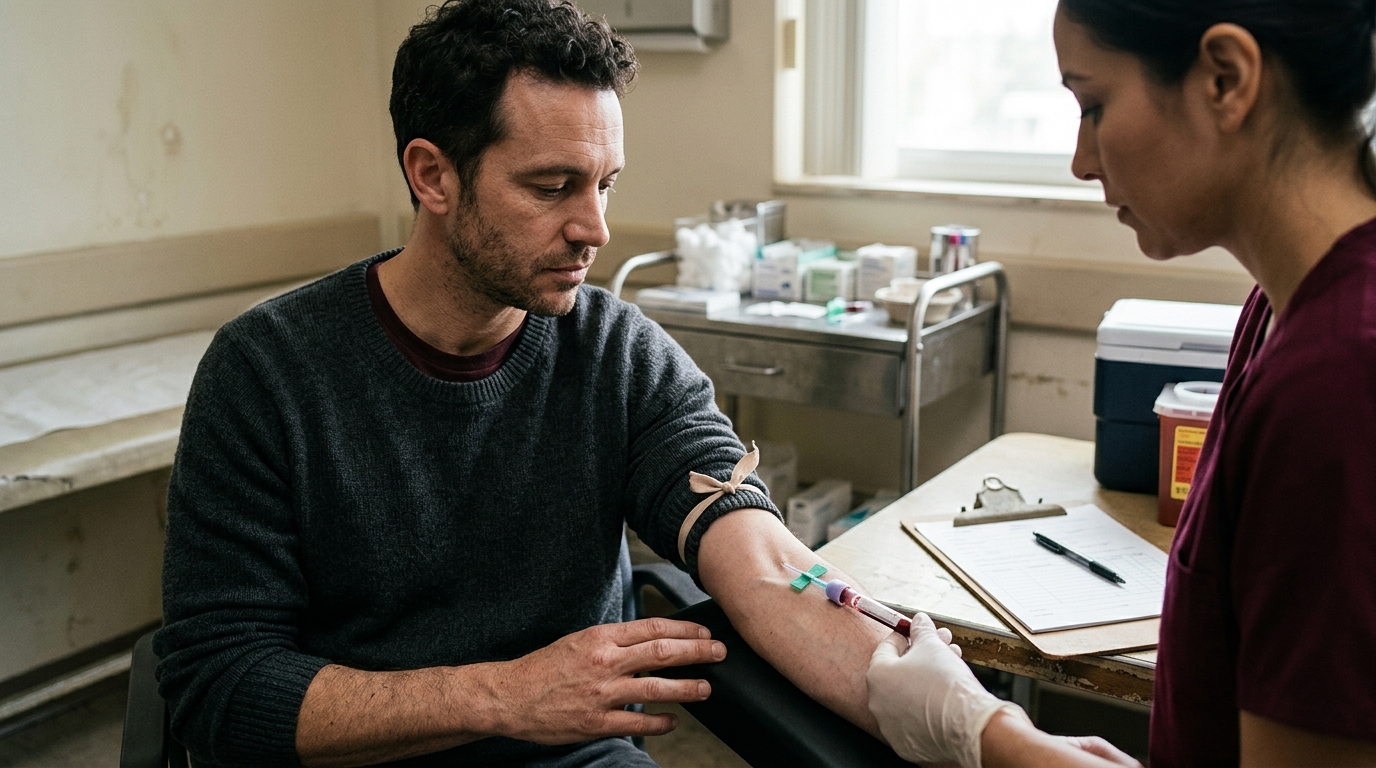

A 10 to 40 percent increase in muscle phosphocreatine improves physical performance without altering testosterone levels, hormone biomarkers, or clinical endocrine function.





Medical Disclaimer: The information presented in this article is strictly for educational and informational purposes. It does not constitute personal medical advice, clinical diagnosis, or treatment recommendations. Always consult a qualified healthcare professional before starting any new dietary supplement, changing your exercise routine, or interpreting laboratory blood tests.
Many people assume that because a supplement rapidly builds muscular strength, it must work by increasing anabolic hormones. Creatine is often placed into this category. Fitness marketing and online forums frequently blur the line between cellular energy production and endocrine function.
This confusion leads to two opposing myths. One claim suggests that creatine acts as a natural testosterone booster capable of fixing hormonal deficiencies. Another claim warns that creatine causes dangerous surges in dihydrotestosterone, leading directly to male pattern baldness.
Both views misinterpret how the compound functions inside human tissue. Creatine operates as a nutritional energy substrate rather than a hormonal regulator. Understanding the exact physiological role of this supplement requires looking past marketing promises and examining the clinical evidence.
A comprehensive review of the scientific literature reveals clear boundaries. Creatine provides reliable, well-documented support for high-intensity physical performance and muscular power. However, clinical trials consistently demonstrate that it does not meaningfully change total testosterone, free testosterone, or circulating androgens.
To understand why creatine does not act as a hormone, one must examine how skeletal muscle generates force. Every muscular contraction depends on a single chemical fuel source called adenosine triphosphate, commonly known as ATP. During maximal physical efforts, stored ATP is consumed within two to three seconds.
Muscles must immediately regenerate ATP to continue working. They do this by utilizing phosphocreatine, an organic compound stored directly within muscle cells. Phosphocreatine donates a phosphate molecule to depleted adenosine diphosphate, rapidly reforming active ATP.
This metabolic pathway is known as the phosphagen energy system. It operates entirely on chemical phosphate transfers within the muscle cytoplasm. It does not rely on the hypothalamic-pituitary-gonadal axis, and it does not require steroid hormone activation.
The human body naturally synthesizes approximately one gram of creatine per day. This synthesis takes place primarily in the liver and kidneys using three amino acids: glycine, arginine, and methionine. The remainder of the body's creatine pool comes from dietary animal proteins, such as beef, poultry, and fish.
Supplemental creatine monohydrate increases the total phosphocreatine pool within skeletal muscle by 10 to 40 percent. This increase allows muscle tissue to sustain peak power output for a few additional seconds during intense contractions.
Anabolic hormones operate through a completely different biological mechanism. Testosterone enters target cells, binds to intracellular androgen receptors, and alters nuclear gene transcription. This process stimulates muscle protein synthesis over hours and days.
Because creatine provides raw cellular fuel rather than an endocrine signal, it is categorized as an ergogenic aid. Confusing an energy substrate with an androgenic hormone represents a fundamental category error. Learning the principles of testosterone fundamentals and hormonal function helps clarify why metabolic supplements cannot replace endocrine signaling.
The relationship between creatine supplementation and testosterone has been thoroughly investigated in controlled human trials. If creatine possessed direct androgenic properties, regular intake would consistently raise circulating hormone concentrations in blood serum.
A comprehensive 2021 systematic review published in the Journal of the International Society of Sports Nutrition examined this exact question. The authors analyzed twelve randomized controlled trials that measured testosterone responses to creatine supplementation. The studies utilized daily doses ranging from 3 to 25 grams over periods lasting between six days and twelve weeks.
The results across the clinical literature were remarkably uniform. Ten of the twelve investigations found absolutely no change in total serum testosterone concentrations. Two studies identified small, temporary fluctuations, but these changes remained well within normal physiological ranges and lacked clinical significance.
Five of the reviewed studies also measured free testosterone, which represents the unbound, biologically active fraction of the hormone. None of the five studies observed a statistically significant increase in free testosterone following supplementation.
Researchers frequently note that intense resistance exercise itself causes a transient rise in circulating testosterone. When study participants lift heavy weights while supplementing with creatine, minor hormonal spikes sometimes occur. However, these acute spikes are driven entirely by the physical demand of the workout, not by the creatine itself.
When researchers control for training volume and intensity, the hormonal difference between creatine and placebo groups disappears. The clinical consensus is definitive: creatine supplementation does not increase total or free testosterone in healthy adult men. Those seeking legitimate medical support for hormone deficits must look to clinical medicine rather than sports nutrition supplements.
Concerns regarding creatine and hair loss originate almost entirely from a single study published in 2009 by Van der Merwe and colleagues. This trial evaluated twenty collegiate rugby players during a three-week supplementation protocol.
The participants completed a standard loading phase of 25 grams of creatine monohydrate per day for seven days, followed by a maintenance phase of 5 grams per day for fourteen days. The researchers measured resting serum testosterone and dihydrotestosterone, commonly called DHT, at baseline and at the end of each phase.
The study reported that total testosterone concentrations did not change during the trial. However, serum DHT levels increased by 56 percent after the seven-day loading phase. DHT levels remained 40 percent above baseline values following the fourteen-day maintenance period.
Because DHT is an androgen derived from testosterone that contributes to male pattern hair loss in genetically susceptible individuals, this finding triggered widespread concern. The study led many consumers to conclude that creatine causes premature baldness.
A critical scientific reading reveals significant context that is often ignored. First, the baseline DHT levels in the creatine group were disproportionately low compared to the placebo group before supplementation even began. The reported 56 percent increase merely brought the participants' DHT levels back toward standard physiological averages.
Second, the study measured circulating serum androgens rather than DHT concentrations within the scalp hair follicles. Serum hormone levels do not directly reflect local tissue enzymatic activity. Most importantly, no clinical trial in the years since has successfully replicated the 2009 rugby study findings.
The 2021 International Society of Sports Nutrition review analyzed the broader body of literature surrounding this topic. The review concluded that the available scientific evidence does not indicate that creatine increases total testosterone, elevates free testosterone, raises DHT, or causes hair loss. A single un-replicated trial cannot override dozens of controlled studies demonstrating hormonal neutrality.
While creatine does not alter male sex hormones, its ability to support athletic performance is supported by extensive research. The National Institutes of Health Office of Dietary Supplements notes that short-term supplementation reliably improves performance in repeated bouts of high-intensity exercise.
The physiological benefits of creatine depend heavily on the specific energy systems used during a given sport. Creatine delivers its greatest advantages in activities requiring maximum effort within short timeframes:
Clinical trials highlight specific functional improvements. In a controlled trial of fourteen resistance-trained men, creatine supplementation produced significant improvements in jump squat peak power and bench press repetition capacity across five consecutive sets. Another study involving eighteen competitive male sprinters demonstrated faster times during repeated 60-meter and 100-meter dash protocols following five days of loading.
Conversely, creatine provides minimal benefit for long-duration, steady-state aerobic endurance. Activities such as marathon running, distance cycling, and long-distance swimming last far longer than 150 seconds. These disciplines rely on oxidative phosphorylation, an aerobic energy pathway that depends on oxygen and glycogen rather than phosphocreatine stores.
Furthermore, the initial weight gain associated with creatine can negatively affect endurance athletes. Creatine draws water into skeletal muscle cells, frequently causing an initial scale weight increase of one to two kilograms. In weight-bearing endurance events, carrying this extra mass can increase the metabolic cost of running without offering any energetic benefit.
Individual baseline nutrition also influences how well someone responds to supplementation. Creatine stores are naturally lower in individuals who follow vegetarian or vegan diets because plant foods contain virtually no creatine. Controlled trials show that vegetarians often experience a more pronounced improvement in muscle saturation and training capacity when supplementing compared to omnivores who regularly consume red meat.
Readers interested in holistic approaches to physical wellness can review our guide on lifestyle and natural testosterone support to understand how diet, sleep, and training interact with baseline energy levels.
Men who supplement with creatine often undergo routine health screenings and become alarmed by abnormal kidney markers. Understanding how creatine interacts with standard blood panels prevents unnecessary panic and misdiagnosis.
The most common lab anomaly involves serum creatinine. Creatinine is a normal metabolic waste product created by the spontaneous breakdown of creatine and phosphocreatine within muscle tissue. The kidneys filter creatinine from the blood and excrete it through urine at a steady rate.
Standard metabolic panels measure serum creatinine to calculate the estimated glomerular filtration rate, known as eGFR. Conventional lab algorithms assume that a high concentration of creatinine indicates that the kidneys are failing to filter waste efficiently.
When a healthy individual takes supplemental creatine, the total body pool of creatine expands. Consequently, the natural conversion of creatine into creatinine increases. This causes serum creatinine to rise, which artificially lowers the calculated eGFR on a standard lab report.
This mathematical artifact does not reflect actual renal damage. Multiple clinical reviews confirm that creatine supplementation does not impair kidney function or reduce true glomerular filtration in healthy adults.
To prevent diagnostic confusion, individuals should consider the following practical biomarker guidelines:
When evaluating endocrine health, men should also understand how specific hormone biomarkers function. The table below clarifies the primary blood markers associated with male vitality and how creatine affects them:
Total testosterone measures the entire quantity of testosterone circulating in the bloodstream, including both bound and unbound fractions. Creatine supplementation does not cause any clinically meaningful change in this value.
Free testosterone represents the small fraction of hormone (roughly two percent) that is not attached to transport proteins like albumin or sex hormone-binding globulin. Research shows creatine has zero measurable effect on free testosterone concentrations.
DHT is a potent androgen converted from testosterone via the 5-alpha reductase enzyme. Outside of a single 2009 trial, broad scientific reviews show that creatine does not reliably elevate circulating DHT.
Serum creatinine is a metabolic byproduct of creatine breakdown used as a proxy for kidney filtration. Creatine supplementation frequently raises serum creatinine without causing structural or functional harm to renal tissue.
For a deeper look into proper testing protocols, explore our resource on testosterone testing and biomarkers.
A critical mistake made by many men experiencing persistent fatigue, low mood, or diminished strength is attempting to treat these symptoms with sports supplements. Dietary supplements like creatine are designed to support cellular work capacity in healthy tissue, not to correct medical deficiencies.
Male hypogonadism is a formal clinical diagnosis characterized by the inability of the testes to produce physiological levels of testosterone, sperm, or both. The Endocrine Society has established rigorous, evidence-based guidelines for identifying and treating this condition.
A proper clinical diagnosis requires two distinct criteria:
If a patient exhibits low morning testosterone alongside symptoms, clinicians perform secondary testing to determine the root cause. This involves measuring luteinizing hormone (LH) and follicle-stimulating hormone (FSH) to distinguish between primary testicular failure and secondary hypothalamic-pituitary dysfunction.
Creatine cannot repair the hormonal signaling pathways that regulate endocrine output. Taking an over-the-counter sports supplement when true hypogonadism is present only delays appropriate medical evaluation.
Men with confirmed androgen deficiency require formal medical care under the supervision of a qualified physician. You can learn more about clinical diagnostic criteria by reading our guide on low testosterone signs, causes, and risk factors.
When clinical deficiency is verified through repeated testing, doctors may discuss medical therapies. For detailed information on therapeutic protocols, consult our overview of TRT, treatment, and emerging testosterone science.
To utilize creatine safely and effectively, consumers should rely on dosing protocols validated by clinical research rather than arbitrary product labels. Scientists have studied several dosing strategies that reliably saturate muscle creatine stores.
There are two primary methods for establishing muscle creatine saturation:
The dietary supplement market features numerous forms of creatine, including creatine ethyl ester, buffered creatine, creatine nitrate, and creatine hydrochloride. Manufacturers frequently claim that these specialized forms offer superior absorption, require smaller doses, or eliminate water retention.
The scientific literature does not support these marketing claims. The National Institutes of Health and independent reviews confirm that creatine monohydrate remains the most heavily researched, effective, and cost-efficient form available. None of the expensive alternative formulations have demonstrated superior bioavailability, safety, or training adaptations compared to standard monohydrate powder.
Creatine is exceptionally well-tolerated by the vast majority of healthy adults, but minor side effects can occur if protocols are mismanaged:
While creatine has an outstanding safety record in healthy populations over short-term and multi-year studies, individuals with pre-existing renal disease or impaired kidney function should exercise caution. Anyone with established renal pathology must consult their nephrologist or primary care physician before using creatine or high-protein nutritional supplements.
Navigating the boundary between athletic performance supplements and endocrine health is best done in partnership with a medical provider. If you are experiencing symptoms such as persistent fatigue, decreased strength, or low libido, a candid conversation with your doctor is essential.
When preparing for your clinical visit, consider bringing a concise list of questions to guide the discussion:
When discussing these issues, provide your clinician with a complete, transparent list of every supplement, powder, and over-the-counter product you consume. Clear communication ensures that lab tests are interpreted accurately and that medical decisions are based on sound clinical data.
Separating the physiological reality of creatine supplementation from common myths allows athletes and health-conscious adults to make informed decisions:
When evaluated through rigorous clinical evidence, creatine stands out as a safe, highly effective aid for muscular energy output that leaves the male endocrine system entirely unaltered.
Testostra explains testosterone biology, testing, symptoms, lifestyle factors and TRT with careful sourcing and clear clinical limits.



Send us a question, research idea or topic suggestion. Reader questions help shape future Testostra content.
Contact Testostra