
Standard hematocrit safety thresholds above 54 percent guide clinicians in monitoring blood thickness and adjusting dosage safely during ongoing testosterone replacement therapy.





This guide provides educational information about laboratory testing, blood cell counts, and male hormone health. It is not personal medical advice, a diagnosis, or a treatment plan. Always consult a qualified healthcare provider for personal health concerns, lab interpretations, or treatment decisions.
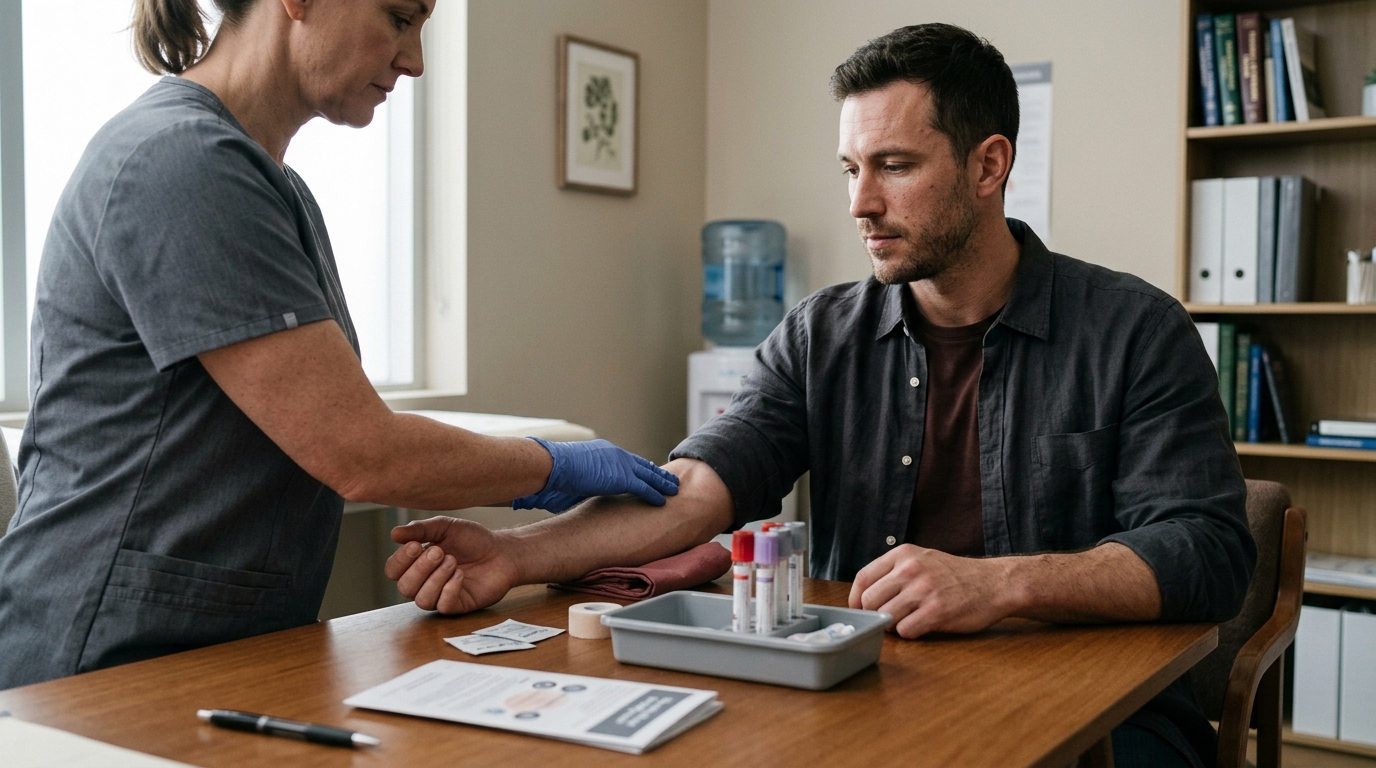
A complete blood count, often called a CBC, is a standard laboratory panel that measures the cells circulating in your bloodstream. It is not a test for testosterone deficiency, and it cannot diagnose hypogonadism. Instead, the CBC serves as a baseline safety assessment and an ongoing monitoring tool when testosterone therapy is considered or prescribed.
When clinicians evaluate male hormonal health, they balance hormone levels against systemic safety markers. Testosterone directly stimulates the production of red blood cells in the bone marrow. Because of this physiological relationship, changes in red blood cell count, hemoglobin, and hematocrit provide critical context. Understanding what a CBC contributes helps men interpret their laboratory reports alongside their medical providers without confusion or unnecessary alarm.
Understanding how red blood cell metrics interact with hormone management requires a clear view of standard clinical guidance.
A complete blood count evaluates three major cellular components: red blood cells, white blood cells, and platelets. In the context of hormonal health and testosterone therapy, the red blood cell panel is the primary focus.
The red blood cell (RBC) count measures the total number of red cells in a specific volume of blood. Red blood cells carry oxygen from the lungs to tissues throughout the body and carry carbon dioxide back to the lungs. A typical adult male reference range is roughly 4.6 to 6.2 million cells per microliter, though specific ranges vary by laboratory. A high RBC count alone does not identify a specific medical condition.
Hemoglobin is the iron-rich protein inside red blood cells that binds directly to oxygen molecules. It gives blood its characteristic red color and enables efficient gas exchange in body tissues. Standard adult male reference intervals generally fall between 13.0 and 18.0 grams per deciliter. Like RBC counts, hemoglobin concentrations must be interpreted using the specific reference range provided by the testing facility.
Hematocrit represents the percentage of total blood volume made up of red blood cells. If a lab report indicates a hematocrit of 45 percent, it means that 45 percent of the blood volume consists of red blood cells, while the remaining 55 percent consists of liquid plasma, white blood cells, and platelets. Adult male hematocrit typically spans from 40 to 54 percent depending on the laboratory and the population tested. Hematocrit depends on both the number of red cells and their average size.
A standard CBC also provides calculated indices, including mean corpuscular volume (MCV), mean corpuscular hemoglobin (MCH), and red cell distribution width (RDW). MCV measures the physical size of the average red blood cell. MCH reflects the average amount of hemoglobin inside each cell. RDW indicates the variation in cell size across the sample. These indices help clinicians distinguish between different causes of abnormal blood counts, such as nutrient deficiencies, genetic traits, or bone marrow responses. For more information on reading laboratory panels, you can review our guide to blood testing and biomarker evaluation.
Evaluating testosterone and checking a complete blood count address two separate clinical questions. Confusing these two frameworks can lead to misinterpretation of laboratory results.
The Endocrine Society and the American Urological Association (AUA) have established clear guidelines for diagnosing hypogonadism. A diagnosis requires the presence of consistent clinical symptoms or physical signs alongside reliably measured low serum testosterone. Symptoms may include low sexual desire, erectile dysfunction, decreased energy, reduced muscle mass, or depressed mood.
Guidelines recommend measuring total testosterone using a fasting morning blood draw on two separate days. Testosterone levels naturally fluctuate throughout the day and can drop temporarily due to illness, poor sleep, or acute stress. The AUA defines a total testosterone value below 300 nanograms per deciliter as a reasonable threshold supporting a deficiency diagnosis when paired with symptoms. A CBC cannot establish this diagnosis because it measures cellular volume and oxygen transport, not androgen concentrations. To learn more about symptom patterns, explore our overview of low testosterone symptoms.
While a CBC cannot diagnose testosterone deficiency, it provides an essential baseline before any hormone treatment begins. It answers whether the blood has a safe concentration of red cells prior to adding an androgen that will stimulate further red cell production.
A normal hematocrit does not mean testosterone levels are adequate. Conversely, a low or high hematocrit does not confirm or rule out an endocrine disorder. The CBC provides context regarding blood thickness and systemic health, ensuring that treatment can be initiated safely if hypogonadism is confirmed.
The relationship between androgens and red blood cell production is well established in human physiology. Testosterone influences bone marrow activity through several interconnected mechanisms.
Testosterone stimulates the production of erythropoietin (EPO), a hormone produced primarily by the kidneys that signals bone marrow to create new red blood cells. In addition to raising EPO, testosterone suppresses hepcidin, a master regulator of systemic iron balance. When hepcidin levels fall, the body absorbs more dietary iron and mobilizes stored iron more effectively. This increased availability of iron directly fuels red blood cell synthesis, leading to measurable increases in RBC count, hemoglobin, and hematocrit.
The degree to which hematocrit rises can depend on the specific formulation and dosing schedule of testosterone therapy. A comprehensive systematic review and network meta-analysis evaluated hematocrit changes across various delivery methods compared to placebo:
The meta-analysis noted that short-acting intramuscular injections resulted in a significantly higher average increase in hematocrit compared to transdermal patches. However, these figures represent statistical averages across groups of study participants, not fixed outcomes for every individual. Individual responses vary based on genetics, baseline health, and hormone dosing.
Before initiating testosterone replacement therapy, clinical practice guidelines emphasize the necessity of establishing baseline hematological parameters.
According to the American Urological Association guidelines, clinicians should obtain a baseline CBC, including hemoglobin and hematocrit, prior to starting therapy. If a patient presents with a baseline hematocrit above 50 percent, guidelines advise considering withholding testosterone therapy until the underlying cause is evaluated and explained.
Starting testosterone in someone who already has an elevated red cell mass can push hematocrit into dangerous ranges quickly. A pre-existing elevation is not caused by hormone therapy because treatment has not yet started. Investigating the baseline abnormality protects the patient from compounding an undetected health issue.
Guidelines also emphasize the importance of informed consent. Clinicians should counsel patients about the potential risk of developing erythrocytosis, also referred to as polycythemia, during treatment. Patients need to understand that routine laboratory monitoring is not optional, as tracking blood counts is an essential component of responsible hormone care. For a broader overview of safety standards, see our guide to testosterone replacement therapy research.
Once testosterone therapy begins, monitoring red blood cell parameters becomes an ongoing safety priority. Clinical organizations provide specific timelines and numerical thresholds to guide management.
The Endocrine Society recommends checking hematocrit at baseline, at three to six months after starting treatment, and annually thereafter if levels remain stable. If doses are changed or if a patient switches formulations, repeat testing at three to six months is standard practice. Regular intervals ensure that rising red blood cell levels are detected before complications develop.
Clinical guidelines distinguish between normal physiological increases and levels that require medical intervention:
When hematocrit reaches 54 percent or higher, the Endocrine Society recommends temporarily pausing testosterone therapy until hematocrit returns to a safe range. Clinicians should evaluate the patient for secondary contributing factors, such as hypoxia or sleep apnea. Once levels normalize, treatment may be restarted at a lower dose or transitioned to a formulation associated with smaller hematocrit increases, such as a topical gel or patch.
The American Urological Association similarly recommends intervention when hematocrit reaches or exceeds 54 percent. When circulating testosterone concentrations are elevated above the therapeutic target, dose reduction serves as a practical first-line strategy.
An elevated hematocrit or red blood cell count is not exclusive to testosterone therapy. When a CBC shows elevated red cell measures, clinicians must consider a broad range of potential primary and secondary causes.
Hematocrit is a concentration measurement based on the ratio of red cells to total blood volume. When an individual is dehydrated, the liquid plasma volume in the bloodstream decreases while the number of red blood cells remains the same. This phenomenon, known as relative or apparent erythrocytosis, causes hematocrit and hemoglobin concentrations to appear artificially elevated on laboratory tests. Proper hydration before a blood draw is necessary for an accurate assessment.
When body tissues experience chronic oxygen deprivation, the kidneys compensate by releasing additional erythropoietin to boost oxygen-carrying capacity. Several common conditions trigger this response:
Cigarette smoke contains carbon monoxide, which binds to hemoglobin with an affinity much higher than oxygen, forming carboxyhemoglobin. Because carboxyhemoglobin cannot transport oxygen to tissues, the body senses functional hypoxia. In response, bone marrow ramps up red blood cell production, frequently resulting in elevated hematocrit levels among regular smokers.
Primary polycythemia, such as polycythemia vera, is a rare myeloproliferative neoplasm where the bone marrow produces excess red blood cells independently of erythropoietin signals. In primary polycythemia, serum erythropoietin levels are typically very low, distinguishing it from secondary causes where erythropoietin is normal or elevated.
Medical guidelines establish conservative safety thresholds to prevent potential adverse events. However, evaluating the underlying clinical evidence helps distinguish established facts from observational associations.
As the proportion of red blood cells in the circulation rises, whole blood viscosity increases. Higher viscosity creates greater resistance to blood flow through microvascular capillary beds. In theoretical models, severely elevated hematocrit can reduce microvascular perfusion and increase cardiac workload. These physiological principles form the rationale behind guideline thresholds like 54 percent.
A large retrospective cohort analysis evaluated 5,842 testosterone-treated men who developed hematocrit levels above 52 percent and compared them with 5,842 treated men who maintained hematocrit below that level. Within the first year of treatment, major adverse cardiovascular events (MACE) or venous thromboembolism (VTE) occurred in 5.15 percent of the elevated group compared to 3.87 percent of the normal group. This represented a statistically significant association with an odds ratio of 1.35.
While this observational study identified a correlation, observational data cannot prove that elevated hematocrit directly caused the cardiovascular events. Patients who develop erythrocytosis may share underlying risk factors, such as undetected sleep apnea or smoking, that independently increase cardiovascular risk. Consequently, researchers continue to study whether treatment-induced erythrocytosis carries the same risks as primary bone marrow disorders.
The TRAVERSE trial provided high-quality randomized controlled trial data regarding testosterone safety in middle-aged and older men with hypogonadism and established cardiovascular risk. In this closely monitored trial utilizing transdermal testosterone gel, fewer than 1 percent of participants (six out of 5,246 men) exceeded a hematocrit of 54 percent despite dose titration to the lowest daily level. These findings illustrate that severe hematocrit elevations are relatively uncommon when topical therapies are monitored and titrated according to standard clinical protocols.
To understand how clinicians evaluate laboratory results in real-world practice, consider these common educational case patterns. These illustrative models demonstrate the decision-making process without serving as individual medical protocols.
An adult male presents with persistent fatigue, diminished libido, and reduced recovery from exercise. Two consecutive fasting morning blood tests reveal total testosterone levels of 220 ng/dL and 240 ng/dL. His complete blood count shows a red blood cell count, hemoglobin, and hematocrit well within normal laboratory ranges.
In this scenario, the normal CBC does not contradict the diagnosis of hypogonadism. The hormone testing and clinical symptoms confirm the endocrine deficiency. The CBC simply confirms that his baseline red blood cell status is healthy, providing a safe baseline if testosterone therapy is initiated.
A man undergoing evaluation for low testosterone has confirmed low morning hormone levels. However, his baseline complete blood count reveals a hematocrit of 51.5 percent and elevated hemoglobin.
Because testosterone therapy can further raise red blood cell levels, clinical guidelines recommend withholding hormone treatment while evaluating the elevated baseline. The clinician investigates secondary causes, screening for obstructive sleep apnea, tobacco use, and chronic dehydration. Testosterone therapy is deferred until the underlying cause is managed and hematocrit stabilizes in a safe range.
A patient receiving intramuscular testosterone injections reports improved energy and resolution of symptoms. Follow-up lab testing at six months shows total testosterone in the mid-normal therapeutic range, but his hematocrit has increased from a baseline of 46 percent to 54.5 percent.
Because his hematocrit exceeds the 54 percent threshold, clinical guidelines advise pausing treatment or immediately adjusting the therapy protocol. The provider evaluates him for newly developed sleep apnea and considers reducing the injection dose or switching to a transdermal gel to lower the erythropoietic stimulus.
A routine lab panel shows a red blood cell count flagged as slightly above the reference range, but both hemoglobin concentration and hematocrit remain comfortably within normal limits.
This pattern demonstrates why clinicians review the entire red blood cell panel alongside calculated indices. If red blood cells are smaller than average (low MCV), a higher total cell count may be required to occupy a normal fraction of blood volume. An isolated high RBC count does not necessarily indicate polycythemia or require stopping therapy, provided total hematocrit remains safe.
A man on stable testosterone therapy for two years suddenly shows a hematocrit increase to 55 percent on his annual laboratory panel. He reports waking with morning headaches, daytime drowsiness, and loud snoring noted by his partner.
Rather than assuming the hormone dose alone caused the sudden spike, the clinician recognizes the classic presentation of sleep-disordered breathing. The patient is referred for a formal sleep study, which confirms obstructive sleep apnea. Treating the apnea with continuous positive airway pressure (CPAP) therapy helps normalize oxygen saturation, allowing hematocrit to return to safe levels alongside appropriate hormone dose management. For more on how health factors influence laboratory outcomes, explore our hormone panel interpretation resources.
When reviewing laboratory results with a physician, asking targeted questions ensures thorough evaluation and collaborative decision-making.
Yes. Dehydration decreases the total volume of fluid in your bloodstream without changing the number of red blood cells. Because hematocrit measures the percentage of blood volume occupied by red cells, a lower plasma volume makes red blood cells appear more concentrated. Ensuring adequate fluid intake before a blood draw helps avoid artificially elevated hematocrit readings.
No. A complete blood count measures red cells, white cells, and platelets, which reflect oxygen delivery, immune function, and clotting capacity. It does not measure testosterone or other circulating hormones. You can have severe testosterone deficiency alongside an entirely normal blood count, which is why hormone testing requires specific serum assays.
Short-acting intramuscular injections often create higher peak testosterone levels in the days immediately following administration compared to daily topical gels or patches. These transient supraphysiological peaks can provide a stronger biological stimulus to the bone marrow, triggering greater erythropoietin release and more pronounced suppression of hepcidin.
While these terms are frequently used interchangeably in clinical discussions, erythrocytosis refers specifically to an increase in red blood cell mass or concentration. Polycythemia technically refers to an increase across all blood cell lines, including red cells, white cells, and platelets. In the context of testosterone therapy, erythrocytosis is the more accurate physiological description, although guidelines often refer to polycythemia as a hematocrit exceeding 52 to 54 percent.
Testostra explains testosterone biology, testing, symptoms, lifestyle factors and TRT with careful sourcing and clear clinical limits.



Send us a question, research idea or topic suggestion. Reader questions help shape future Testostra content.
Contact Testostra