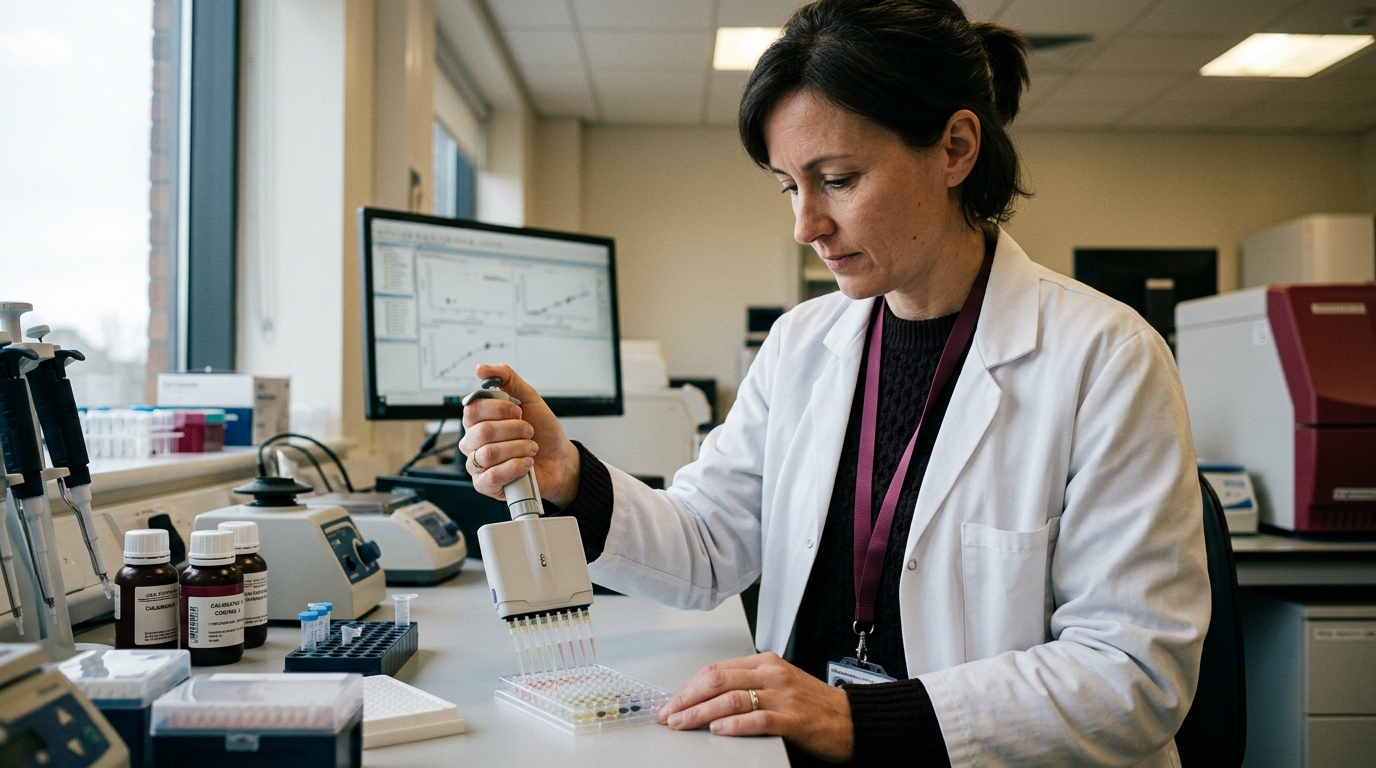

Clinical evidence shows that typical dietary soy intake does not reduce male testosterone levels or cause adverse hormonal imbalances in healthy adults.





Medical Disclaimer: This guide is written for educational purposes only. It does not provide medical advice, diagnosis, or treatment. Hormone health and dietary changes should always be evaluated with a qualified healthcare professional based on your personal health history.
You are standing in the grocery aisle, looking at a carton of soy milk or a package of tofu. You recall a post from an online fitness forum claiming that eating soy will wreck your testosterone, raise your estrogen, and undermine your strength. You put the item back on the shelf, wondering if a simple dietary choice could truly alter your hormones.
Conversations about male hormones and plant-based foods are often filled with extreme claims. Some people argue that plant foods destroy male vitality, while others claim a vegan diet is a natural booster of male hormones. Both positions oversimplify human biology and misinterpret the scientific research.
Understanding how diet intersects with endocrine health requires looking past sensational headlines. By examining controlled human trials, observational studies, and clinical guidelines, you can separate internet folklore from verified physiology. This guide provides a thorough, evidence-based review of soy, vegetarian and vegan diets, and male hormonal health.
Understanding the interaction between diet and male physiology begins with clear evidence. The following points summarize the current clinical consensus:
To understand why soy causes so much debate, you must examine the biology of phytoestrogens. Soybeans contain naturally occurring compounds known as isoflavones. The primary isoflavones found in soy foods are genistein, daidzein, and glycitein.
These compounds are classified as phytoestrogens because their chemical structure resembles human 17-beta-estradiol. Because of this structural similarity, isoflavones can bind to human estrogen receptors. This molecular fact leads many people to assume that eating soy is functionally equivalent to taking female hormones.
Human biology, however, is far more nuanced than simple receptor binding. The human body contains two distinct types of estrogen receptors, known as alpha and beta receptors.
Estrogen receptor alpha is predominantly found in tissues such as the mammary glands, uterus, and liver. Activation of alpha receptors is typically associated with classical estrogenic effects. Estrogen receptor beta is widely distributed in other tissues, including the prostate, bones, vascular system, and central nervous system.
Phytoestrogens bind to estrogen receptor beta with a much higher affinity than they bind to estrogen receptor alpha. When an isoflavone binds to a receptor, it often acts as a selective estrogen receptor modulator. This means it can exert weak estrogen-like effects in some tissues while blocking estrogen actions in others.
Phytoestrogens are significantly weaker than endogenous human estrogen. Genistein and daidzein exhibit a fraction of the biological potency of human estradiol. When consumed as part of whole foods, these plant compounds do not overwhelm the male endocrine system.
The male body maintains hormonal balance through a feedback system called the hypothalamic-pituitary-gonadal axis. The hypothalamus monitors circulating sex hormones and releases gonadotropin-releasing hormone. This stimulates the pituitary gland to release luteinizing hormone and follicle-stimulating hormone.
Luteinizing hormone signals the Leydig cells in the testes to produce testosterone. If a dietary compound significantly disrupted this system, blood levels of luteinizing hormone and testosterone would shift measurably. Controlled human research consistently shows that typical dietary soy intake does not disrupt this feedback loop.
Evaluating whether soy lowers male hormones requires looking at randomized controlled clinical trials in humans. Animal studies and cell culture experiments cannot replicate the complex metabolism and clearance rates of the human body. Rodents metabolize isoflavones differently than humans, often producing higher circulating concentrations of active metabolites.
A comprehensive 2021 meta-analysis compiled data from 41 clinical trials investigating soy and male reproductive hormones. Most of these trials were conducted in Western populations and examined the effects of soy protein or isolated isoflavone supplements.
The meta-analysis evaluated specific hormone measurements across large cohorts of men:
The researchers analyzed the data across multiple subgroups to ensure subtle effects were not missed. They evaluated the impact of isoflavone dosage, comparing intakes below 75 milligrams per day against intakes of 75 milligrams per day or higher. They also evaluated study duration, comparing interventions lasting 12 weeks or less against those lasting longer than 12 weeks.
The results were clear and consistent. Neither soy protein nor isolated isoflavones had any statistically significant effect on total testosterone, free testosterone, estradiol, or estrone. The dose-response and study-duration analyses also revealed no hormonal changes.
Beyond circulating hormone levels, some men worry about the impact of soy on male fertility and reproductive parameters. The 2021 review examined three clinical trials that evaluated semen volume, sperm concentration, and sperm motility. Isoflavone exposures in these trials ranged from 40 milligrams to 480 milligrams daily for two to three months.
None of the clinical trials found adverse effects on sperm or semen quality. However, researchers noted that the semen evidence base is smaller than the circulating hormone data. While the hormone findings are supported by dozens of robust trials, fertility outcomes remain an area with fewer total studies.
The clinical trial evidence provides a clear answer to a common question. When consumed in amounts typical of human diets, soy foods do not lower male testosterone or raise estrogen levels.
Moving beyond isolated soy intake, many men wonder how overall plant-based eating patterns affect male hormone levels. Online fitness communities frequently debate whether eliminating animal products changes circulating androgens.
To answer this, researchers have conducted large observational studies comparing men following different dietary patterns. One prominent cross-sectional study evaluated 696 men, including 226 omnivores, 237 vegetarians, and 233 vegans.
The researchers measured a broad panel of hormones and binding proteins across all three groups. The raw data produced an interesting finding that is frequently taken out of context online. Vegan men had slightly higher total testosterone levels compared to both meat-eaters and vegetarians.
At first glance, this finding might lead someone to claim that a vegan diet boosts testosterone. A deeper examination of the endocrine data reveals a more complex physiological reality.
The vegan men also had significantly higher levels of sex hormone-binding globulin, commonly known as SHBG. Specifically, SHBG levels were 16 percent higher in vegan men compared to meat-eaters, and 12 percent higher compared to vegetarians.
Because SHBG binds tightly to circulating testosterone, higher SHBG reduces the fraction of hormone that remains biologically unbound. When researchers calculated free testosterone, they found no significant difference between the omnivores, vegetarians, and vegans.
The study also measured luteinizing hormone and androstanediol glucuronide, a marker of peripheral androgen breakdown. Neither of these markers differed significantly between the dietary groups.
Furthermore, when researchers adjusted the data for body mass index, the observed differences in total testosterone were notably reduced. Men following vegan diets in this cohort had lower average body weights, which is independently associated with higher SHBG and total testosterone levels.
This study illustrates an essential rule in hormone research: observational associations do not prove dietary causation. The study recorded group measurements at a single moment in time. It does not prove that adopting a plant-based diet will raise your total testosterone or change your hormonal status.
For readers researching lifestyle and natural testosterone support, these findings highlight the importance of looking at complete hormonal panels rather than isolated numbers.
Interpreting nutrition research requires a clear understanding of male endocrine biomarkers. When you review lab results or scientific literature, several key proteins and hormones provide the necessary context.
Understanding these biomarkers helps prevent the confusion that often occurs when reading about diet and hormones.
Total testosterone represents the entire pool of testosterone circulating in your bloodstream. It includes hormone that is tightly bound to proteins, loosely bound to proteins, and completely unbound.
Most circulating testosterone is attached to carrier proteins. A standard total testosterone blood test measures this entire combined concentration, usually reported in nanograms per deciliter (ng/dL) or nanomoles per liter (nmol/L).
Total testosterone provides a useful initial baseline for clinical assessment. However, it does not reveal how much hormone is readily accessible to target tissues throughout your body.
Sex hormone-binding globulin is a glycoprotein produced primarily by the liver. Its primary role is to bind sex steroids, including testosterone, dihydrotestosterone, and estradiol, transporting them through the bloodstream.
Approximately 40 to 65 percent of circulating testosterone in men is bound tightly to SHBG. Testosterone attached to SHBG is generally considered inactive because the strong bond prevents the hormone from easily entering target cells.
SHBG levels are influenced by many physiological factors:
Because SHBG fluctuates based on diet and metabolic state, two men can have identical total testosterone levels but very different amounts of active hormone.
Free testosterone refers to the small fraction of hormone that is entirely unbound to any carrier protein. In healthy adult men, free testosterone accounts for roughly 1 to 2 percent of total circulating testosterone.
Albumin is another blood protein that carries testosterone. Unlike SHBG, albumin binds testosterone loosely, allowing the hormone to dissociate easily and enter target tissues.
The sum of free testosterone and albumin-bound testosterone is known as bioavailable testosterone. This represents the functional portion of circulating androgen that can interact with cellular androgen receptors.
When evaluating claims about diet and hormones, free and bioavailable testosterone are far more informative than total testosterone alone. A dietary change that raises total testosterone while simultaneously raising SHBG may leave bioavailable testosterone entirely unchanged.
Luteinizing hormone and follicle-stimulating hormone are gonadotropins secreted by the anterior pituitary gland. They regulate testicular function and hormone synthesis.
Luteinizing hormone acts directly on testicular Leydig cells to stimulate testosterone production. Follicle-stimulating hormone acts on Sertoli cells to support sperm development and maturation.
Measuring gonadotropins helps clinicians determine the underlying origin of a hormone imbalance. If testosterone is low while LH is elevated, the issue lies within the testes. If both testosterone and LH are low, the disruption originates in the pituitary gland or hypothalamus.
Estrogens are essential steroid hormones present in both men and women. In men, estradiol is produced primarily through the conversion of testosterone by the aromatase enzyme in adipose tissue, the brain, and bone.
Estradiol plays critical roles in male physiology, including the regulation of bone mineral density, brain function, and lipid metabolism. It also contributes to the feedback signals that control LH secretion.
Estrone is a weaker estrogen synthesized through the peripheral conversion of androstenedione. Monitoring both estrogens ensures that changes in dietary aromatase activity or exogenous phytoestrogens can be properly evaluated.
To learn more about how these markers fit into comprehensive blood panels, explore our guide to understanding testosterone testing and biomarkers.
Another common debate in male nutrition involves comparing dairy milk to plant-based beverages like soy milk. Online claims often suggest that dairy lowers testosterone due to naturally occurring bovine hormones, or conversely, that soy milk undermines post-workout hormone spikes.
Evaluating these claims requires looking at specific human exercise studies. Research has examined how dairy and soy milk affect acute hormone fluctuations following resistance training.
A 2024 clinical study investigated the acute hormonal responses of men consuming either cow's milk or soy milk immediately after resistance exercise. Following intense lifting, both groups experienced a temporary, time-dependent increase in total testosterone.
Crucially, the study found no significant difference in testosterone response between the dairy milk condition and the soy milk condition. The post-workout hormonal curve was driven by the physical exertion of lifting weights, not the choice of post-exercise beverage.
It is important to understand what acute exercise studies can and cannot tell us. A temporary post-workout rise in hormones reflects acute metabolic stress, hemoconcentration, and clearance changes. It does not indicate a permanent increase in baseline hormone production.
Similarly, acute studies examining muscle protein synthesis after consuming whey, casein, or soy protein show subtle differences in digestion kinetics. Whey protein is absorbed more rapidly than soy protein, leading to a faster initial rise in blood amino acid levels.
However, short-term digestion kinetics do not automatically translate to differences in long-term muscle mass or chronic hormone levels. When total daily protein and energy needs are met, men consuming plant proteins can achieve comparable training adaptations to those consuming animal proteins.
Neither dairy milk nor soy milk functions as a hormonal switch. Choosing between them should be based on digestive tolerance, total nutritional needs, and personal dietary preference rather than fears of hormonal disruption.
When people search online for evidence that soy lowers testosterone, they often encounter individual medical case reports. These case studies describe dramatic symptoms in men who consumed large amounts of soy products.
To evaluate these reports objectively, you must examine the specific context and dosage involved in each case.
One widely cited medical report described a 60-year-old man who developed breast tenderness, gynecomastia, and sexual dysfunction. Clinical testing revealed significantly elevated estrone and estradiol levels alongside low total testosterone.
A detailed dietary investigation revealed that the man was drinking three quarts of commercial soy milk every single day. His daily isoflavone intake was estimated at roughly 360 milligrams per day.
Another report described a 19-year-old man who developed erectile dysfunction and low testosterone while consuming a strictly vegan diet heavily reliant on processed soy foods. His daily isoflavone intake was similarly extreme, exceeding 300 milligrams daily for several months.
When both individuals ceased their extreme soy consumption, their hormone levels and physical symptoms returned to normal ranges.
These case reports illustrate an important toxicological principle: the dose determines the effect. Consuming 360 milligrams of isoflavones daily is radically different from eating a standard portion of tofu or edamame.
For perspective, typical soy foods contain modest amounts of isoflavones:
To reach the extreme intakes described in clinical case reports, a man would need to consume 12 to 15 servings of soy foods every day for months. Typical dietary consumption in Asian countries with high soy intake averages 30 to 50 milligrams of isoflavones daily.
Individual case reports serve as valuable medical records of unusual clinical presentations. However, they cannot establish typical population risk and do not invalidate the results of controlled clinical trials involving hundreds of participants.
Adopting a vegetarian or vegan diet does not inherently damage male hormones. However, an unplanned or restrictive plant-based diet can lead to nutritional deficiencies that indirectly affect vitality, energy, and overall health.
Men choosing plant-based diets should structure their meals around nutrient-dense whole foods and address key vitamins and minerals.
Protein provides the amino acids necessary for muscle repair, enzyme synthesis, and tissue maintenance. While animal proteins contain complete amino acid profiles, plant proteins vary in their specific amino acid distributions.
Men following plant-based diets can easily meet their protein requirements by incorporating a variety of protein sources throughout the day:
Focusing on total daily protein intake is more important than attempting to combine specific proteins at every single meal. Consuming adequate total calories alongside 1.2 to 2.0 grams of protein per kilogram of body weight supports training recovery for active men.
Vitamin B12 is essential for red blood cell formation, neurological function, and DNA synthesis. Plants do not produce vitamin B12, making it a critical nutrient for anyone following a strict vegan diet.
Guidance from public health authorities, including the National Health Service, emphasizes that vegan diets must include reliable sources of B12. Unsupplemented plant-based diets will eventually lead to depletion of liver B12 stores, causing anemia, fatigue, and neurological impairment.
Reliable options for securing vitamin B12 include:
Relying on unfortified plant foods like spirulina, seaweed, or fermented vegetables is unsafe, as these contain inactive B12 analogues that do not support human health.
Vitamin D functions as a secosteroid hormone in the human body. Receptors for vitamin D are present in testicular tissue and throughout the reproductive system.
While the body can synthesize vitamin D through skin exposure to sunlight, geographic location, indoor work, and winter seasons frequently cause widespread deficiency. Plant-based food sources of vitamin D are limited primarily to UV-exposed mushrooms and fortified plant beverages.
Men following any dietary pattern should consider periodic vitamin D testing and speak with a clinician regarding appropriate supplementation if blood levels fall below optimal ranges.
Iodine is a trace mineral necessary for the production of thyroid hormones, thyroxine (T4) and triiodothyronine (T3). Thyroid function directly influences metabolic rate, energy levels, and SHBG production.
In omnivorous diets, dairy products and seafood are primary iodine sources. On a vegan diet, iodine intake can be variable. Using modest amounts of iodized table salt or consuming tested sea vegetables helps maintain adequate iodine status.
Selenium is an essential antioxidant cofactor involved in thyroid hormone conversion and sperm health. Plant selenium content depends heavily on the soil in which the crops were grown. Consuming one or two Brazil nuts a few times per week provides a reliable source of dietary selenium.
Calcium is vital for vascular contraction, muscle function, nerve transmission, and bone density. Men eliminating dairy should ensure their diet provides bioavailable plant calcium.
Beneficial plant-based calcium sources include:
While spinach contains high amounts of calcium, it also contains high levels of oxalates, which bind to the calcium and prevent efficient absorption in the digestive tract. Low-oxalate greens provide significantly better calcium bioavailability.
Omega-3 fatty acids support cardiovascular health, reduce systemic inflammation, and maintain cellular membrane fluidity. Plant diets supply alpha-linolenic acid (ALA), a short-chain omega-3 fat.
Rich sources of dietary ALA include:
The human body converts ALA into long-chain omega-3s (EPA and DHA) at relatively low rates. Men following strict plant-based diets may consider an algae-derived EPA and DHA supplement to support long-chain fatty acid status directly.
To understand how overall energy balance and dietary fats interact with endocrine health, see our comprehensive guide on fundamental male hormonal function.
When men experience fatigue, low mood, or reduced physical drive, it is easy to blame a specific food or dietary pattern. Internet articles often encourage men to self-diagnose low testosterone based on non-specific lifestyle symptoms.
In medical practice, testosterone deficiency (male hypogonadism) is a formal clinical diagnosis that requires specific, rigorous criteria. It cannot be inferred from a single food choice or a momentary shift in energy.
Major medical organizations provide clear diagnostic frameworks for evaluating male testosterone:
The American Urological Association (AUA) guidelines state that a diagnosis of testosterone deficiency requires:
The Endocrine Society clinical practice guidelines similarly recommend diagnosing hypogonadism only in men who exhibit consistent clinical symptoms accompanied by unequivocally low morning testosterone levels measured on repeated occasions.
Morning testing is critical because testosterone levels follow a circadian rhythm in healthy men. Circulating levels peak in the early morning hours (between 7:00 AM and 10:00 AM) and decline steadily toward the evening. Testing later in the day often produces falsely low results that do not reflect true baseline production.
Furthermore, many common health conditions produce symptoms that closely mimic low testosterone:
If a man adopts a poorly planned vegan diet and begins to feel exhausted, the issue is far more likely to be an overall caloric deficit, insufficient protein, or a micronutrient shortfall than a soy-induced hormonal crash.
If you are experiencing persistent symptoms, read our guide on evaluating low testosterone signs and causes to prepare for a productive discussion with your doctor.
Evaluating dietary health claims requires an understanding of scientific evidence quality. In nutritional science, different study designs provide varying degrees of certainty.
Understanding this hierarchy prevents you from being misled by poorly designed studies or sensationalized media headlines.
Randomized controlled trials represent the gold standard for clinical intervention research. In an RCT, participants are randomly assigned to consume an active intervention (such as soy protein) or a control substance (such as whey or casein).
By controlling the intervention and comparing against a control group, researchers can isolate the specific biological effect of the food or compound. When multiple RCTs are combined into a systematic review and meta-analysis, the statistical power increases substantially.
The 2021 meta-analysis of 41 clinical trials represents the highest tier of evidence regarding soy and male hormones. Because these trials measured actual blood concentrations of hormones across diverse cohorts, their finding of no hormonal effect carries substantial scientific weight.
Observational studies examine existing lifestyle habits in large populations without assigning specific interventions. Cross-sectional studies, such as the 696-man vegan comparison, record diet and biomarkers at a single point in time.
These studies are valuable for identifying broad demographic associations and generating hypotheses. However, observational research cannot establish cause and effect.
People who follow plant-based diets often differ from the general population in many ways beyond what they eat. They may exercise differently, consume less alcohol, smoke less frequently, or maintain lower body mass indices. These confounding variables make it impossible to attribute a single biomarker difference solely to diet.
Cell culture studies place isolated cells in petri dishes and expose them directly to chemical compounds. Animal studies introduce high doses of substances to rodents or other species.
While useful for early exploratory research, animal and cell studies cannot predict human hormonal responses. Rodents produce different digestive enzymes, maintain distinct receptor affinities, and metabolize phytoestrogens far more efficiently into active compounds like equol.
Claims that soy causes feminization are almost always built on cell culture experiments or rodent trials using massive, non-physiological doses.
Case studies describe unusual medical events in individual patients. While they provide useful safety flags for extreme behaviors, they represent the lowest tier of broad clinical guidance.
Treating an isolated case report of a man consuming 12 servings of soy milk daily as proof that moderate soy consumption is dangerous represents a fundamental misinterpretation of scientific data.
Misconceptions about plant foods and male hormones are widespread. Recognizing these common errors will help you make objective dietary decisions.
The most frequent error is assuming that plant molecules with "estrogen" in their name function identically to human 17-beta-estradiol. Phytoestrogens bind preferentially to estrogen receptor beta and have weak, tissue-selective actions. Clinical trials confirm they do not raise circulating estrogen or suppress testosterone in men.
Looking solely at total testosterone ignores the regulatory role of SHBG. A higher total testosterone reading in a vegan man does not mean he has more active androgen if his SHBG is proportionally higher. Biologically active free testosterone is the relevant metric.
Using rare medical reports involving 360 milligrams of daily isoflavones to criticize ordinary soy foods is misleading. Typical culinary portions provide 15 to 30 milligrams of isoflavones, well below any threshold of clinical disruption.
Observing an acute, 30-minute hormone shift after drinking dairy or soy milk post-workout does not tell you what your baseline hormones will look like next month. Acute exercise responses are transient and should not be used to justify long-term dietary choices.
A diet is defined by what you actually eat, not merely by the label you place on it. A plant-based diet filled with diverse whole foods, adequate protein, and proper B12 supplementation supports excellent health. Conversely, an unplanned diet consisting of refined carbohydrates and ultra-processed foods can lead to genuine nutritional deficits.
Attributing fatigue, mood changes, or decreased gym performance directly to a food item prevents you from identifying real health issues. Suspected hormonal concerns should always be evaluated through formal medical channels.
If you are evaluating your dietary habits, experiencing persistent fatigue, or considering comprehensive hormone testing, a structured conversation with your doctor is the best next step.
Here are constructive, evidence-based questions to raise during your consultation:
Revisit this guide if you are contemplating a transition toward a plant-based diet, modifying your intake of soy foods, or interpreting changes in your routine blood work.
Understanding the scientific boundaries between established clinical evidence and common dietary myths ensures that your nutritional choices are grounded in objective physiology rather than internet speculation.
Testostra explains testosterone biology, testing, symptoms, lifestyle factors and TRT with careful sourcing and clear clinical limits.



Send us a question, research idea or topic suggestion. Reader questions help shape future Testostra content.
Contact Testostra