

Learn how clinicians separate erectile dysfunction from low sexual desire. Understand the medical guidelines used to evaluate male hormonal and vascular health.





When patients and clinicians evaluate changes in sexual health, they must carefully distinguish between the complex mechanical process of achieving an erection and the neuroendocrine function of sexual desire.
The information provided by Testostra is for educational purposes only and does not constitute medical advice. Readers should always consult a qualified healthcare professional before making any decisions regarding diagnosis or medical treatment.
Sexual desire operates as a distinct psychological and hormonal function within the human body. Medical professionals often view a significant decline in libido as a potential warning sign of an underlying medical condition. The European Association of Urology (EAU) advises screening men with ED for possible hypogonadism symptoms. These clinical symptoms specifically include decreased libido alongside decreased energy and chronic fatigue.
Systemic fatigue often prompts clinicians to investigate the endocrine system closely during an initial consultation. The EAU highlights decreased energy and fatigue as relevant symptoms alongside a lowered sexual interest. However, fatigue is an incredibly non-specific symptom that can result from poor sleep or occupational stress. Clinicians must gather a comprehensive picture rather than jumping to an immediate hormonal conclusion.
A symptom like low desire does not serve as a definitive clinical diagnosis on its own. The Endocrine Society states that clinicians should diagnose hypogonadism only when compatible symptoms or signs coexist with unequivocally and consistently low testosterone. The presence of low libido certainly warrants further clinical investigation. It does not automatically guarantee a severe hormonal deficiency.
Proper medical evaluation requires matching physical signs with precise blood test results over an extended period. A doctor cannot diagnose a testosterone deficiency from symptoms or a single lab result alone. The diagnostic process demands a careful review of a patient's overall physical well-being. Understanding how low testosterone and sexual symptoms overlap remains a critical step in these clinical evaluations.
The Endocrine Society places a strong focus on unequivocally low testosterone to protect patients. Borderline laboratory results require extremely careful interpretation by a qualified medical professional. A single reading slightly below average does not meet the strict criteria for a medical diagnosis. This absolute requirement for consistency protects patients from unnecessary and potentially lifelong medical interventions.
It is vital to recognize that sexual desire involves complex brain chemistry alongside hormonal inputs. While testosterone facilitates sexual interest, it is merely one component of a broader neurological system. Patients experiencing fatigue and low libido might simply face elevated stress rather than a true endocrine failure. Relying on a single symptom leads directly to inaccurate medical assumptions.
Erectile dysfunction involves a completely different set of physiological mechanisms compared to sexual desire. ED means a persistent inability to attain or maintain an erection sufficient for satisfactory sexual performance. The EAU categorizes this specific condition as organic, psychogenic or mixed in nature. The guideline explicitly cautions that most cases actually have mixed causes.
The physical process of an erection requires highly coordinated effort across multiple vital body systems. The EAU describes ED as a complex condition involving vascular, hormonal, neurological and psychological dysfunction. A single isolated issue rarely explains the entire mechanical problem. Several different pathways may coexist in one person at the exact same time.
Organic ED refers to physical disruptions occurring within the vascular or neurological pathways. Conditions that affect blood vessels directly impact the mechanical rigidity of an erection. These physical barriers operate independently of sexual desire or circulating hormone levels. Identifying an organic cause prevents a patient from mistakenly blaming a pure mechanical failure on their testosterone.
Neurological health also contributes significantly to the mechanical process of achieving an erection. The nervous system must accurately transmit signals from the brain directly to the vascular tissue. If nerve damage occurs due to metabolic conditions, the physical response will fail entirely. This highlights another distinct pathway where testosterone levels have absolutely no mechanical influence.
Furthermore, psychological factors play a significant role in mechanical sexual function. The EAU guideline includes relationship-related and performance-related problems among possible psychogenic contributors. These psychological elements sit directly alongside physical and medication-related causes during a standard clinical evaluation. Consequently, an erection problem is not proof of low testosterone by itself.
Medication-related causes also complicate the diagnostic process significantly. Various prescription medications can interfere with neurological signaling or blood pressure control. This interference can physically prevent an erection even if a patient has completely normal testosterone levels. Patients seeking a complete picture should review how erectile dysfunction and low testosterone differ fundamentally.
Vascular health remains one of the most critical factors in maintaining normal erectile function. Blood flow must increase rapidly and remain trapped within the tissues to sustain adequate rigidity. If blood vessels are compromised by other health conditions, hormonal therapy will not correct the mechanical failure. A comprehensive view of vascular health is absolutely required during every evaluation.
Clinicians must untangle how desire and mechanical function influence each other during a professional evaluation. Erections and sexual desire are related but fundamentally distinct parts of human sexual function. In its ED evaluation, the EAU recommends documenting erection quality and duration as well as overall sexual desire. Clinicians also carefully assess arousal, ejaculation and orgasm to build a complete physiological profile.
The recommended clinical approach always starts with a comprehensive medical and sexual history. This detailed history-taking can cover erection rigidity and duration over specific periods of time. Doctors will often ask specifically about morning erections and general sexual arousal. They will also review relationship or life-stress factors to identify potential mixed causes.
Gathering a thorough medical history helps clinicians map out exactly when symptoms began. If erection issues occurred suddenly during a period of high life stress, a psychogenic cause is highly likely. Gradual changes over several years might suggest a progressive vascular or hormonal shift instead. This interaction guides the physician toward the most appropriate set of diagnostic tests.
Doctors must carefully weigh the symptoms of low energy against reports of poor erection quality. If a patient reports strong morning erections but poor performance later, the interaction might be purely psychological. Conversely, a total absence of morning erections might point directly toward a physical or vascular pathway. The precise interaction between these varied symptoms guides the physician toward the correct medical conclusion.
Questionnaires often assist doctors in standardizing this historical review process. Questionnaires such as the IIEF or SHIM can help assess different sexual-function domains accurately. Clinicians rely on structured questions about arousal and orgasm to categorize the dysfunction appropriately. This structured interaction ensures a highly standardized approach to complex sexual health concerns.
Following the patient history, a focused physical examination helps pinpoint interacting bodily systems. The recommended physical examination focuses heavily on genitourinary, endocrine, vascular and neurological systems. The clinical evaluation acknowledges that a vascular issue might easily exist alongside a hormonal change. It highlights why investigating lifestyle, erectile function, and testosterone requires a completely holistic medical perspective.
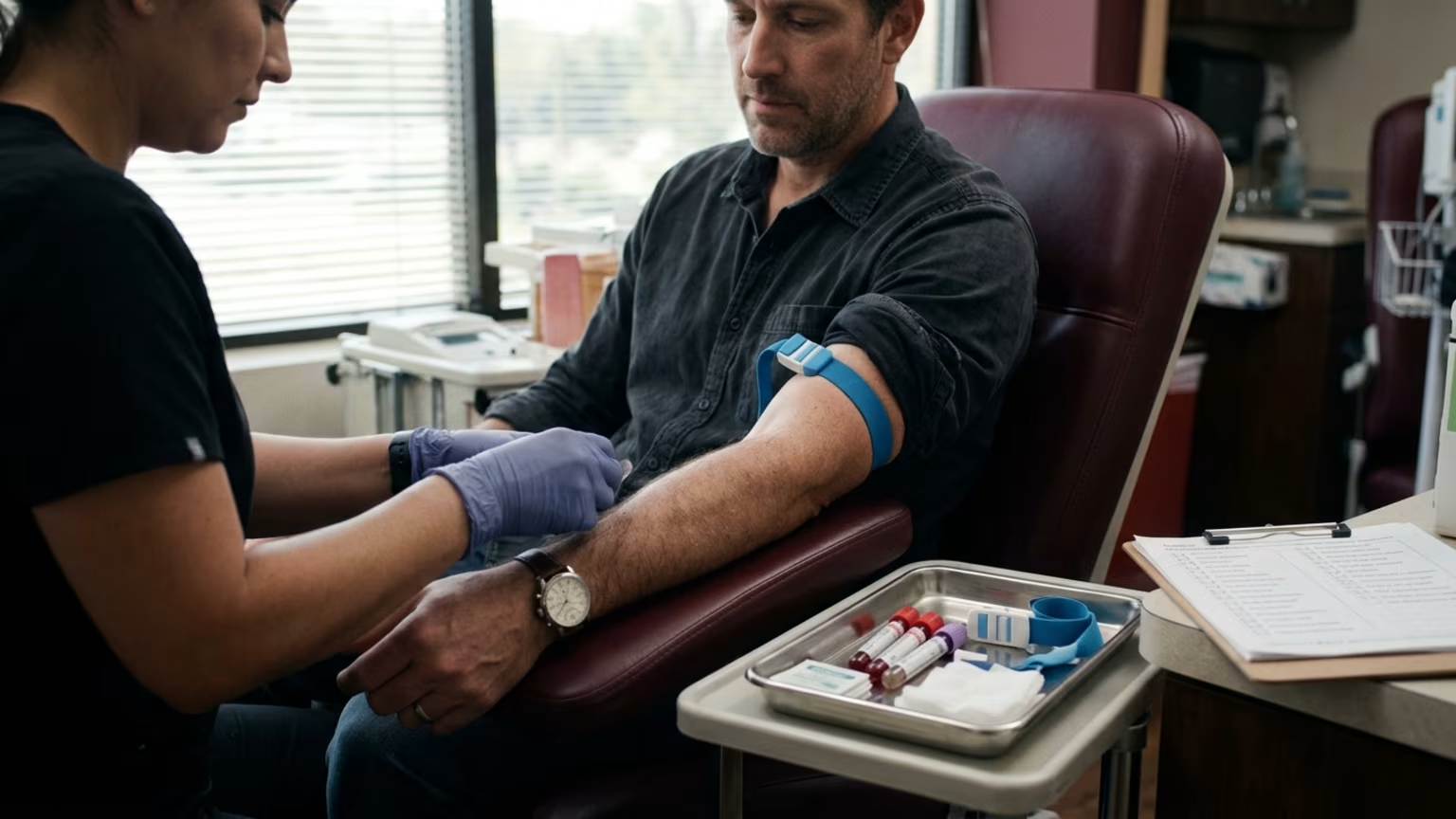
When symptoms warrant further investigation, clinical guidelines dictate a specific sequence of laboratory tests. The EAU guideline page retrieved for this research was updated on October 8, 2026. This updated guideline clearly includes early-morning fasting total testosterone in the ED laboratory work-up. Sometimes, bioavailable or calculated free testosterone may be needed to corroborate the total testosterone result.
Medical professionals must confirm any suspected hormonal deficiency carefully and methodically. The Endocrine Society recommends confirming suspected hypogonadism with a repeat morning fasting total-testosterone measurement. Hormone levels fluctuate naturally based on the time of day and recent sleep quality. Repeating this specific test confirms that a low reading represents a permanent baseline rather than a temporary dip.
Clinicians use accurate assays and pursue further evaluation of the cause when a deficiency is identified. For instance, testing LH and FSH helps distinguish primary from secondary hypogonadism. Identifying the exact source of the deficiency dictates the subsequent medical treatment plan. Doctors build targeted protocols based on confirmed deficiencies rather than isolated laboratory anomalies.
Other important hormones and biomarkers also play a crucial role in a complete diagnostic process. Prolactin, LH or PSA may be considered in selected patients based on specific clinical signs and symptoms. A doctor will order these supplementary tests only if the physical examination points toward a specific related condition. This selective approach keeps the laboratory evaluation focused and clinically relevant.
The EAU also recommends checking fasting glucose or HbA1c and a standard lipid profile. These critical metabolic tests are recommended if they have not been assessed in the previous 12 months. Evaluating metabolic markers helps doctors identify underlying vascular risks associated directly with erectile difficulties. For more detail on specific laboratory markers, patients can review total vs free testosterone.
It is extremely important to note that experts do not support testing every man indiscriminately. The Endocrine Society strongly recommends against routine population screening of men for hypogonadism. A highly targeted diagnostic approach prevents overdiagnosis and ensures that laboratory results match actual physical symptoms. Evaluating blood sugar and lipid levels often yields more immediate actionable data for mechanical issues.
Ultimately, patients must view sexual desire and physical erection mechanics as interrelated but distinct health metrics rather than assuming a single hormone controls both.
When men attempt to determine the cause of erectile difficulties, they often incorrectly assume that a single mechanical failure points directly to a severe hormonal deficiency. Testostra directly resolves this difficulty separating clinical evidence from marketing and social-media claims by clarifying standard diagnostic frameworks. We provide the objective context patients need to navigate medical consultations effectively. Read Resources
Testostra follows testosterone research, clinical guidance and emerging evidence without turning general information into personal treatment advice.





Send us a question, research idea or topic suggestion. Reader questions help shape future Testostra content.
Contact Testostra