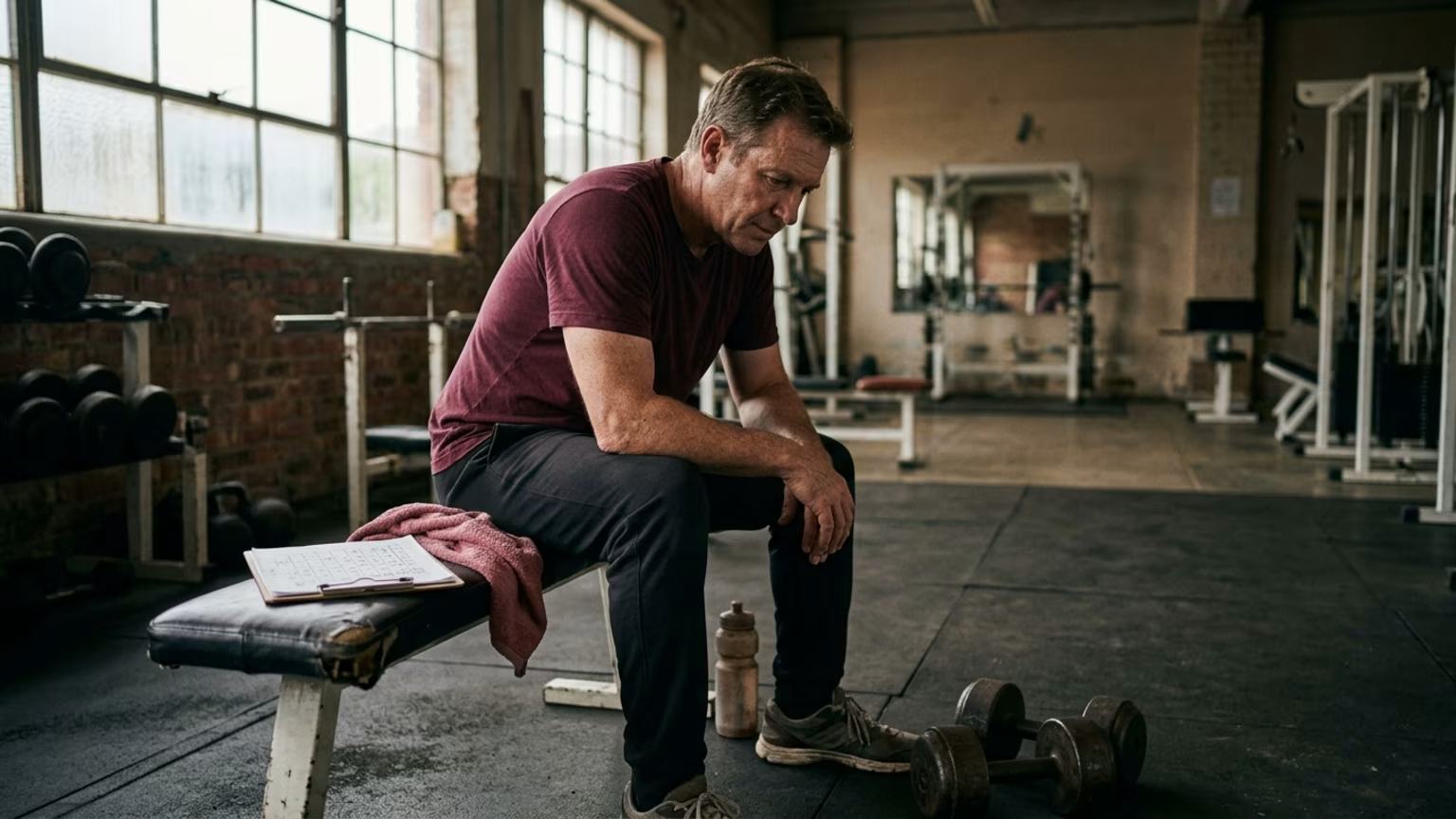

Learn why strength training causes temporary post-workout hormone spikes but does not durably increase resting testosterone levels in healthy men.





It is a common misconception that heavy resistance training permanently increases your resting testosterone levels. In reality, a demanding workout can cause a temporary rise in circulating hormones, but standard exercise programs do not meaningfully change long-term resting testosterone in apparently healthy men.
The misunderstanding that lifting weights permanently shifts hormone levels likely originated in fitness marketing. Decades of advertising have conflated the immediate physical sensations of a demanding workout with long-term clinical changes. People observed brief spikes in post-exercise hormone measurements and assumed these represented a permanent shift in their biological baseline. This misunderstanding allowed fitness brands to market routine strength training as a medical treatment for hormonal health.
The content provided in this article is for informational purposes only. It is not intended as medical advice, diagnosis, or treatment. Always consult with a qualified healthcare provider regarding any questions about medical conditions or hormonal health.
Many men begin a new training program hoping to change their resting hormone profile. They often read that heavy lifting produces an immediate hormonal flush. A demanding resistance-training session can indeed produce a short-lived rise in circulating testosterone. However, that immediate post-exercise response is completely different from a lasting change in resting testosterone.
According to a report published by Health Newspapers summarizing a 2021 meta-analysis, exercise training had an essentially null average effect on resting total testosterone. This systematic review combined 11 randomized controlled trials involving 421 insufficiently active, apparently healthy men. The authors evaluated resistance, aerobic, and combined exercise interventions. Across these different physical activities, the reported average effect on resting total testosterone was essentially zero.
The same report states that the trials lasted a median of 12 weeks. Within this population, the authors found no apparent effect on resting total or free testosterone. The standardized mean difference was 0.00, with a 95 percent confidence interval ranging from negative 0.20 to positive 0.20. This indicates that the men did not experience a durable hormonal shift from their new training routines.
Available search results describe the acute post-workout rise as temporary. However, the precise size and duration of a typical post-workout rise remain insufficiently verified in available literature. You should avoid treating broad estimates of this temporary spike as universal facts. A transient post-exercise result should never be presented as evidence that a training program has durably raised your baseline testosterone.
When men see a higher hormone reading immediately after a gym session, they often draw incorrect medical conclusions. A workout-day hormone value and a resting clinical measurement answer completely different questions. Resting testosterone reflects your body's steady state, which is what clinicians use to evaluate true hormonal health. A temporary spike simply reflects the physiological stress of the exercise session itself.
For this reason, men should manage their expectations when starting a gym routine. Resistance training offers immense physical value, but it is not a medical intervention for your endocrine system. If you are experiencing genuine signs of low hormones, lifting weights will not correct a clinical deficiency. You can learn more about realistic training outcomes in our guide to Exercise and Testosterone: What Training Can and Cannot Change.
The lack of a durable hormonal shift does not mean that resistance training is useless. The more defensible case for lifting weights is its direct role in building or maintaining muscular capacity. You can experience significant physical improvements without any permanent change in your resting testosterone. These functional changes are the true markers of a successful training program.
While exercise builds structural strength, individual programming should not be conflated with formal testosterone treatment or medical diagnosis. Men often look to the gym when they feel physically fatigued, hoping to resolve a suspected hormonal issue without medical guidance. This approach can significantly delay proper evaluation by a qualified clinician. Exercise remains a supportive lifestyle habit, rather than a proven method for correcting an endocrine deficiency.
If you suspect a hormonal issue, it is vital to separate fitness goals from actual medical diagnostics. The Endocrine Society says current evidence does not support population-level screening of asymptomatic men for hypogonadism. In its 2026 statement, the society cautioned that screening men over 30 could generate many false positives. Furthermore, broad screening without persistent symptoms may be expensive and time-consuming.
Instead of relying on heavy lifting to fix a suspected deficiency, symptomatic men should seek targeted medical advice. Routine laboratory screening can produce confusing results if a man does not have persistent clinical symptoms. For instance, a single low reading on a blood test does not prove a permanent condition. We discuss this further in our overview of Low Testosterone Symptoms: Clinical Context and Non-Specific Changes.
Men should focus on establishing a clear clinical picture with their healthcare provider. A doctor will evaluate your resting testosterone in conjunction with other symptoms, rather than looking at workout-induced spikes. If a true deficiency exists, clinical interventions provide reliable management, while exercise helps maintain muscle mass. The goal is to build physical capacity safely, without expecting medical shifts from the weight room.
Many fitness enthusiasts track their physical data meticulously, logging every strength metric and post-workout feeling. This habit sometimes bleeds into how they approach medical testing. A man might schedule a blood draw immediately after a strenuous gym session, hoping to see an elevated hormone number. However, testing under these conditions provides a distorted view of your actual health status.
Clinicians require a clean baseline to make accurate medical assessments. This is why testosterone tests are typically scheduled early in the morning, before any heavy physical exertion. The immediate stress of a demanding workout can introduce confusing variables into the laboratory results. A post-exercise hormone surge obscures the resting baseline that physicians actually need to see.
Many patients do not realize that resting testosterone levels naturally fluctuate throughout the day. A healthy man will typically see his highest hormone concentrations in the early morning hours, followed by a gradual decline into the afternoon. If a man exercises heavily in the afternoon and then tests his blood, the results reflect both acute physical stress and natural daily variation. Interpreting those complicated numbers as a permanent medical baseline will almost certainly lead to incorrect clinical assumptions.
Understanding this distinction helps men ask better questions during their medical appointments. If you are concerned about your energy levels, tell your doctor about your daily routine, sleep habits, and exercise schedule. They will use this context to interpret your fasting, morning blood work accurately. We cover the preparation process in detail within our guide on Why Clinicians Advise Delaying Diagnostic Testosterone Testing During Acute Illness and Infection.
Men often feel frustrated when their hard work in the gym does not translate to higher testosterone numbers. This frustration stems from the false promise that lifting weights serves as a natural hormone replacement therapy. When you accept that resting testosterone remains stable despite intense training, you can appreciate exercise for its actual merits. Resistance training improves your resilience, structural strength, and functional mobility.
When evaluating medical evidence, it is crucial to understand the specific populations involved in the clinical trials. The 2021 meta-analysis focused exclusively on insufficiently active, apparently healthy men. This specific demographic detail is important, because it sets the boundary for how we interpret the null findings. The results demonstrate that simply starting a new exercise routine does not predictably raise resting hormones in healthy individuals.
The duration of a fitness intervention also matters when evaluating scientific claims. The 2021 meta-analysis tracked exercise routines over a median of 12 weeks, which allows researchers to observe sustained physiological adaptations rather than isolated events. By the end of these programs, the participants had established new activity habits, yet their resting hormones remained functionally unchanged. This prolonged observation period confirms that consistent lifting does not eventually force a permanent increase in baseline testosterone.
This finding should not be generalized to men with diagnosed hypogonadism or men undergoing formal hormone replacement therapy. Men with complex metabolic conditions might experience different physiological responses when they alter their body composition or activity levels. However, the available data clearly refutes the idea that resistance training guarantees a testosterone increase for the average man. The 11 randomized trials spanning 421 participants provide a strong foundation for this conservative conclusion.
Relying on fitness marketing rather than clinical evidence often leads to unnecessary anxiety. A man might lift weights for 12 weeks, test his resting testosterone, and feel disappointed when the number remains unchanged. According to the 2021 systematic review, this stable resting state is the normal, expected outcome. Recognizing this established reality prevents men from chasing non-existent problems or seeking unnecessary medical interventions.
The Endocrine Society explicitly advises against population-level screening for hypogonadism in men without symptoms. Their 2026 statement noted that screening asymptomatic men over 30 is likely to result in a high number of false positives. A false positive can lead to unnecessary medical anxiety, further testing, and unwarranted clinical interventions. The statement also highlighted that such widespread screening may be expensive and time-consuming for patients and healthcare systems alike.
Instead of pursuing broad screening, men should monitor themselves for specific, persistent clinical symptoms. If you experience ongoing fatigue, changes in sexual function, or unexplained physical decline, a targeted clinical evaluation is appropriate. This symptom-led approach ensures that laboratory testing serves a clear medical purpose, rather than satisfying mere curiosity. Men can read more about evaluating physical changes in our overview of Body Fat, Weight, and Testosterone: Understanding the Relationship.
Ultimately, the human endocrine system is highly regulated and maintains homeostasis despite routine physical stress. A heavy training session creates a brief physiological demand, and the body temporarily adjusts its circulating hormones to cope. Once the workout ends, the body efficiently returns to its established resting baseline. Understanding this basic biological principle helps men separate fitness myths from established clinical reality.
When evaluating fitness claims, men should pursue strength training for its proven functional benefits rather than expecting it to permanently alter their resting testosterone levels.
When men consider using a new resistance training program to address suspected hormonal deficiencies, they frequently conflate immediate post-exercise physiological stress with durable baseline improvements. Testostra resolves this confusion around TRT evidence, risks and monitoring by mapping the strict boundaries between routine gym adaptations and formal clinical evaluations. We supply the factual context readers require to assess their physical health markers accurately. Read Resources
Testostra follows testosterone research, clinical guidance and emerging evidence without turning general information into personal treatment advice.





Send us a question, research idea or topic suggestion. Reader questions help shape future Testostra content.
Contact Testostra