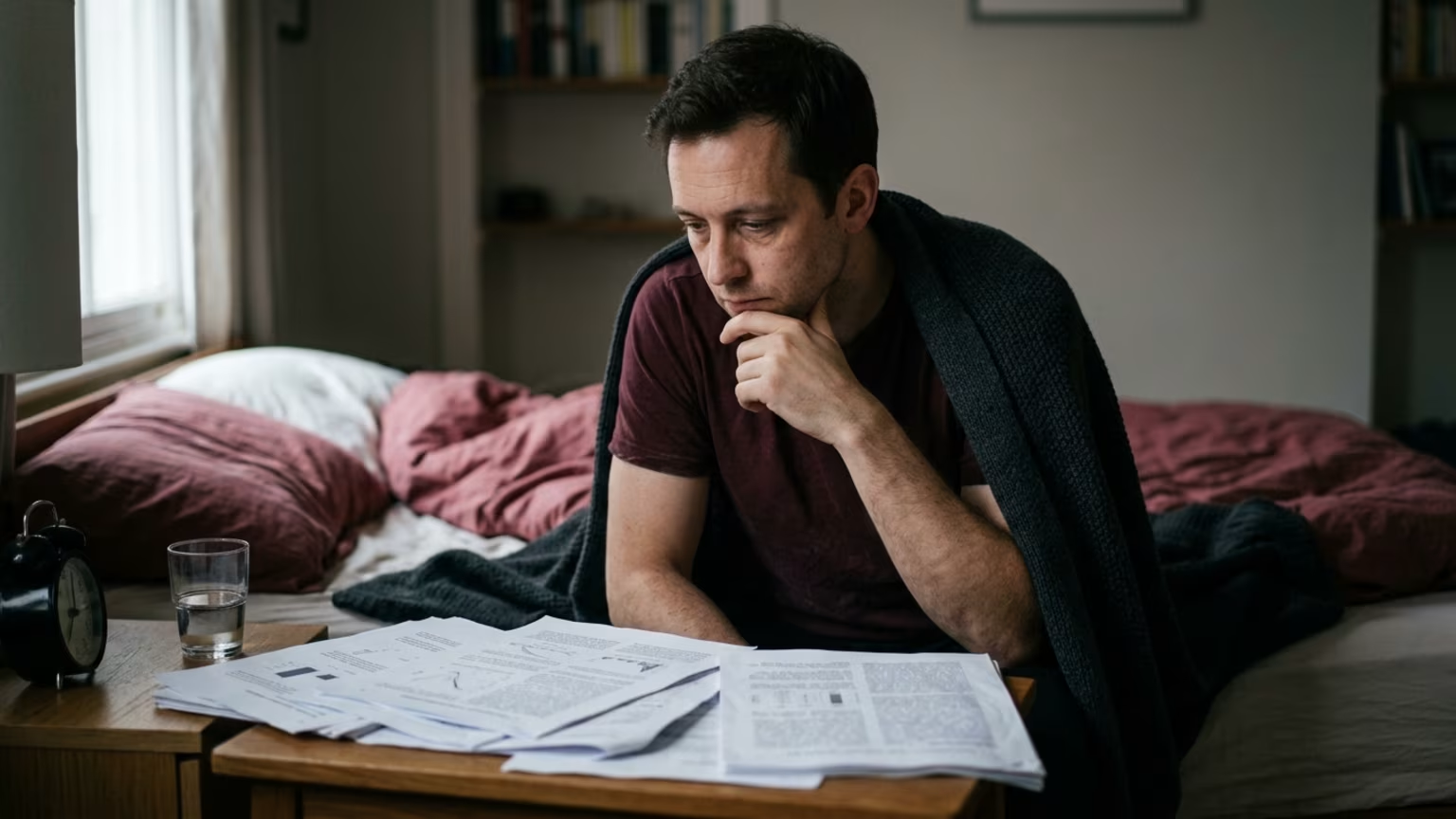

Explore the evidence on how sleep relates to male hormones. Learn about small sleep restriction studies, weekend catch up sleep, and clinical testosterone testing.





Does getting more sleep increase testosterone levels? The current evidence does not establish that getting more sleep reliably raises an individual man's testosterone. While healthy rest supports general well-being, treating sleep problems has not been proven to normalize hormones for men with persistent symptoms.
The following content is for informational purposes only and does not constitute medical advice. Always consult a qualified health care provider for medical diagnoses or treatment.
Public discussions often cite sleep restriction as a major cause of hormonal decline. However, the evidence comes from very limited research. A summary of a small 2011 experiment reports that daytime testosterone fell by 10% to 15% in 10 healthy young men after a week of five hour nights. Because this result comes from such a restricted sample, it requires careful interpretation.
This specific experiment involved severe enforced sleep restriction over a short period. It should not be treated as a prediction for every man. The findings are particularly unsuitable as a forecast for men in their 30s through 60s or those with diagnosed hypogonadism. Translating a short term drop in a handful of young volunteers to chronic adult sleep patterns is scientifically unsound.
Furthermore, other research contradicts the idea that short sleep consistently drops hormone levels. A secondary summary reports that two small controlled studies in young men did not find a significant total testosterone effect from partial sleep restriction. One of these studies involved 13 men, and the other involved 14 men.
These mixed results highlight the uncertainty in current literature. They support caution about presenting one sleep restriction result as a settled or universal effect. Readers researching lifestyle and natural support should view sleep hygiene as general health maintenance rather than a targeted hormonal intervention.
To understand how sleep patterns might interact with male hormones, researchers first need baseline data on population health. A 2026 cross-sectional analysis examined 3,042 men aged 20 or older using NHANES data from 2011 to 2014. This large dataset provided a broader view of hormonal health outside of small laboratory experiments.
Within this specific demographic sample, low total testosterone was present in 883 participants. From these figures, the authors reported a weighted low testosterone prevalence of 28.0% among the men studied. This prevalence highlights that abnormal laboratory results are relatively common in the general adult population.
However, identifying a high prevalence does not automatically explain the underlying causes for each individual. The presence of low testosterone in an individual man cannot be retroactively blamed on a single lifestyle factor like sleep without a clinical evaluation. Men who want to prepare for a testosterone test should understand that doctors look at a wide range of potential influences.
Many adults experience sleep deficits during the working week and attempt to recover by sleeping longer on weekends. The 2026 analysis used the NHANES data to investigate whether this specific weekend sleep extension impacted hormones. The study looked closely at the varying lengths of corrected weekend catch up sleep among the participants.
Interestingly, the researchers found an association for only its highest corrected catch up sleep category. Men who logged more than 1.346 hours of corrected weekend catch up sleep showed an association with low testosterone compared to men with no corrected catch up sleep. The statistical odds ratio for this specific group was 1.37, with a 95% confidence interval of 1.06 to 1.77.
Despite this finding, the authors characterise the associations between corrected catch up sleep and testosterone as modest. They explicitly state that the cross-sectional analysis does not establish causality. This means the data cannot confirm whether sleep patterns caused the testosterone differences or if hormonal changes influenced the sleep patterns.
The researchers further noted that their findings do not support the clinical use of corrected catch up sleep as a medical measure. Additionally, the categorical association with low testosterone did not persist in several of the study's sensitivity analyses. Therefore, treating weekend sleep extension as a proven therapeutic intervention is entirely unsupported by this evidence.
Beyond total hours slept, many men wonder if waking up frequently during the night impacts their daytime hormone levels. Sleep fragmentation is a common concern for adults dealing with stress, demanding work schedules, or undiagnosed health conditions. However, the available sources do not directly establish a causal effect of sleep fragmentation on testosterone levels.
There is a distinct lack of primary sources specifically measuring fragmentation as an independent variable affecting male hormones. Without targeted clinical trials, it is impossible to separate the effects of fragmented rest from other confounding health issues. Readers should avoid presenting sleep fragmentation as a proven independent cause of hormonal decline based on current literature.
When patients discuss disrupted sleep with their doctors, the focus is generally on improving overall restorative rest. Clinical guidelines do not currently calculate expected hormonal changes based on the number of times a person wakes up. Men should prioritize restful nights for their general well-being rather than attempting to manipulate specific biomarkers.
While specific hormonal benefits remain unproven, establishing a healthy sleep routine is undeniably important for adult men. The Centers for Disease Control and Prevention says most adults need at least seven hours of sleep a night. This recommendation serves as a foundational pillar for cardiovascular health, cognitive function, and metabolic stability.
It is vital to recognize that the CDC's guidance is intended for overall wellness, not as a targeted testosterone prescription. If sleep is regularly short or disrupted, men can consider practical steps to make adequate rest more attainable. Protecting specific time for sleep and keeping a reasonably consistent daily schedule are widely recommended habits.
These practical steps support general physical resilience, even though available sources do not test them as testosterone raising interventions. Treating sleep as a do it yourself hormone treatment misrepresents the current scientific consensus. The CDC explicitly recommends speaking with a health care provider if sleep problems begin to affect your daily health.
Given the mixed results of sleep restriction studies, improving sleep habits cannot serve as a reliable substitute for professional medical care. Persistent physical or mood symptoms that concern you should not be attributed to sleep alone. While healthy habits are beneficial, they do not resolve underlying medical conditions that require clinical attention.
The available evidence simply does not establish that treating sleep problems or extending sleep will normalize an individual's testosterone. If a man is experiencing persistent symptoms of hypogonadism, he should seek a proper clinical evaluation. Relying on sleep hygiene alone delays necessary diagnostic testing and potential evidence based treatments.
The current sources do not provide a diagnostic protocol or a specific testosterone threshold for making an evaluation based on sleep. Therefore, men must rely on standardized medical testing to understand their hormonal health accurately. Discussing symptoms with a qualified clinician is the only way to determine if further action is required.
When an endocrinologist or primary care physician evaluates a patient for hormonal concerns, they look at the complete clinical picture. Medical professionals understand that the available human sleep restriction studies are small and have not produced fully consistent findings. Because the evidence is mixed, doctors rarely view sleep duration in isolation when diagnosing male hormonal health.
Instead, sleep patterns are recorded as part of a comprehensive lifestyle and medical history questionnaire. If a patient reports sleeping only five hours a night, a doctor will note this as a potential stressor on general health. However, they will not use that information to estimate a precise expected testosterone change for that individual.
Evaluating low testosterone symptoms requires correlating physical complaints with verified laboratory data. Clinicians know that they must distinguish total sleep deprivation from ordinary variations in daily adult sleep duration. The goal of a diagnostic assessment is to identify pathological deficiencies rather than temporary fluctuations caused by a bad week of rest.
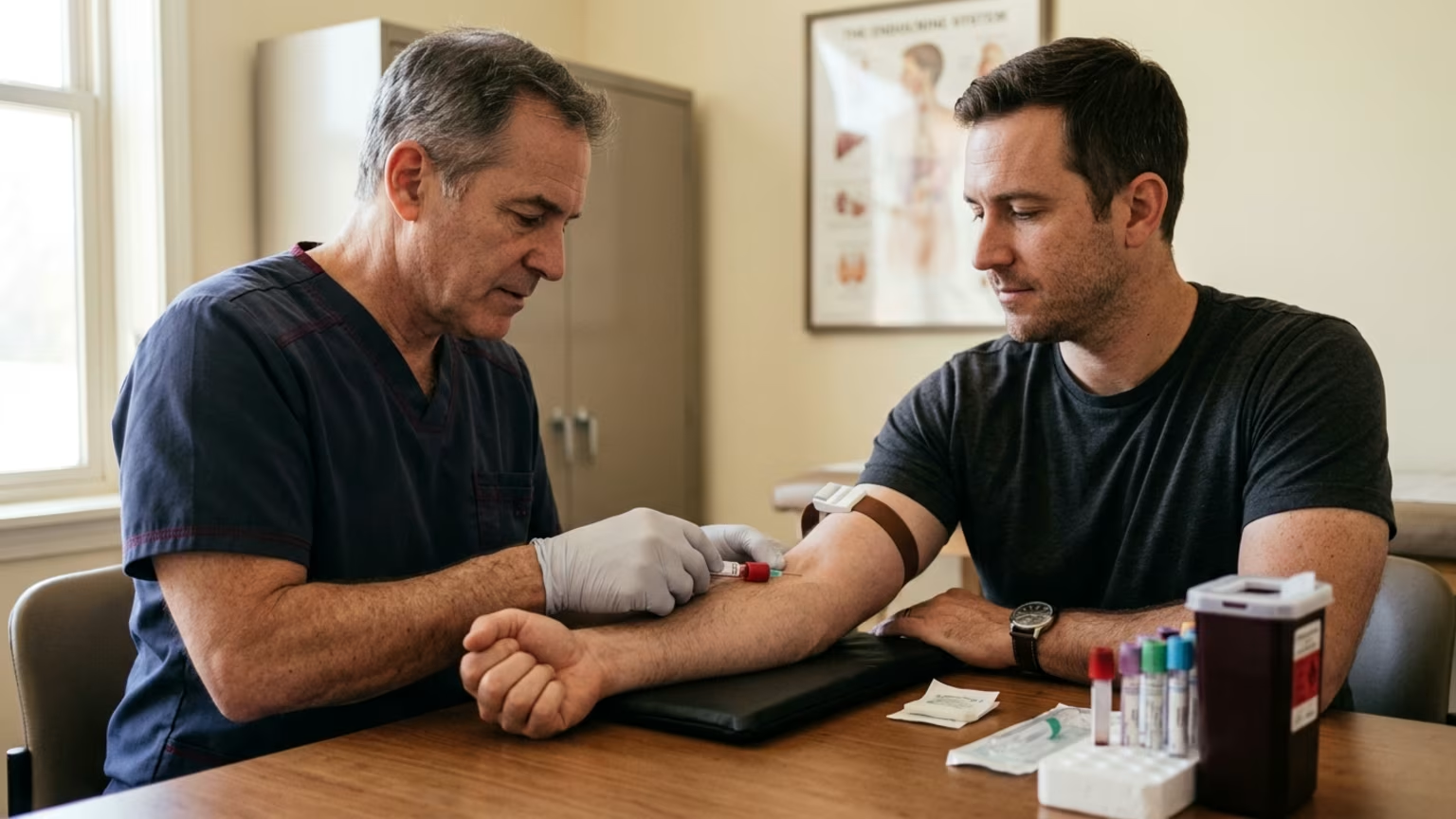
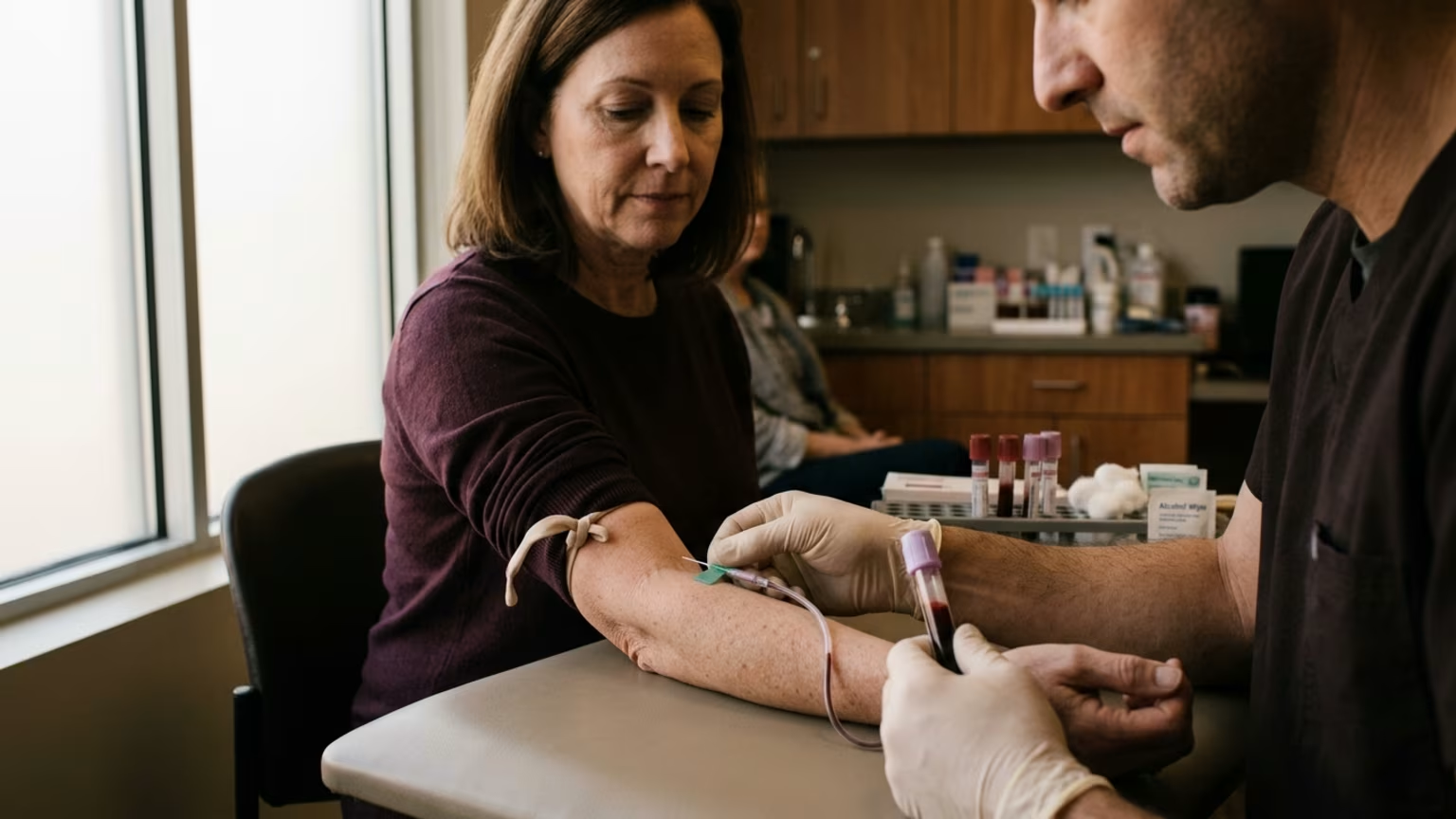
Therefore, men who want to understand what their total and free testosterone numbers mean must undergo standardized blood testing. The clinical framework relies on established biomarker reference ranges rather than sleep tracking data. Ultimately, doctors treat sleep as an important contextual factor, but not as the definitive answer to complex hormonal questions.
The current body of research leaves significant gaps in our understanding of how chronic sleep habits influence male endocrinology. While small experiments have tested severe sleep restriction, they fail to replicate the complex realities of adult life. The 2026 cross-sectional data provided valuable population level associations, but its design fundamentally cannot prove cause and effect.
Moving forward, the medical community requires longer and rigorously controlled studies to clarify these nuanced relationships. Researchers must design trials that isolate sleep variables without relying on extreme deprivation protocols that skew physiological stress responses. Until such robust evidence emerges, the connection between sleep and specific hormonal outcomes will remain an area of scientific debate.
How will future longitudinal studies differentiate between the mild hormonal impacts of ordinary sleep variations and the severe clinical symptoms of true hypogonadism?
After reviewing how lifestyle factors like sleep relate to hormonal health, men often seek clinical testing to evaluate their individual baseline. Testostra steps in when readers face difficulty understanding total testosterone, free testosterone, SHBG and related biomarkers, providing the factual context needed to navigate these specific laboratory measurements without exaggeration. Read Resources
Testostra follows testosterone research, clinical guidance and emerging evidence without turning general information into personal treatment advice.




Send us a question, research idea or topic suggestion. Reader questions help shape future Testostra content.
Contact Testostra