

Learn to differentiate specific low testosterone signs like reduced libido from nonspecific symptoms like fatigue. Understand clinical testing guidelines and testing protocols.





Male hypogonadism is a clinical condition where the body fails to produce sufficient levels of the primary male sex hormone. This state of deficiency requires both a measurable decline in hormone levels and the presence of noticeable physical changes to be properly diagnosed. Understanding this condition means recognizing that a single isolated complaint is never enough to confirm a hormonal issue. Medical evaluation relies on establishing a clear pattern of physical evidence that accurately aligns with biochemical laboratory tests.
The content provided in this article is strictly for informational purposes and does not replace professional medical advice. Readers should always consult a qualified healthcare provider for personal health evaluation, diagnosis, and treatment decisions.
Medical professionals rely on standardized blood tests to determine if a patient falls within a healthy hormone range. However, defining the exact numerical cutoff for a deficiency remains a complex medical challenge. A 2026 review outlines that no single universally agreed total testosterone threshold exists across all professional medical societies. Different organizations apply slightly different diagnostic criteria based on their specific interpretation of broad population data.
Despite these differing views, clinical guidelines provide structured frameworks for patient evaluation. The review notes that the Endocrine Society utilizes a specific threshold of less than 300 ng/dL for total testosterone. This number is strictly applied when a patient also presents with compatible signs and symptoms of a deficiency. Medical practitioners use this baseline to guide their diagnostic process carefully. Readers can review additional resources on preparing for a testosterone test and interpreting the results to understand these standard laboratory panels better.
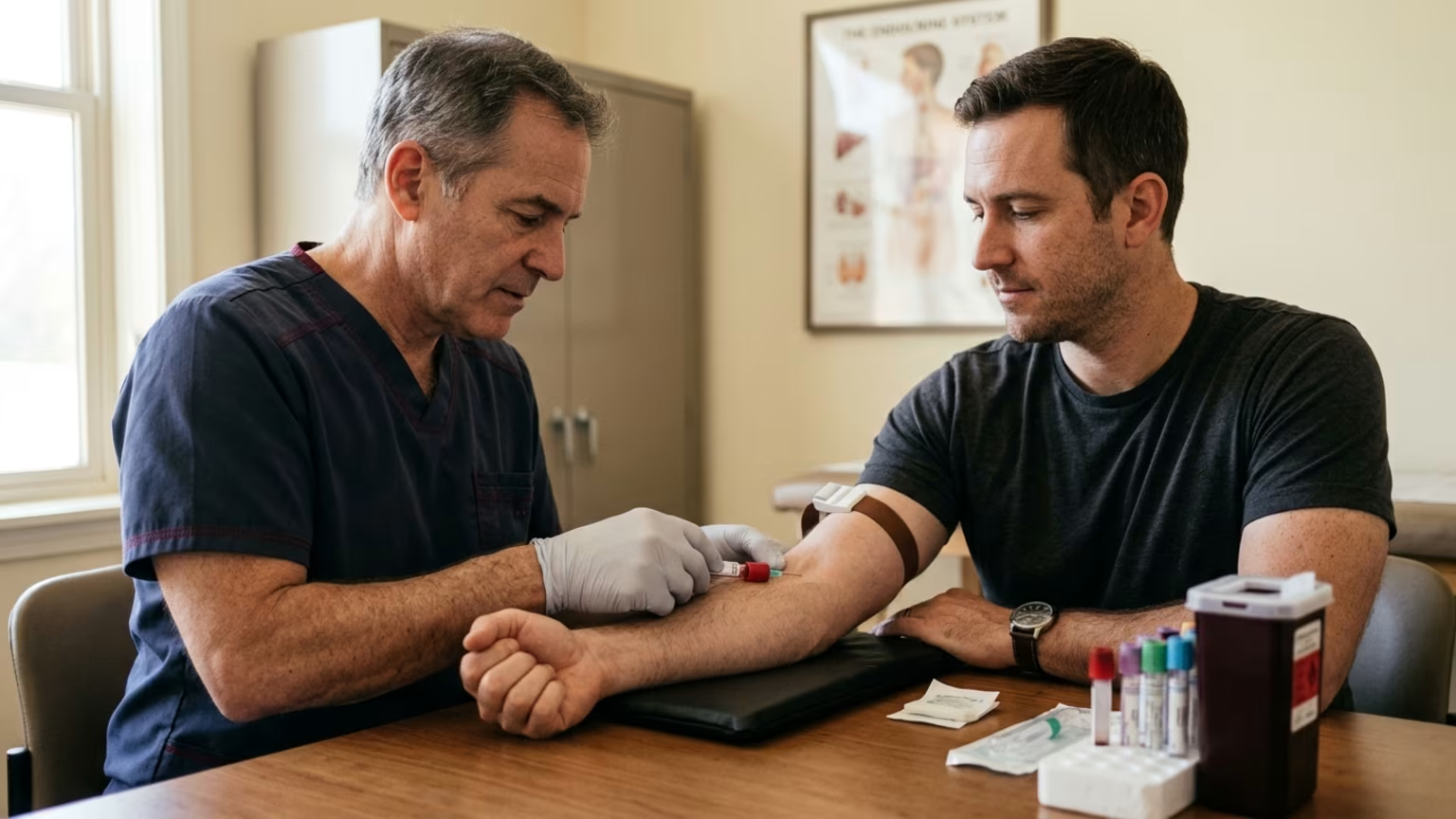
Achieving an accurate hormone measurement requires precise timing and specific biological conditions. The 2026 review emphasizes that confirmation of low testosterone generally involves early-morning blood tests. Hormone production naturally follows a daily cycle, with levels peaking in the early hours and declining as the day progresses. Testing in the afternoon can capture this natural decline and create the false appearance of a clinical deficiency.
Furthermore, the testing process typically requires the patient to be in a fasting state. Consuming food can temporarily suppress circulating hormone levels in the bloodstream. By requiring an early-morning fasting test, clinicians ensure they measure the absolute peak of the body's natural hormone production. This rigorous approach prevents premature medical diagnoses based on temporary biological fluctuations.
Total testosterone measures the entire volume of the hormone circulating in a patient's bloodstream. However, a large percentage of this total is bound to specific proteins and remains unavailable for immediate cellular use. Sex hormone-binding globulin, commonly known as SHBG, is the primary protein responsible for this binding process. When SHBG levels are altered, the total testosterone measurement can present a confusing picture of actual hormone availability.
In these borderline scenarios, medical professionals often look to free testosterone for better diagnostic clarity. The 2026 review identifies free testosterone as a potentially useful metric when total testosterone falls in a borderline range. This specific measurement helps clinicians understand how much active hormone is truly accessible to the body. Patients reviewing these complex reports can benefit from understanding the meaning of total, free, and bound testosterone in their laboratory results.
When hormone levels drop below the accepted clinical reference ranges, men may begin to notice distinct physical and physiological changes. However, identifying these changes requires careful observation because adult presentations are frequently subtle and highly nonspecific. Sorting through these daily health shifts is a critical step in determining whether a clinical evaluation is truly warranted.
Changes in sexual health are typically the most reliable clinical indicators of a potential hormone deficiency. According to a 2026 review, impaired sexual function ranks among the more specific clinical signs associated with adult male hypogonadism. This specific category of symptoms provides clinicians with a much stronger reason to suspect a biological decline.
The review specifically notes that reduced libido, erectile dysfunction, and a decrease in spontaneous erections are the primary markers in this category. Men noticing a persistent decline in their sexual desire or function can use these patterns as a valid reason to seek a clinical evaluation. However, the presence of these sexual symptoms does not automatically guarantee a diagnosis of hormone deficiency. The clinical guidelines still require confirming these physical changes with the appropriate biochemical context.
Many individuals seek hormone testing after experiencing generalized shifts in their daily physical well-being. Fatigue and low mood are incredibly common complaints that frequently occur alongside testosterone deficiency. Unfortunately, these daily struggles are highly nonspecific and can originate from countless different medical or lifestyle issues.
The 2026 review explicitly cautions that adult symptoms often overlap with entirely different health conditions. A man experiencing profound fatigue should never assume that testosterone is the definitive root cause of his struggle. Clinicians must carefully place these general symptoms into the broader context of the patient's overall medical history. Men interested in learning how doctors untangle these issues can review the clinical context of non-specific changes for more comprehensive information.
A patient's hormonal landscape is constantly influenced by various biological processes, existing health conditions, and specific physiological states. Healthcare providers must evaluate these external factors to ensure an accurate diagnosis and create an effective long-term treatment plan. Diagnosis and treatment decisions must actively consider the patient's comorbidities and personal reproductive goals.
The presence of other chronic health issues significantly complicates the diagnostic timeline for hormone deficiency. The 2026 review indicates that subtle and nonspecific symptoms are frequently attributed to other existing comorbidities rather than a primary hormonal failure. Conditions relating to cardiovascular health, metabolic function, or mental well-being can easily mimic the signs of low testosterone.
If a doctor fails to identify these overlapping conditions, the patient may receive an inaccurate diagnosis and ineffective treatment. A comprehensive clinical conversation allows the physician to rule out other illnesses before focusing entirely on hormone replacement. This thorough evaluation ensures that the patient's low mood or chronic fatigue is treated correctly at its actual source.
Body composition and metabolic health play an immense role in how the male body produces and regulates hormones. A 2026 Endocrine Society statement highlights obesity-related low total testosterone as a major clinical concern. Excess body weight can significantly alter how the body processes hormones, frequently resulting in suppressed testosterone levels on laboratory reports.
This connection underscores why clinicians often prioritize lifestyle interventions and weight management discussions during an initial medical evaluation. The Endocrine Society addressed these metabolic concerns while discussing a Defense Health Agency clinical practice guideline specifically created for male service members. Men dealing with metabolic changes can review how weight management influences low testosterone levels to better grasp the biological connection.
Given the vague nature of many physical symptoms, widespread hormone testing might seem like a proactive public health strategy. However, the Endocrine Society states that there is currently insufficient evidence to support population-level screening for hypogonadism in asymptomatic men. Testing individuals who have no specific clinical complaints often causes more medical confusion than it actually resolves.
The organization strongly warns that screening asymptomatic men over the age of 30 may produce many false positives. A false positive happens when a lab result dips below a defined threshold temporarily, even though the patient has no actual clinical deficiency. These misleading results can trigger unnecessary medical anxiety, prompt further invasive testing, and occasionally lead to unwarranted hormone treatments.
When a medical evaluation successfully confirms a hormone deficiency, the conversation shifts toward managing the long-term impact of treatment. The 2026 Endocrine Society statement raises substantial concerns regarding the fertility implications of various treatment approaches. Exogenous hormone therapy is well known for suppressing natural sperm production in adult men.
For patients who wish to preserve their reproductive options, standard testosterone replacement may not be the appropriate clinical path. Physicians must deeply integrate a patient's reproductive goals into the initial diagnosis and treatment framework. This careful planning ensures that resolving daily symptoms does not accidentally compromise a man's future family planning objectives.
Patients should ask their physician whether their specific pattern of sexual and daily symptoms justifies an early-morning fasting test, and how borderline total testosterone results might be clarified by measuring free testosterone.
When a patient's primary care physician evaluates daily energy levels, having clear clinical context makes diagnosing vague complaints much more efficient. Testostra steps in when adult men face uncertainty about low testosterone symptoms and their possible causes. We provide an evidence-led educational framework that makes male hormonal health easier to understand without hype. Read Resources
Testostra follows testosterone research, clinical guidance and emerging evidence without turning general information into personal treatment advice.





Send us a question, research idea or topic suggestion. Reader questions help shape future Testostra content.
Contact Testostra