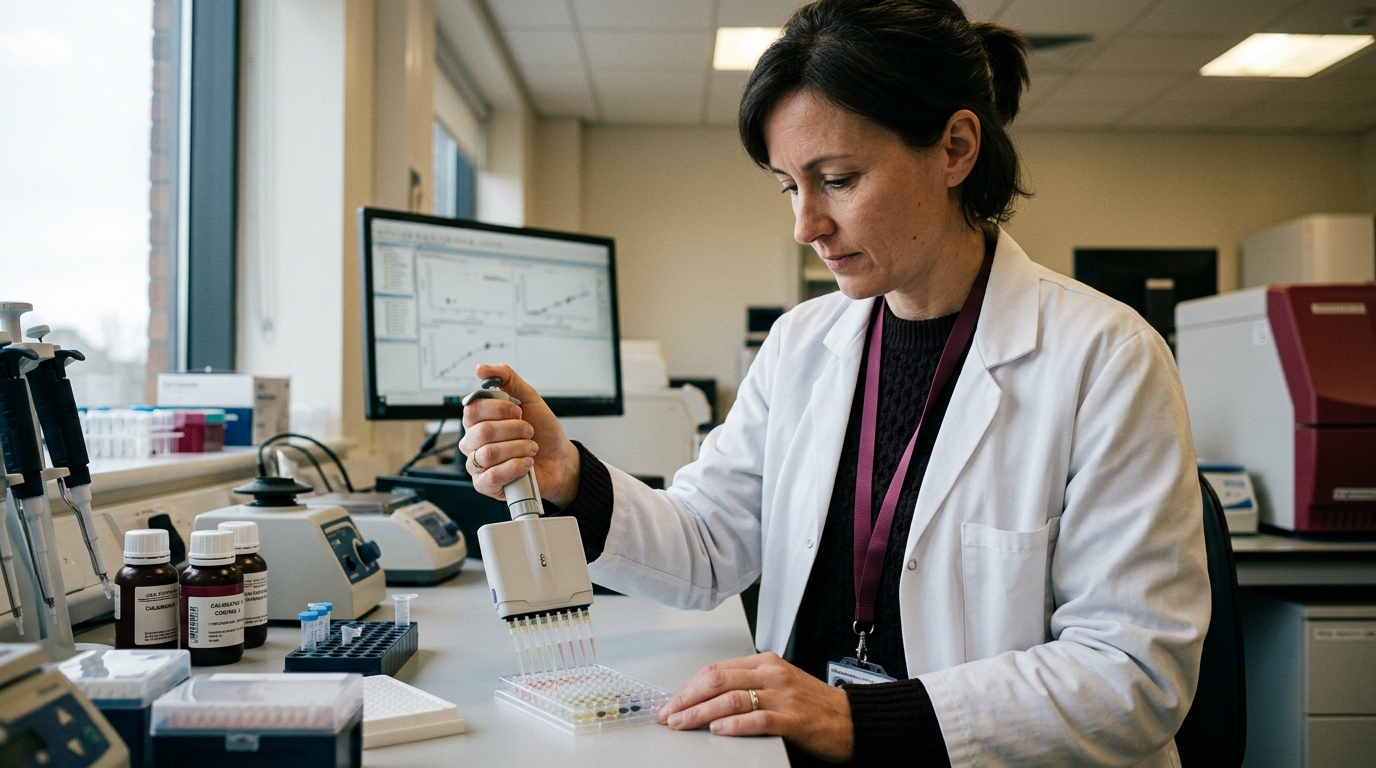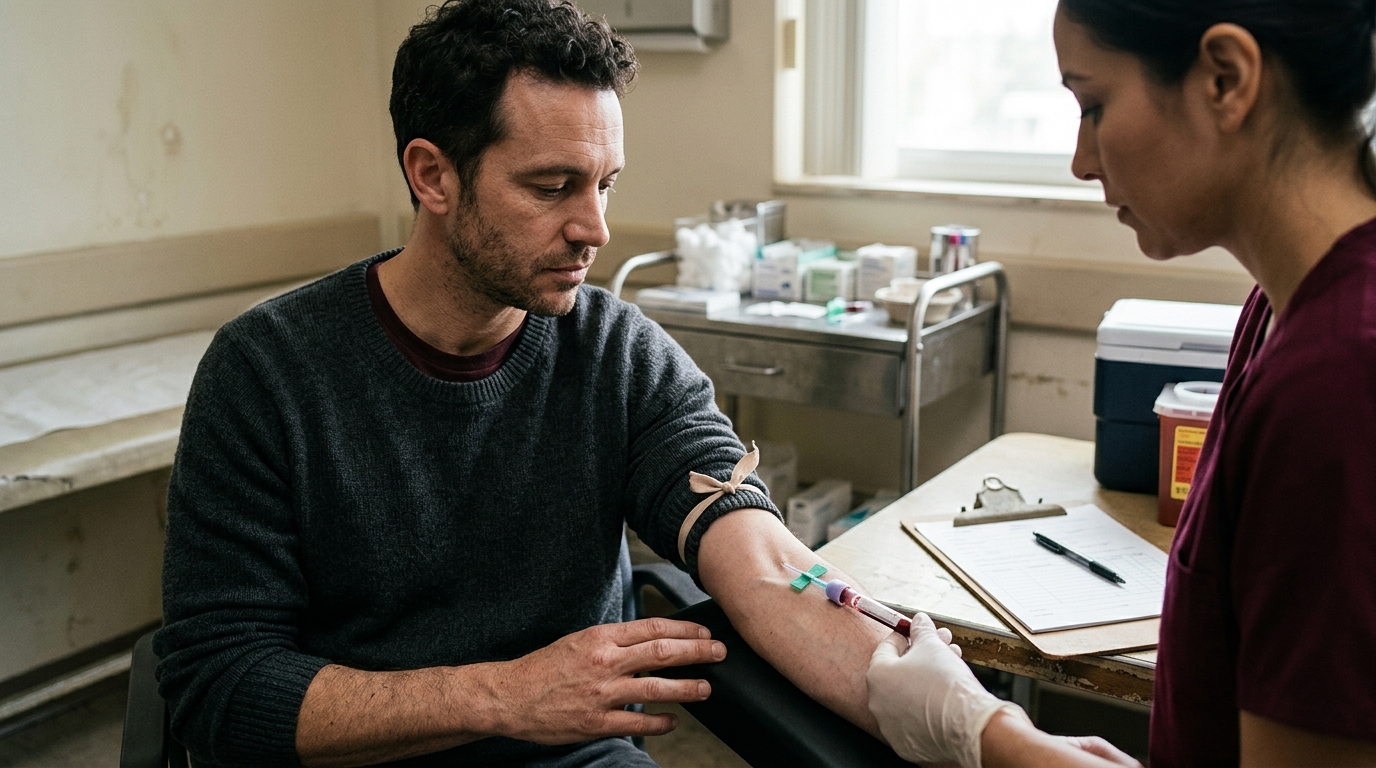

One standard meal can suppress total testosterone for up to three hours, showing why clinical guidelines recommend fasting before diagnostic blood tests.





If you are scheduling a blood draw to check your hormone levels, you have likely searched online to ask whether you need to skip breakfast first. The guidance found across laboratory portals and health websites can seem conflicting. Some sources state that fasting is mandatory, while others mention only the time of day.
This guide provides a definitive overview of how food intake influences blood androgen measurements. It explains the biological mechanisms behind post-meal hormonal changes, outlines clinical practice guidelines, and helps you prepare accurately for your specific laboratory appointment.
This resource is designed solely for informational and educational purposes. It does not provide medical advice, diagnosis, or treatment recommendations for any individual.
Testosterone levels vary throughout the day and respond to many physiological signals. Interpreting hormone tests requires a comprehensive evaluation by a qualified healthcare professional. Always consult a licensed physician or endocrinologist regarding your laboratory orders and clinical care.
Fasting is not a universal mandate for every testosterone blood test, but it is standard practice for diagnosing hormone deficiency. Knowing why preparation rules differ helps prevent confusion when reading lab orders.
When you consume food, your digestive and endocrine systems undergo rapid changes. Blood flow shifts toward the gastrointestinal tract, and the pancreas releases insulin to process circulating glucose. These digestive responses directly influence circulating steroid hormones.
Research demonstrates that consuming macronutrients can cause a temporary decline in measured total testosterone. This drop is known as a postprandial reduction. The effect occurs across different macronutrient types, including pure glucose solutions, high-fat meals, and balanced mixed meals.
The biological mechanism behind this reduction involves multiple pathways. Rising insulin and gastrointestinal hormones may alter how the brain signals the testes, or they may temporarily reduce androgen synthesis in testicular Leydig cells. Additionally, post-meal changes in hepatic blood flow can speed up the rate at which the liver clears hormones from circulation.
The duration of this drop typically spans one to three hours following a meal. After digestion progresses, hormone levels gradually return to their previous baseline. Because of this temporary dip, having a standard breakfast right before a blood draw can artificially lower your test result.
Major endocrine organizations have established protocols to standardize how hormone deficiencies are evaluated. The American Urological Association provides clear recommendations for clinicians assessing potential testosterone deficiency.
The American Urological Association guideline states that a diagnosis must be based on two separate total testosterone measurements. Both samples must be drawn early in the morning on different days. This standard accounts for natural day-to-day fluctuations and ensures that clinical decisions rest on confirmed patterns rather than isolated outliers. You can learn more about these foundational concepts in our testosterone basics guide.
Morning collection is vital because testosterone production follows a strong circadian rhythm. In healthy adult men, serum testosterone concentrations peak during the early morning hours and decline toward late afternoon and evening. Studies show that morning values can be 30 percent to 35 percent higher than mid-afternoon values in younger men.
While clinical guidelines universally emphasize morning collection, fasting recommendations are frequently integrated to minimize confounding variables. When a clinician suspects androgen deficiency, eliminating the variable of food intake ensures that a borderline result reflects true physiological status rather than a recent breakfast.
Laboratory preparation rules can differ depending on how the blood work is ordered. Understanding these operational differences helps explain why you might see conflicting instructions.
Direct-to-consumer laboratory platforms often impose strict, uniform preparation rules. For instance, Quest Health specifies that patients taking their consumer testosterone test must fast for 8 to 12 hours before sample collection, allowing only water. This standardized rule ensures that self-ordered samples are collected under uniform conditions.
In contrast, clinical diagnostic orders placed through standard healthcare systems follow customized laboratory requisitions. When a physician submits an order through Quest Diagnostics or hospital laboratories, patients are instructed to follow the specific guidance provided on their requisition form. If you are reviewing standard protocols, our testing and biomarkers resources explain how diagnostic panels are arranged.
Preparation rules also depend on whether other biomarkers are being checked at the same time. Testosterone tests are often bundled into broad health screenings that include lipid panels, fasting blood glucose, or comprehensive metabolic profiles. Those companion tests require a strict 8 to 12 hour fast, making fasting necessary for the entire blood draw regardless of the hormone test protocol.
Scientific investigations into food intake and hormone levels provide valuable context on how diet alters blood test values. These studies show measurable changes, though findings vary based on study designs and participant groups.
A clinical study evaluated 60 men aged 23 to 97 who had normal baseline testosterone and no prediabetes or diabetes. Researchers administered both an oral glucose tolerance test and a mixed-meal tolerance test to observe postprandial hormone dynamics.
The study found that both glucose and mixed meals triggered a significant temporary reduction in total testosterone. The average decline reached 100 ng/dL following glucose ingestion and 123 ng/dL after the mixed meal. The authors concluded that these substantial drops strongly support using fasting blood samples when evaluating men for potential androgen deficiency.
Another clinical study examined healthy men given a standardized 550-kilocalorie meal after an overnight fast. Researchers monitored hormone levels continuously over several hours following meal consumption.
The researchers observed a 30 percent reduction in serum total testosterone between 60 and 120 minutes post-meal. Interestingly, levels of luteinizing hormone and sex hormone-binding globulin did not change during this window. Because the binding proteins and brain signaling markers remained stable while total hormone dropped, the authors recommended fasting morning assessments for diagnostic evaluations.
Other trials have investigated whether specific macronutrients cause different hormonal responses. One study compared the effects of an isolated high-fat meal against an isolated high-carbohydrate meal in healthy adult volunteers.
Both meals caused a statistically significant drop in serum testosterone within one hour of consumption. The researchers found no major difference in the magnitude of the drop between the high-fat and high-carbohydrate conditions. This suggests that general caloric intake and digestive activation drive the reduction, rather than a single specific nutrient.
Research also shows that extended fasting periods alter hormone concentrations differently than a routine overnight fast. A short diagnostic fast of 8 to 12 hours stabilizes morning baseline readings. In contrast, multi-day fasts represent severe metabolic stress that can lower hormone production.
One physiological study investigated reproductive axis responses to a single missed evening meal. The researchers noted that while overnight urinary testosterone excretion increased, morning salivary testosterone measurements were lower than baseline. Furthermore, studies on multi-day fasting show that three days of complete food deprivation can reduce circulating testosterone by roughly 40 percent. These findings highlight that an overnight fast before a morning blood test should not be confused with prolonged caloric deprivation.
When evaluating male hormonal health, clinicians look at several related biomarkers rather than relying on total testosterone alone. Understanding how each marker responds to food intake clarifies your overall lab profile. You can read more about these relationships in our testosterone testing resources.
Total testosterone measures all circulating testosterone in the bloodstream. This includes hormone bound tightly to sex hormone-binding globulin, hormone bound loosely to albumin, and unbound hormone.
Because it reflects the total pool of circulating androgens, total testosterone is the primary screening marker for male hypogonadism. It is also the marker most clearly shown to drop following a meal. A decrease of 100 to 120 ng/dL after eating can push a healthy man into a falsely low range.
Free testosterone represents the small fraction of hormone, typically 1 to 2 percent, that is not attached to transport proteins. This unbound hormone is readily available to enter cells and interact with androgen receptors.
When total testosterone declines after eating, measured and calculated free testosterone levels usually drop as well. This occurs because the total supply of available hormone is temporarily reduced while binding protein levels remain stable.
Sex hormone-binding globulin is a protein produced by the liver that transports sex steroids through the bloodstream. It regulates the balance between bound and active hormone fractions.
Unlike total testosterone, sex hormone-binding globulin does not fluctuate significantly in the hours immediately following a meal. Its concentrations change slowly in response to long-term metabolic health, liver function, and chronic insulin exposure. Because binding globulin remains stable during acute digestion, temporary shifts in total testosterone directly impact calculated free hormone fractions.
Luteinizing hormone and follicle-stimulating hormone are gonadotropins released by the pituitary gland. Luteinizing hormone stimulates the Leydig cells in the testes to produce testosterone.
Studies show that luteinizing hormone levels remain relatively stable during the immediate postprandial window. Even when serum testosterone drops after a meal, the pituitary gland does not immediately alter its signaling pulses. Measuring gonadotropins helps clinicians differentiate between primary testicular issues and secondary pituitary disorders.
Prolactin is another pituitary hormone that can influence reproductive function. Markedly elevated prolactin can suppress gonadotropin-releasing hormone, which lowers testosterone production.
Unlike luteinizing hormone, prolactin can rise in response to physiological stress, sleep disruption, or high-protein meals. If your physician includes prolactin on your lab requisition, fasting helps ensure an accurate, unconfounded reading.
Laboratory appointments do not always happen under ideal conditions. Reviewing common real-world scenarios helps you understand how different testing circumstances affect your results.
If you ate breakfast before an early morning blood draw, do not assume your lab test is ruined. However, you should inform the phlebotomist and make a written note of what you ate and when.
If the resulting total testosterone level comes back comfortably in the mid-normal or high-normal range, a deficiency is unlikely. But if the value comes back borderline or low, the result must be interpreted with caution. Your clinician will likely order a repeat test under strict fasting conditions to determine your true baseline. To understand how temporary factors alter readings, explore our guide on low testosterone signs and causes.
Having your blood drawn in the afternoon is a frequent pitfall in hormone assessment. Due to natural circadian rhythms, testosterone levels drop significantly as the day goes on.
An afternoon total testosterone test cannot reliably diagnose androgen deficiency. If your schedule only allowed an afternoon draw and the result appears low, it reflects normal diurnal variation rather than a clinical disorder. A follow-up test should always be scheduled between 07:00 and 10:00 in the morning.
Men who are already undergoing prescribed testosterone replacement therapy face different testing requirements than untreated men seeking an initial diagnosis. For these patients, the timing of the blood draw relative to their medication dose is the primary concern.
For injectable treatments, clinicians usually check trough levels right before the next scheduled injection. For transdermal gels, blood is drawn during steady-state hours. Fasting may still be required if routine metabolic panels are run concurrently, but the medication schedule dictates when the draw must occur.
Oral testosterone undecanoate is a unique case regarding food intake. Pharmacokinetic research shows that oral testosterone undecanoate requires dietary fat for proper absorption in the digestive tract. Taking this specific medication with food increases drug absorption, which is different from preparing for an untreated diagnostic blood draw.
When discussing hormone testing with your healthcare provider, clear communication helps ensure appropriate testing conditions. Here are practical questions to raise during your consultation:
Following a consistent routine ensures your blood sample reflects your true physiological baseline. Use this checklist to prepare for your upcoming appointment.
By standardizing your preparation, choosing early morning collection times, and confirming your lab orders, you can ensure that your hormone tests provide reliable data for you and your physician. You can browse our complete collection of educational research guides to learn more about male hormonal health and laboratory testing.
Testostra explains testosterone biology, testing, symptoms, lifestyle factors and TRT with careful sourcing and clear clinical limits.



Send us a question, research idea or topic suggestion. Reader questions help shape future Testostra content.
Contact Testostra