

Learn why testosterone test results fluctuate and why the Endocrine Society recommends confirming a single low reading with a repeat morning fasting test.





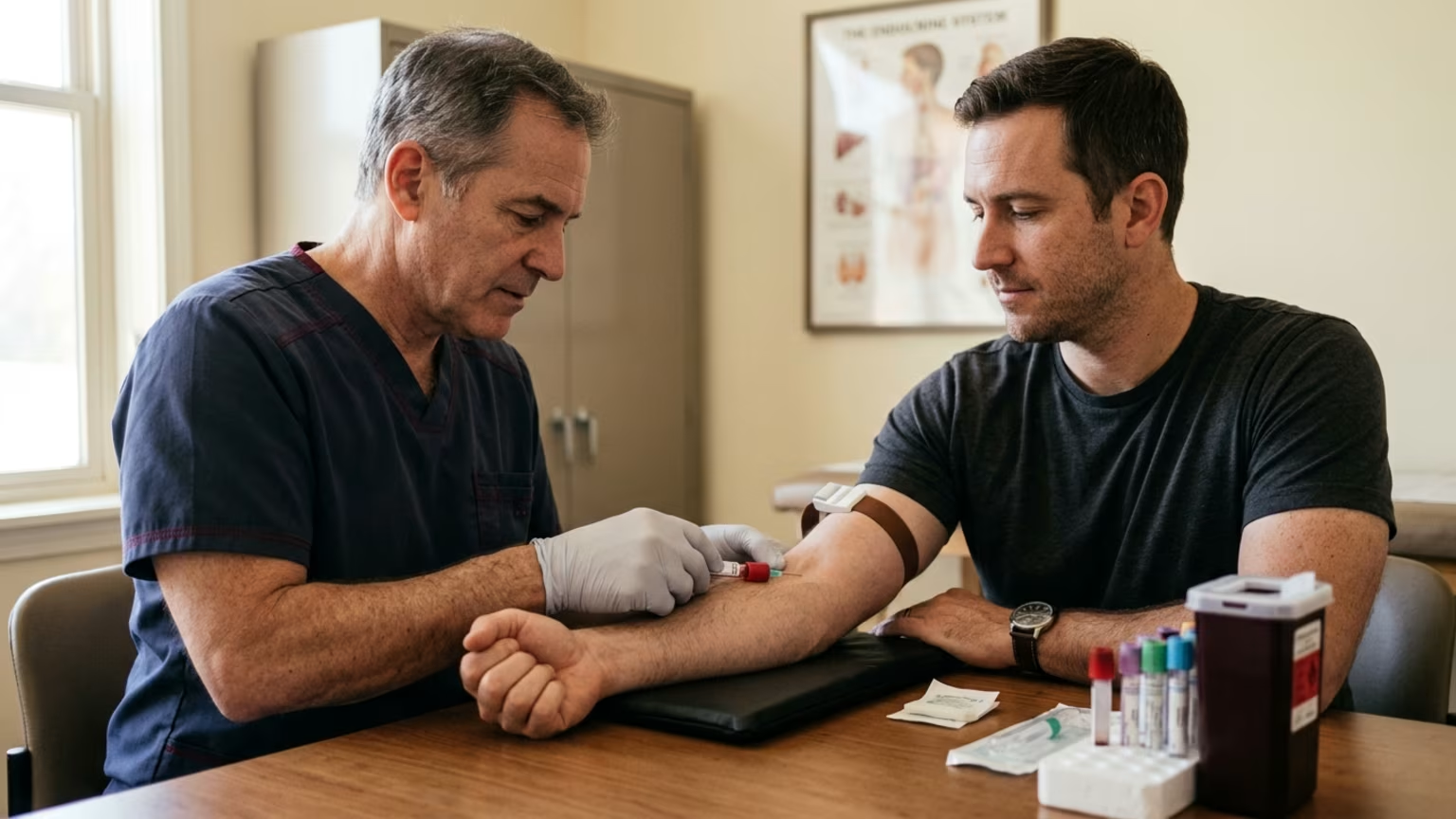
A testosterone test result is a snapshot of hormone levels at a specific moment in time rather than a fixed biological number. Because hormones fluctuate throughout the day and react to daily habits, a single blood draw only shows what is happening in that exact window. Clinicians look at these numbers as part of a broader clinical picture rather than a permanent label.
The information in this article is for educational purposes only. It is not medical advice. Readers should always consult a qualified healthcare professional regarding hormone testing, symptom evaluation, and medical diagnoses.
When patients receive their laboratory results, they often view the final number as a permanent measurement. However, biological systems are constantly shifting. A test taken at breakfast will look different from one taken in the late afternoon. This natural volatility is why clinical guidelines caution against relying on just one reading.
The Endocrine Society recommends confirming a suspected low result with a repeat morning, fasting total testosterone measurement. They advise against relying on one single reading. This cautious approach prevents men from jumping to conclusions based on an isolated drop in their hormone levels.
Hormone testing requires precision and clinical context. A patient who takes a test after a poor night of sleep might see a lower number than usual. If that same patient tests again under optimal conditions, the result could be entirely different. This is why medical professionals look for patterns instead of reacting to a single data point.
The human body adjusts hormone production constantly in response to its environment. Therefore, medical guidelines are designed to filter out this daily noise. By requiring multiple tests, doctors can identify genuine deficiencies rather than temporary dips.
Medical professionals rely on established reference ranges to evaluate hormone levels accurately. The Endocrine Society states that hypogonadism should only be diagnosed when compatible symptoms or signs occur alongside unequivocally and consistently low testosterone. A laboratory result alone is never enough for a formal diagnosis.
Researchers often use specific numerical cutoffs to organize their studies. For instance, one 2026 cross-sectional study reported an operational definition using morning total testosterone below 300 ng/dL plus relevant symptoms. This operational definition relied on a single 7:00 to 10:00 a.m. fasting measurement for classification purposes.
However, clinical diagnostic evaluations are not the same thing as research definitions. A study protocol is designed to categorize participants quickly for data analysis. In a real medical setting, doctors apply more rigorous standards to ensure the diagnosis is accurate over time.
The 300 ng/dL mark often serves as a baseline for clinical discussions in some research settings. Yet, doctors will interpret this number alongside patient history. A reading slightly below this threshold on a Tuesday might rebound significantly by Thursday. This inherent variability reinforces the strict need for multiple readings.
By scheduling consistent laboratory testing, patients and doctors can track genuine biological trends. Understanding the difference between a clinical threshold and a one-off study definition prevents unnecessary anxiety. It grounds the patient in evidence rather than panic.
When hormone levels drop consistently, men may experience specific physical and mental changes. The Endocrine Society requires compatible symptoms or signs to be present before diagnosing hypogonadism. Low numbers on a chart do not mean much if a man feels completely normal and healthy.
Because of this, the Endocrine Society states that available evidence does not support population-level screening for hypogonadism in asymptomatic men. A September 2026 Endocrine Society statement reiterated this position clearly. There is simply insufficient evidence to support testing men who have no complaints or visible signs of deficiency.
When symptoms do arise, they often include noticeable changes in energy, sexual function, and overall mood. However, these changes must align with unequivocally and consistently low testosterone concentrations. If a patient feels fatigued but has normal hormone levels, doctors will investigate other underlying causes. This careful diagnostic framing prevents unnecessary hormonal treatments.
Men who notice persistent changes in their daily well-being should discuss these signs with a doctor. The presence of symptoms is the critical trigger for a proper clinical assessment. Without these symptoms, chasing a specific number on a lab report provides little clinical value.
The guidelines are clear that routine screening of asymptomatic populations is entirely unwarranted. A clinical assessment must be driven by actual patient complaints. This ensures medical resources are directed toward those who genuinely require evaluation.
Testosterone levels are highly sensitive to daily routines and natural biological rhythms. This natural fluctuation is known as diurnal variation. Hormone concentrations naturally peak in the early morning and gradually decline as the day progresses. This biological reality is why precise testing time is a critical factor for accurate results.
To limit diurnal variation, the 2026 cross-sectional study collected samples between 7:00 and 10:00 a.m. after an overnight fast. This 7:00 to 10:00 a.m. window is a common research protocol used to standardize biological data. By ensuring all participants tested early and on an empty stomach, researchers minimized the impact of daily biological shifts.
Food intake and active digestion can also temporarily alter hormone readings. Fasting before a blood draw helps prevent morning meals from skewing the laboratory results. Understanding how to prepare for a testosterone test ensures that the final numbers accurately reflect a patient's true baseline.
Sleep loss, acute illness, and specific medications can further impact hormone concentrations. While current primary evidence does not establish precise percentage drops for these factors, clinicians widely recognize their temporary influence. A severe cold or a disrupted week of sleep can suppress hormone production temporarily. Patients should always inform their doctors about any recent illnesses or lifestyle disruptions before testing.
The initial hormone test is only the very beginning of a proper clinical evaluation. The Endocrine Society recommends confirming a suspected diagnosis with a repeat morning fasting total testosterone measurement. This second test verifies whether the first result was a temporary anomaly or a true biological trend.
A single low reading might simply reflect a stressful week or a poorly timed blood draw. If the second reading returns to a normal range, the doctor can safely rule out hypogonadism. This methodical approach effectively protects men from premature medical diagnoses.
Consistency is the most vital factor in any hormone evaluation. Doctors need to see unequivocally and consistently low concentrations across multiple clinical visits. This strict standard ensures that any subsequent medical decisions are based on highly reliable data. Patients should expect their doctors to request a second draw if initial numbers appear low.
By adhering to the Endocrine Society clinical practice guideline, healthcare providers maintain a very high standard of care. They focus on the patient's overall health rather than treating an isolated laboratory error. This evidence-based strategy is central to responsible testosterone basics and education.
Routine screening might seem like a proactive health measure, but it is not recommended for every man. The Endocrine Society recommends against routine screening for hypogonadism in the general population. Testing every adult male without cause often leads to deep confusion and potential misdiagnosis.
When asymptomatic men take hormone tests, they may uncover naturally lower levels that cause absolutely no harm. Treating these numbers can introduce entirely unnecessary medical risks. The clinical guidelines prioritize men who are actually experiencing the physical realities of testosterone deficiency.
In September 2026, the Endocrine Society reaffirmed that screening should remain exclusively focused on those with compatible signs. While population-specific policies exist in some specialized fields, they do not apply to the general public. Clinical assessment is a highly personalized process, not a broad public health mandate.
Men should focus on their individual physical symptoms rather than comparing their numbers to broader population averages. A healthy man with no symptoms does not need to worry about his exact hormone concentrations. The medical consensus is exceptionally clear that testing should follow symptoms, not precede them.
Understanding hormone volatility deeply helps men approach their health with realistic clinical expectations. A laboratory panel provides valuable insights, but it is never the final definitive word. A hormone result must be interpreted within the context of a man's daily life, personal habits, and recent health events.
Doctors carefully factor in all these variables when reviewing a patient's medical chart. They will ask about recent life stress, overall sleep quality, and any noticeable changes in physical performance. This ongoing dialogue is just as critical as the blood test itself. It paints a more complete picture of the patient's actual hormonal environment.
Patients can greatly assist this process by being entirely transparent about their recent lifestyle. Sharing specific details about a recent respiratory infection or a change in medication provides crucial medical context. This essential information helps the clinician determine if a low reading is a temporary artifact or a chronic medical issue.
Ultimately, the clinical goal is to align laboratory data closely with actual lived experience. When clear physical symptoms and consistently low numbers point in the exact same direction, a proper diagnosis can emerge. Until that clear alignment happens, a single test remains just one piece of a much larger medical puzzle.
Patients should ask their doctor how recent sleep, specific test timing, and current symptoms factor into interpreting a single low testosterone result.
When reviewing the volatility of a single hormone snapshot, men often seek guidance on whether further testing is medically justified. Testostra steps in when readers face confusion around TRT evidence, risks and monitoring. We provide the rigorous context needed to understand why multiple laboratory measurements matter, ensuring adult men can navigate their health conversations effectively. Read Resources
Testostra follows testosterone research, clinical guidance and emerging evidence without turning general information into personal treatment advice.





Send us a question, research idea or topic suggestion. Reader questions help shape future Testostra content.
Contact Testostra