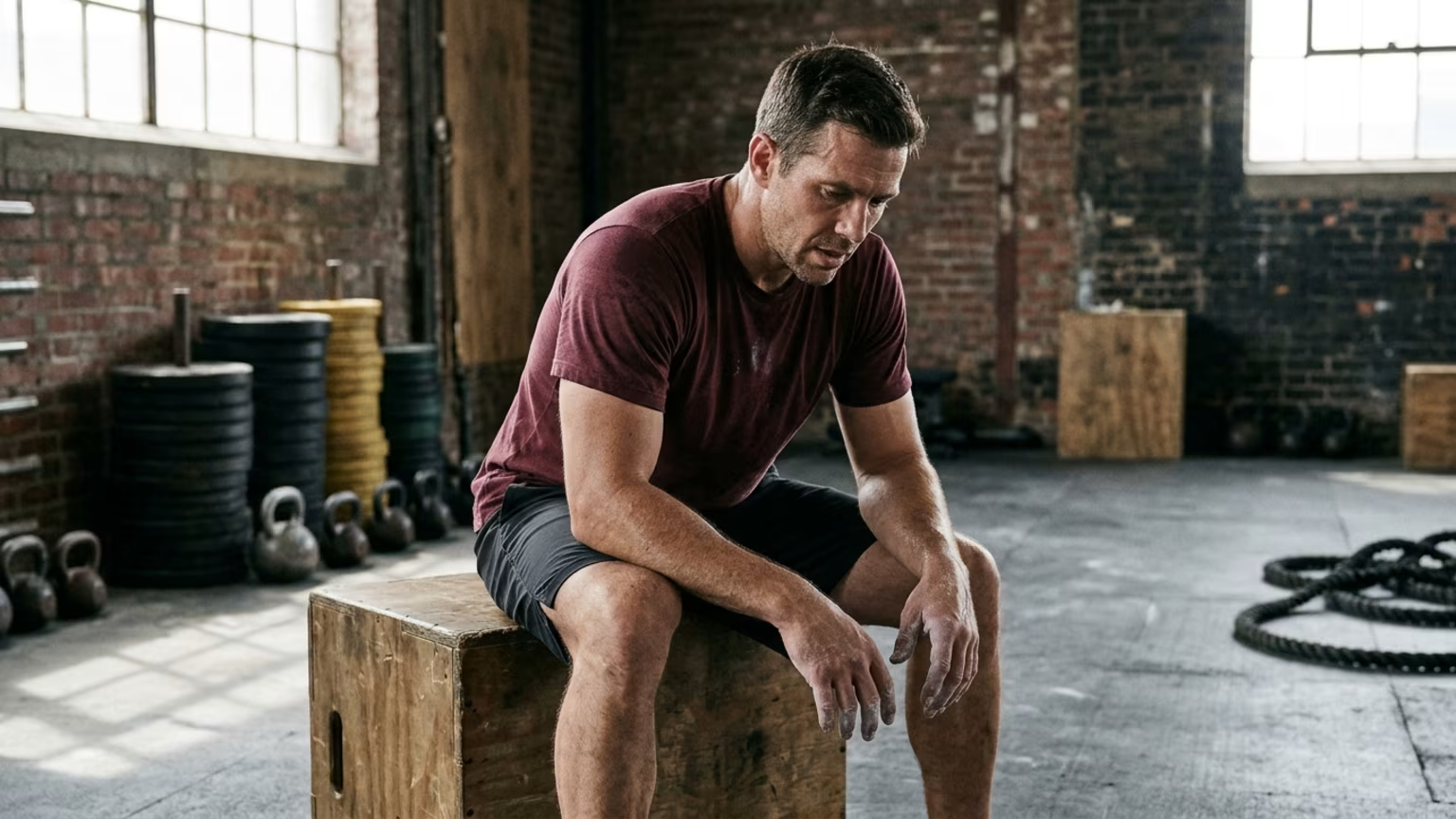

Hard training is not a low testosterone diagnosis. Learn how fueling, recovery, persistent fatigue and repeat testing fit into a clinical assessment.





Myth: hard training inevitably lowers testosterone; clinically, fatigue or declining performance calls for a review of recovery and health rather than an assumption of hormone deficiency.
This article is for informational purposes and is not medical advice. It explains how training concerns and testosterone assessment fit together without diagnosing the cause of anyone's symptoms. Personal decisions about persistent symptoms, testing or treatment belong with a qualified clinician.
The central clinical distinction is between noticing a problem and identifying its cause. Feeling persistently tired or performing below expectations may justify attention. Neither observation establishes that testosterone is low.
A clinical review of testosterone deficiency describes hypogonadism as compatible symptoms or signs alongside repeatedly and unequivocally low testosterone. Its diagnostic approach does not start and finish with a single laboratory result. Symptoms and measurements must be considered together.
That distinction matters when training becomes the explanation for everything. A difficult period in the gym may prompt questions about hormones, but it does not answer them. The clinical framework asks whether there is evidence of hormone deficiency rather than whether a training period felt unusually demanding.
The review describes morning testing on at least two occasions while the patient is clinically stable. It also describes fasting as preferable. These are features of a clinical assessment, not instructions to arrange or interpret testing independently.
A low measurement is therefore a finding to discuss rather than a diagnosis to apply. It also does not establish why the result was low. Concluding that exercise caused it adds a second assumption before the first question has been resolved.
For readers considering testing, understanding why symptoms and repeated results belong together is more useful than treating a workout trend as a hormone test.
The European Association of Urology guideline recommends against testosterone therapy in eugonadal men. This means men with normal testosterone status. It describes treatment as relevant to symptomatic hypogonadism under its stated criteria and contraindications.
That provides an important boundary around training-related claims. Fatigue or disappointing performance does not make testosterone therapy appropriate by itself. Nor does a low or borderline result automatically settle the treatment question.
The responsible sequence is assessment followed by interpretation and any individual treatment discussion. It is not a progression from hard training to presumed hormone deficiency to TRT.
Sports medicine adds another question: how does the energy available to support health relate to the demands of training?
A BBC report on Relative Energy Deficiency in Sport describes REDs as relevant to male as well as female athletes. It identifies fatigue and disrupted sleep among possible concerns. Low mood and effects on performance also feature in the report.
The BBC quotes sports scientist Nicky Keay arguing that insufficient fueling can contribute to underperformance. That places nutrition alongside training rather than treating exercise intensity as the only variable worth considering.
A summary of the International Olympic Committee's 2023 consensus describes a framework that considers health and performance together. It also distinguishes adaptable from problematic low energy availability. The distinction matters because the framework is more specific than a blanket warning against demanding exercise.
These sources support asking about the relationship between training demands and fueling. They do not make REDs and hypogonadism interchangeable labels. A sports-health concern and a hormone diagnosis require their own interpretation.
For general context, the relationship between food intake and training demands is a useful companion topic. The purpose is to understand the wider picture rather than identify a single food or nutrient as the answer.
The BBC reported an assessment of 50 male competitive cyclists. Nearly half had poor bone health and 25% were identified as having REDs. Those findings are important within the group studied.
The scope of the evidence needs one clear boundary. These cyclist figures are not prevalence estimates for recreationally active men. The detailed sports material here comes through secondary reporting and a consensus summary rather than a controlled comparison isolating exercise intensity in ordinary adult men.
The sources also do not provide a precise rule translating training load, recovery time or calorie intake into an individual testosterone prediction. They offer no universal sleep-duration formula for that purpose either. Their practical value is in identifying questions that deserve attention rather than calculating a reader's hormone level or prescribing a recovery schedule.
This is how athlete evidence remains useful without becoming a warning that all demanding exercise is harmful. It directs attention toward the combination of training and available energy. Clinical guidance then supplies a separate standard for assessing suspected hypogonadism.
The practical approach supported by this research is a review of training, recovery, sleep and fueling alongside clinical assessment when symptoms persist. These are areas for discussion rather than a self-treatment protocol. A clear account of the concern is more useful than arriving with a hormone diagnosis already attached.
The first question is about context: what changed around the time fatigue or declining performance became persistent? Training demands and opportunities for recovery belong in that account. The point is to describe the situation rather than decide in advance that the training was excessive.
A workout record can help organize that discussion. It should remain a record of training rather than become a substitute for clinical evidence. Likewise, a wearable trend is not a diagnosis of hypogonadism.
The distinction is between “something has changed” and “testosterone explains the change.” The first is an observation. The second requires assessment.
The BBC's reporting supports considering insufficient fueling when performance and health concerns occur in athletes. A review can therefore include how food intake relates to training demands. This is a broader question than whether someone follows a particular diet label.
It is also separate from asking whether testosterone is low. Keeping those questions distinct avoids treating every nutrition concern as an endocrine problem. It leaves room for a clinician to assess symptoms without losing sight of the training context.
Questions about whether training or nutrition needs to change should be discussed in that wider context. They should not be answered by assuming that the cyclist findings describe every man who trains hard.
Because the BBC report includes disrupted sleep among REDs-related concerns, sleep belongs in the account of a difficult training period. So do the fatigue and mood concerns described in that reporting. Describing them clearly is more useful than assigning them a hormone explanation.
The clinical discussion can distinguish what the person is experiencing from what laboratory testing might establish. “Sleep has been disrupted” describes an experience. “Poor sleep has caused hypogonadism” is a conclusion that the experience alone does not support.
This approach keeps sleep relevant without turning it into a numerical forecast of testosterone. It also avoids letting one difficult aspect of recovery stand in for the entire assessment.
The research supports seeking qualified assessment for persistent fatigue or performance concerns rather than relying on a workout trend or isolated laboratory result. Reviewing lifestyle and seeking care are not competing choices. The training discussion can be part of the medical discussion.
If testing is considered, the clinical review's emphasis on symptoms and repeated measurements provides the framework. If a result is low or borderline, its meaning and possible causes remain questions for interpretation. The EAU guideline then supplies a clear treatment boundary for men with normal testosterone status.
The goal is not to prove that training is responsible or to dismiss hormones entirely. It is to keep observations, possible explanations and diagnostic evidence separate until they can be assessed together.
Evaluate claims by separating training and recovery concerns from a hormone diagnosis, checking which population the evidence describes and leaving personal testing and treatment decisions to qualified care.
Deciding whether training-related fatigue raises a recovery question or a hormone question requires context, and Testostra supports the educational side of that distinction. Its evidence-led coverage addresses uncertainty about low testosterone symptoms and possible causes so men can better understand their concerns without receiving a personal diagnosis or a hormone protocol.
Testostra follows testosterone research, clinical guidance and emerging evidence without turning general information into personal treatment advice.




Send us a question, research idea or topic suggestion. Reader questions help shape future Testostra content.
Contact Testostra