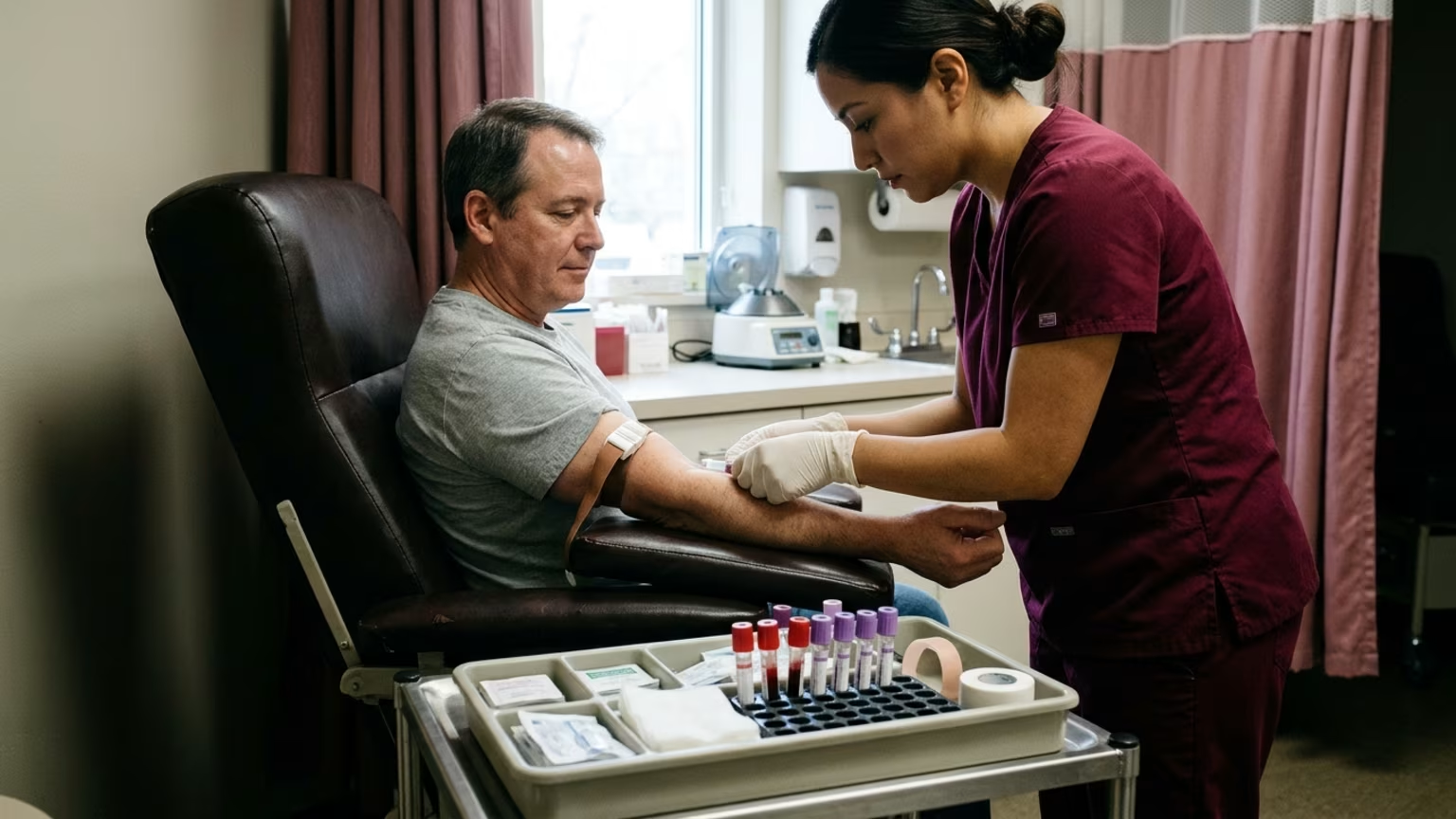

How clinicians assess a low testosterone result using symptoms, repeat morning testing and related biomarkers, with illness and sleep context.





A clinical evaluation of low testosterone separates an isolated reading from a supported diagnosis by checking symptoms, repeat measurements and the conditions surrounding each blood draw.
This article is for informational purposes only and is not medical advice. Individual assessment and decisions about further testing belong with a qualified clinician.
The European Association of Urology (EAU) guideline describes late-onset hypogonadism as a diagnosis requiring compatible signs or symptoms alongside consistently low testosterone. Its testing recommendations specify conditions that help clinicians assess the measurements.
The clinician or testing service should explain the arrangements for the draw.
The evaluation brings clinical information and laboratory evidence together. The following sequence explains that process rather than supplying a test-ordering checklist for individual use.
The central result is a total testosterone concentration. In the EAU guideline, its stated diagnostic threshold appears as 12 nmol/L (3.5 ng/mL). If additional tests were ordered, the review may also include SHBG, calculated free testosterone or other hormone measurements.
The useful question is not simply whether a value looks low. Physicians structure the review around the symptom profile, the consistency of the testosterone findings and any reason the measurements need further context.
That review separates three questions:
The first two questions establish the central evidence described in the guideline. The third helps guide investigation of the cause. A larger panel does not replace either symptoms or confirmation.
The EAU recommends repeating total testosterone on at least two separate occasions when it is below 12 nmol/L and before starting testosterone therapy. It describes that threshold as reliable for diagnosing late-onset hypogonadism while emphasizing the patient's symptom profile.
A cutoff is not a universal self-diagnosis or treatment rule. Assay considerations and the clinical picture remain part of the physician's interpretation.
Two low readings without compatible signs or symptoms do not complete the diagnostic framework described by the EAU. Symptoms without consistently low testosterone leave its biochemical requirement unmet. These are reasons to review the whole assessment rather than choose whichever part seems most convincing.
When SHBG may be altered, the EAU recommends considering SHBG measurement and calculated free testosterone. It also lists drugs associated with changes in SHBG. This gives the medication review a role beyond simply recording a prescription list.
Additional hormone results serve different purposes within the assessment. SHBG and calculated free testosterone help clarify interpretation when indicated. LH and FSH help investigate the type of hypogonadism, while prolactin is used in the specified clinical circumstances.
Not every evaluation requires every hormone measurement. The clinician selects the tests that address the uncertainty in the case. For background on the distinctions, Testostra explains how related hormone measurements fit beside total testosterone.
The Hill reported that 25.7% of participating active-duty male Army personnel had one morning testosterone measurement below 300 ng/dL in an Army-related study. Study author Claire E. Berryman cautioned that the finding alone was insufficient to diagnose hypogonadism.
That population and one-time measurement should not be generalized to all adult men or treated as the prevalence of diagnosed testosterone deficiency. The example shows why a count of low readings answers a different question from a clinical evaluation.
Epic Research reported that only one in five men starting testosterone in its analysis met the two-test standard. That finding applies to the analysis rather than establishing how every clinician or healthcare setting practices. It provides a separate reason to ask whether a treatment discussion rests on confirmed laboratory evidence.
Once results are available, the responsible next step is a review with the qualified clinician who can connect the findings to the original concern. Bring the reports and be ready to confirm the sampling circumstances and medication history.
Useful questions include:
Do not start, stop or change medication based only on an isolated testosterone result. The aim is to leave the appointment with a clear account of what the results establish and what still needs assessment.
Once repeat testing has been reviewed, Testostra helps readers prepare questions about related biomarkers through its evidence-led explanations of male hormonal health. Its coverage addresses confusion about SHBG alongside total and free testosterone so men can better understand a hormone report while leaving personal diagnosis and treatment decisions to a qualified clinician.
Testostra follows testosterone research, clinical guidance and emerging evidence without turning general information into personal treatment advice.



Send us a question, research idea or topic suggestion. Reader questions help shape future Testostra content.
Contact Testostra