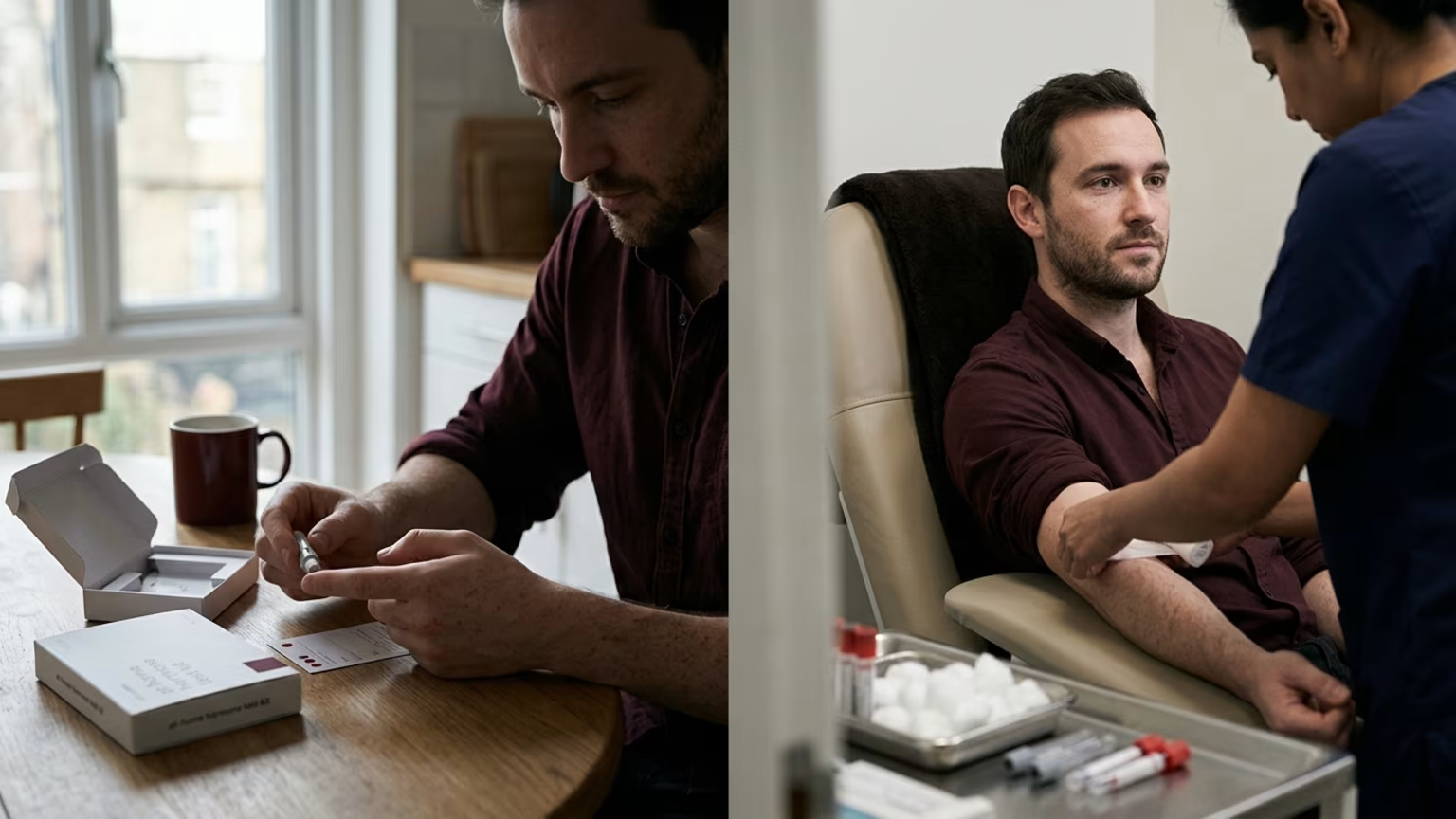

Compare clinician-ordered lab tests with at-home testosterone kits. Understand collection methods, serum guidelines, and the need for proper clinical review.





Deciding between a traditional clinician-ordered lab test and an at-home testing kit requires understanding the difference between diagnostic serum evaluation and consumer access models.
The information provided here is for educational purposes only and does not constitute medical advice. Readers should always consult a qualified healthcare professional before making any decisions about testing or treatment.
Clinician-ordered testing integrates a single laboratory result into a broader medical evaluation. The Endocrine Society recommends diagnosing male hypogonadism only when compatible symptoms and signs occur alongside unequivocally and consistently low serum testosterone. This approach relies on a careful assessment of the entire endocrine system rather than an isolated number. It ensures that any blood work is viewed alongside a patient's actual physical health.
A physician will document a patient's medical history before ordering any lab work. They want to ensure that any physical complaints are genuinely consistent with a hormone deficiency. This is why the Endocrine Society places such heavy emphasis on physical signs. Treating a number on a page without corresponding physical symptoms contradicts established medical guidelines.
In a clinical setting, physicians follow specific protocols for how and when to draw blood. The Endocrine Society recommends accurate assays and rigorously derived reference ranges to ensure precise measurements. Doctors typically order a morning, fasting total-testosterone measurement to capture peak hormone levels. A venous blood draw is the standard method for collecting the required serum sample.
This traditional route also builds in necessary medical follow-up. A laboratory number alone is not enough for a diagnosis under established clinical guidelines. A clinician will evaluate the results to see if further testing is needed. They are responsible for reviewing the full clinical picture.
When a physician oversees the process, the focus remains on established diagnostic standards. Medical professionals look for physical signs of testosterone deficiency before ordering blood panels. The clinical approach avoids testing asymptomatic individuals. The Endocrine Society explicitly recommends against routine population screening for hypogonadism.
Relying on a clinician also ensures that the testing environment is tightly controlled. Venous blood draws in a professional laboratory minimize the risk of sample contamination. The collected serum is then analyzed using standardized methods. This rigorous approach helps prevent false readings that might lead to unnecessary worry.
Furthermore, the clinical path provides immediate access to professional medical resources. A doctor can quickly answer questions about how lifestyle factors influence lab numbers. They can also explain why a single test is rarely definitive. This direct communication builds a foundation of trust between the patient and the healthcare system.
Direct-to-consumer testing refers to how a patient accesses a test rather than a specific biological sample. These services offer convenience by removing the immediate need for a doctor visit. One service guide describes several collection models. These include partner-lab venous draws, mailed specimens, and at-home collection.
The term direct-to-consumer is primarily a description of a commercial access model. It explains who orders the test and who pays for it. It does not guarantee a specific level of scientific rigor or a particular laboratory method. Users pay for the ability to initiate the testing process themselves.
The mechanical differences depend heavily on the specific kit provided by the service. Some companies require a standard venous blood draw at a local partner facility. Others rely on user-collected finger-stick capillary blood, dried blood spots, or saliva. The variety in these collection methods means that the physical sample often differs from traditional serum tests.
This variation in specimen types presents a critical mechanical difference. The Endocrine Society guideline specifically points to serum measurements for accurate diagnosis. Current evidence does not establish that every at-home specimen type is interchangeable with a venous serum test. Users must verify exactly what biological material is being measured.
A direct-to-consumer service might offer a wide panel of biomarkers. However, a large panel is not the same as a focused diagnostic evaluation. The convenience of mailing a sample can sometimes obscure the clinical limitations of the method. Consumers often assume that any blood test is medically equivalent to a hospital draw.
Furthermore, the responsibility for sample collection often shifts to the user. A capillary test or dried blood spot kit requires the patient to perform the physical collection. If the collection process is flawed, the resulting data may be inaccurate. This is a significant mechanical departure from a professionally administered venous draw.
The marketing language surrounding consumer tests can also create confusion. Terms like comprehensive or advanced do not necessarily mean the test meets clinical standards. Consumers must read past the promotional material to find the technical specifications. Relying solely on marketing copy can lead to misplaced confidence in the results.
Physicians weigh these two testing routes based on their clinical utility and accuracy. Doctors prefer targeted testing when specific physical signs are present. A direct-to-consumer test might prompt a man to seek medical care, but a physician will usually require a traditional lab test to confirm the result. This careful weighing prevents premature treatment decisions.
The interaction between an initial test and clinical follow-up is a central part of endocrine care. The Endocrine Society recommends confirming a suspected low result with a repeat morning, fasting total-testosterone measurement. A single low reading from an at-home kit is not sufficient for a diagnosis. Doctors need consistent data to understand what the endocrine system is actually doing.
When an initial screening indicates a potential issue, the medical pathway diverges from basic consumer testing. If hypogonadism is identified, the guideline recommends luteinizing hormone and follicle-stimulating hormone testing. Measuring LH and FSH helps doctors distinguish primary from secondary hypogonadism. It also guides the further evaluation of the underlying cause.
Measuring luteinizing hormone and follicle-stimulating hormone provides a map of the brain's communication with the body. The pituitary gland uses these hormones to signal the testes to produce testosterone. If testosterone is low but these signaling hormones are high, the issue likely resides in the testes. If all three levels are low, the problem often stems from the pituitary or hypothalamic regions.
This deeper level of testing illustrates how clinicians view hormone panels. A single testosterone number is simply a starting point for medical inquiry. Identifying the root cause of a deficiency is a complex physiological puzzle. Primary hypogonadism points to testicular issues, while secondary hypogonadism points to pituitary or hypothalamic causes.
Doctors must weigh the convenience of consumer tests against the strict requirements of these diagnostic pathways. A consumer test might highlight a low number, but it cannot map the entire endocrine system. Clinicians use their expertise to bridge the gap between a raw number and a physical reality. They rely on consistent serum results to make safe decisions.
The timeline for reaching a diagnosis also differs between these two approaches. A consumer test provides a quick initial number but cannot finalize a medical decision. The clinical route may take longer due to scheduling and repeat testing requirements. However, this measured pace ensures that any resulting treatment plan is built on solid medical evidence.
When designing a patient protocol, physicians prioritize tests that provide clear and actionable data. They look for accurate assays and standardized reference ranges that align with Endocrine Society guidelines. Patients evaluating their own options should take a similar approach. Understanding the limits of testosterone testing and biomarkers is a critical step.
Choosing between a direct service and a clinical visit involves checking several practical details. Patients should ask what specific specimen is being tested. They must also confirm whether the report measures total testosterone accurately. Knowing whether collection happens at home or in a lab is equally important.
A strong testing protocol also accounts for what happens after the results arrive. Patients must know if the service supports repeat morning testing if the first result is low. They should also ask whether a qualified clinician will review the results. Proper medical oversight involves evaluating physical symptoms alongside the lab numbers.
Men reviewing these options can use a specific checklist to evaluate any testing service.
Evaluating these services requires a critical eye and an understanding of clinical standards. Many services market themselves as comprehensive health solutions. However, a true diagnostic evaluation is an ongoing process. Individuals must take responsibility for asking the hard questions about assays and reference ranges.
This structured evaluation helps individuals separate reliable tools from incomplete solutions. It encourages men to ask better questions about their health data. A rigorous approach to low testosterone requires patience and clear clinical standards. Consumer tests can be useful, but they require careful scrutiny.
Patients must also consider the long-term implications of their testing choices. A haphazard approach to gathering health data can complicate future medical care. Doctors prefer having a clear and unbroken record of reliable serum measurements. Establishing a baseline with verified laboratory results makes all future health tracking much easier.
Finally, clinical guidelines emphasize careful monitoring once a diagnosis leads to medical action. The Endocrine Society states that clinicians should evaluate response to therapy, adverse effects, and adherence after treatment begins. This ongoing care is a hallmark of TRT and emerging research. A standalone test result cannot replace this comprehensive medical supervision.
Both testing models are tools for gathering biological data, but true hormonal health requires viewing convenient access and rigorous clinical evaluation as complementary steps rather than interchangeable solutions.
After comparing different testosterone testing options and receiving their laboratory results, individuals must carefully determine what those hormone numbers actually mean for their daily health. Testostra helps men who are facing difficulty separating clinical evidence from marketing and social media claims, providing clear context so they can make informed decisions about their next steps.
Testostra follows testosterone research, clinical guidance and emerging evidence without turning general information into personal treatment advice.



Send us a question, research idea or topic suggestion. Reader questions help shape future Testostra content.
Contact Testostra